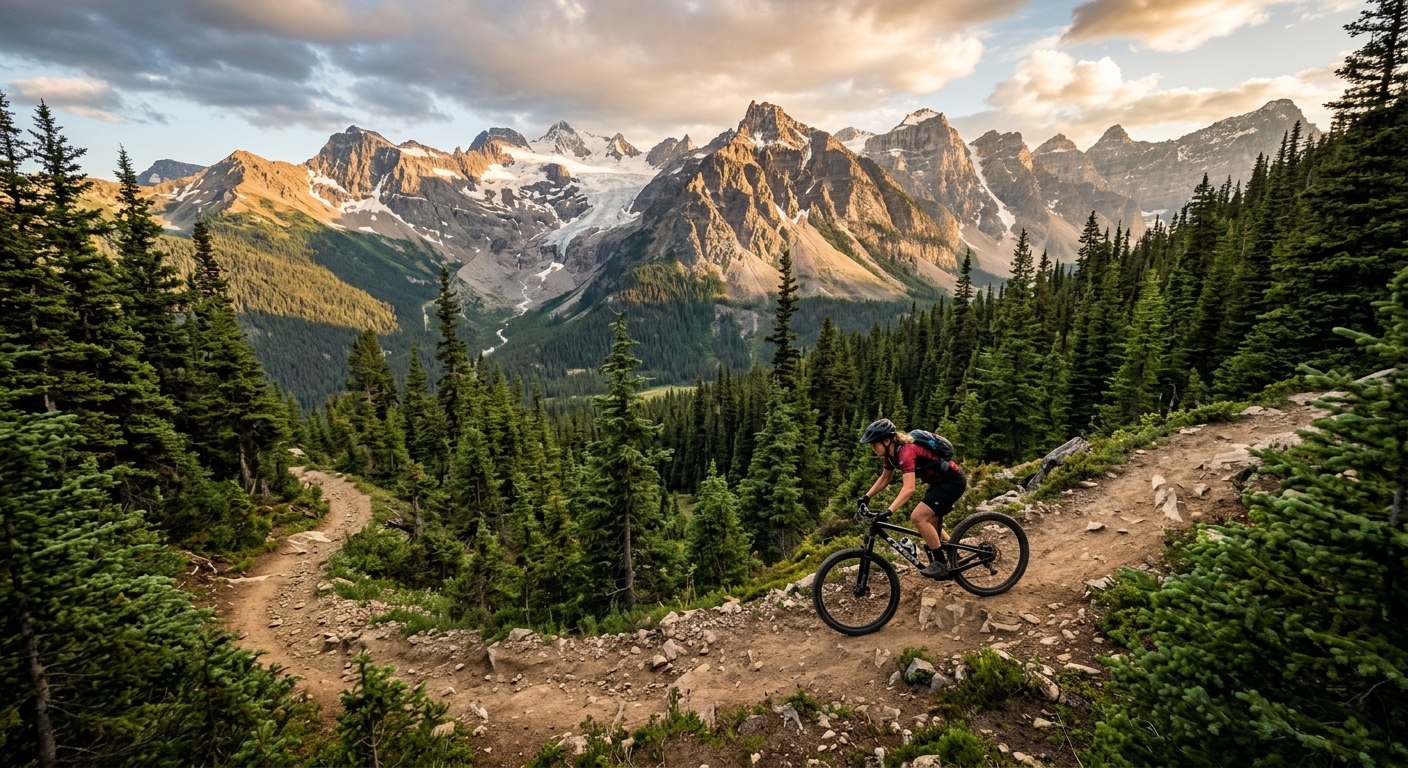
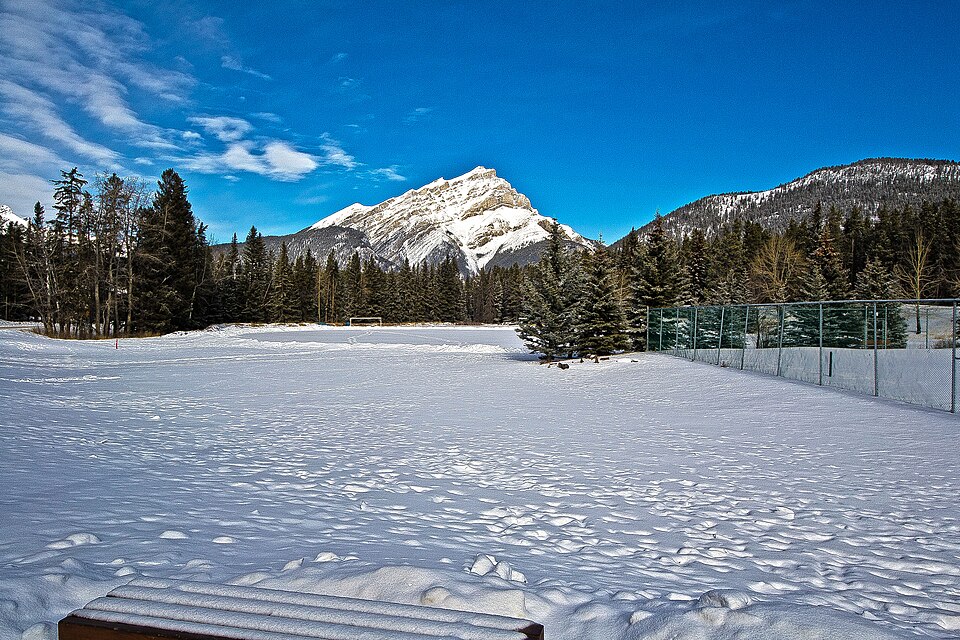
A Banff mountain-bike day begins with the permitted route and the rider's handling skills. A paved multi-use path, a rolling doubletrack valley route and remote rooty singletrack may have similar distances but make very different demands. Choose the actual destination, bike type and return before renting equipment, and keep the plan within the least experienced rider's ability.
Compare complete route choices
Parks Canada's summer cycling inventory supplies activity-specific profiles. Its grades are cycling grades, not the hiking grades used elsewhere on this site. The cycling planner keeps those profiles and the separate winter routes together with the permission checks.
| Route | Official summer cycling profile | Choose it with this distinction in mind |
|---|---|---|
| Sundance Trail | Easy; 3.7 km one way | Paved Cave and Basin approach to the bike racks. The canyon loop is hiking-only. |
| Tunnel Campground Loop | Easy; 6.4 km loop | Packed-gravel campground circuit, separate from the summit and technical trails. |
| Spray River East and West | Easy; 11.3 km combined profile | Rolling doubletrack; East and West have different trailheads. Resolve their final connection. |
| Spray River / Goat Creek | Moderate; 18.7 km one way | Long point-to-point route to the trailhead above Canmore, with a return transfer to arrange. |
| Lake Minnewanka shoreline | Moderate; up to 29.4 km one way | Remote and exposed, with steep singletrack and a recurring summer cycling prohibition. |
| Rundle Riverside | Difficult; 13.9 km one way | Extensive rough, rooty singletrack before the Nordic Centre connections; not an easier alternative to Legacy. |
The publisher's grade should be read with the terrain description. Minnewanka's Moderate label accompanies explicit fitness, bike-handling and remoteness warnings. Rundle Riverside is described for intermediate and advanced riders, with full suspension recommended and a repair kit important. Neither belongs in a universal beginner or family recommendation.
Know where the bicycle may go
The park cycling rules require designated routes: riding an unlisted, closed or off-trail line is not an alternative when the intended outing is unavailable. Do not infer permission from a nearby hiking path, a map line or a bicycle already being ridden there.
The current restricted-activity order specifically prohibits all bicycles on Tunnel Mountain Summit Trail, Hoodoos Interpretive Trail and the named corrals connections. Tunnel Mountain still contains permitted campground, bench and technical routes; identify the exact trail instead of offering a generic summit ride.
Pedal-assist e-bikes have their own named exceptions and must meet Parks' complete equipment definition. Some maintained Tunnel Bench trails are included, while the Banff Spray/Goat corridor, Rundle Riverside and Minnewanka shoreline are not listed exceptions. Healy Creek's exception runs only from the Healy/Brewster parking lot to Brewster junction, not onward to Sundance. A rental shop selling an e-bike does not expand those boundaries.
Minnewanka requires a date and endpoint
From July 10 to September 15 annually, cycling is prohibited beyond Stewart Canyon Bridge. Read the official restriction and boundary. Its four-person group requirement concerns hiking; assembling four cyclists does not create permission to ride.
Outside that window, current closures still govern. Choose the intended endpoint and complete return: the summer inventory distinguishes the full boundary corridor from shorter Aylmer-junction and Warden's Cabin destinations. Do not use the gentle first section as a test that guarantees the exposed singletrack farther along will suit the group. Check daylight and supplies for the real distance without relying on a fixed latest-start rule.
Goat Creek and Rundle: solve the return first
Goat Creek Day Use is above Canmore in Spray Valley Provincial Park, rather than in downtown Canmore. Parks describes arranging a transfer there and riding towards Banff as descending much of the way; reversing the route changes the climbing. The route remains rolling, and its clay-rich sections are not recommended in wet conditions.
Check Alberta Parks access and applicable parking/pass requirements at the Canmore-side start, plus Parks Canada rules at the Banff end. A provincial e-bike permission does not override the national-park order. Rundle Riverside reaches the Nordic Centre trail system, another location distinct from central Canmore. Neither ride includes a transfer just because it links the two towns on a map.
Roam bike carriage is first-come and dependent on capacity, bike fit and the actual bus. A passenger ticket is not a reserved bike space. Arrange a fallback for the riders and bikes and check all final connections before starting a point-to-point outing.
Winter fat biking uses another inventory
Read the reviewed fat-biking guide and Parks winter profiles. The designated Tunnel winter network differs from the summer campground loop, and winter Minnewanka's listed endpoint is Aylmer junction, not the full summer boundary route. Fat tyres do not make deep snow, ice or avalanche terrain suitable.
Spray River East has a winter fat-bike description; Spray River West prohibits bikes in winter. Do not reuse the summer East–West loop or the full summer Goat Creek exit as a winter bike itinerary. Keep out of classic ski tracks, ride only firm snow and stop if tyres sink more than 2.5 cm. Check the exact route and bike type before paying for a rental.
Equipment, providers and a workable day
Discuss braking, cornering, climbing, exposure and basic repairs honestly with the shop or guide. Ask for the specific bike and tyres, helmet, repair kit, lock, return deadline, damage terms and current total quote. A guided outing should name its route, skill expectations, meeting point and included transfers; it is not a guarantee of risk-free travel.
Banff Adventures is at 211 Bear Street, Banff; Wilson Mountain Sports is at 101 Lake Louise Drive, Samson Mall, Lake Louise. For the Canmore Nordic Centre, use Alberta Parks' current activity map and restrictions, rather than treating its ski network as automatically available for bikes. Choose a named route from the current activity map rather than assigning one generic distance or grade to a whole trail system.
Start with one realistic ride, then leave the rest of the day flexible. Bring water, food, layers, navigation, repair and emergency supplies; carry bear spray and know its use. Use packing guidance, base comparisons and winter planning. An Expedia stay search and GetYourGuide cycling search are affiliate links; we may earn a commission. A search does not confirm a particular product or availability.
Sources and review
Reviewed October 29, 2026 against the linked Parks cycling profiles, current order, Minnewanka restriction, winter guide, Alberta Parks access, Roam policy and named operators. Use the official report and bulletins for the day. No summer calendar guarantees opening or winter suitability.
Enjoyed this guide? Get weekly Banff tips.