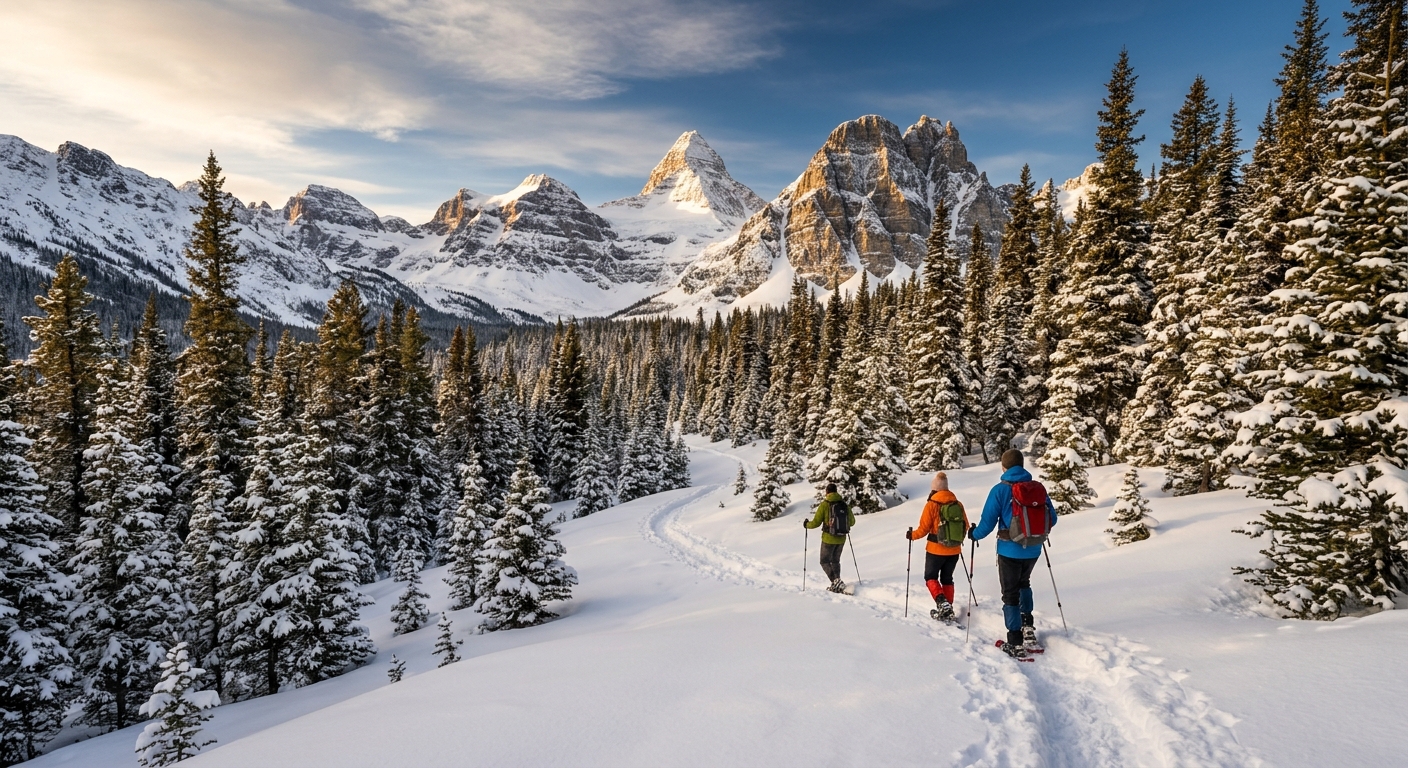
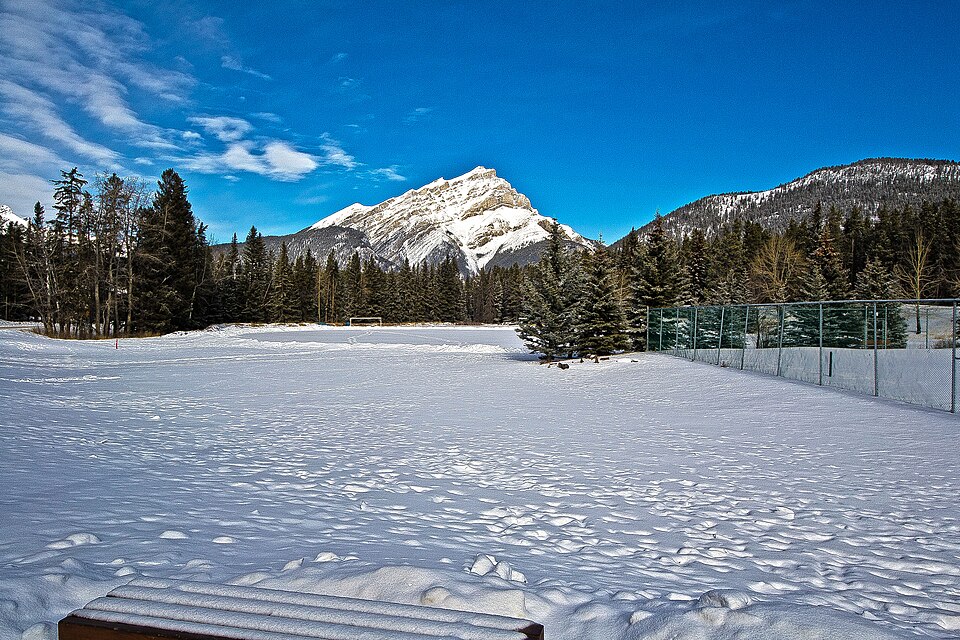
For a first snowshoe outing in Banff, choose a short designated winter route and leave room to turn around. Snowshoes help you float on soft snow; on a hard, icy trail, appropriate boot traction may matter more. Ask about the day's conditions before renting equipment. A summer hiking sign, footprints or an online route recording do not establish winter safety.
Where should beginners snowshoe?
These are starting points from Parks Canada's designated winter-route lists, subject to current closures and conditions. Distances are for the named route, not a promise that the full route suits every visitor.
| Route | Published distance | Why consider it | Turnaround decision |
|---|---|---|---|
| Tunnel Mountain Drive, Banff | 2 km one way | A winter vehicle closure creates a broad route for a first try | Return whenever the group has had enough; do not confuse it with the summit trail. |
| Johnson Lake shoreline, Banff | 2.8 km loop | A short forest and shoreline route | Follow the land trail; the frozen lake is not a shortcut. |
| Louise Creek, Lake Louise | 2.9 km one way | A designated pedestrian route between the village and lake | Account for the climb and the return journey. |
| Fairview Lookout, Lake Louise | 1.2 km one way | A short outing with climbing and a viewpoint | Return by the same path. Parks Canada warns that the loop beyond requires avalanche training and equipment. |
See the original Banff route descriptions and Lake Louise route descriptions. Ask at a visitor centre if the easiest suitable choice is unclear. Keep the first trip deliberately short; adjusting bindings in deep snow is more tiring than doing it in the rental shop.
Snowshoeing and avalanche terrain
Snowshoes do not make a summer trail suitable for winter. Parks Canada identifies avalanche hazards at Lake Louise, including the Lake Agnes/Mirror Lake and Plain of Six Glaciers teahouse trails. Do not plan these as casual winter walks. The teahouses are closed in winter. At an avalanche warning sign, stop unless your group has the required training, equipment and decision-making skills.
Checking the avalanche forecast is part of planning, not a substitute for training or route assessment. For an outing beyond your knowledge, choose a qualified guided trip and discuss the route with the guide. Do not follow an existing track as evidence of safe terrain.
Renting the right equipment
Tell the shop your route, boots, approximate weight including pack, and whether anyone is a child or first-time user. Ask staff to demonstrate bindings and appropriate pole length. Practise putting everything on and taking it off before leaving. Check pickup, return and late-return terms.
- Wear waterproof winter boots, warm socks, hat, gloves and layers you can adjust.
- Carry food, water, spare insulation, a headlamp, first aid and a map available offline.
- Choose a turnaround time that preserves daylight and warm-up time.
- Tell someone where you are going and when to expect you back; cell service is not reliable everywhere.
Sharing trails
Keep out of the parallel classic-ski tracks. On shared routes, use the lane permitted for walkers or snowshoers and yield to descending users. Step aside for breaks and follow dog restrictions for the particular trail. Carry out everything you bring.
Can we snowshoe to Moraine Lake in winter?
Do not plan the lake itself as an ordinary beginner destination. Parks Canada's winter route ends at a viewpoint before large avalanche paths; continuing beyond that point requires avalanche training and equipment. The full outing is also long for a first try. Pick a shorter route from this guide instead.
What if the snow is too icy or too shallow?
Switch to a suitable open winter walk with appropriate traction, or change the activity. Rental equipment does not commit you to a route when conditions change.
For a guided option, compare the route and inclusions in Banff snowshoe listings (affiliate link; BanffBound may earn a commission). Build the rest of your trip with the winter guide, winter stays and town guides.
Sources and review
Reviewed 28 October 2026 using Parks Canada's Banff snowshoeing and Lake Louise winter routes and avalanche warnings.
Enjoyed this guide? Get weekly Banff tips.