Larch Valley / Minnestimma Lakes can be the whole hike. Choose the forest, meadow and lakes destination when that is the day you want, rather than treating it as an incomplete attempt at Sentinel Pass. The climb begins at Moraine Lake, so the outing includes both the mountain walk and a separately arranged journey to the lake and back.
Full guide reviewed October 29, 2026. The route figures below use Parks Canada’s summer hiking profile. They do not establish current trail conditions, foliage or a seat on a future shuttle. Use the larch route comparison to compare this endpoint with other outings.
Read the figures with the endpoint
| Measure | Published basis |
|---|---|
| Distance | 4.5 km one way from Moraine Lake |
| Elevation | 570 m outward gain; 10 m outward loss |
| Time | 3.5–4 hours estimated return hiking time |
| Grade | Moderate |
| Start | Moraine Lake; begin just beyond Moraine Lake Lodge |
The official detailed hiking profile and reviewed trail record identify the same destination. The one-way gain and loss describe the outward walk; returning reverses the journey. The published time is a summer estimate, not a promise for every pace or surface. Add transport, breaks, photographs and the return to your accommodation separately.
Moderate is a route grade, not approval for every person or family. Discuss the climb, sustained walking and descent with the least experienced participant. Decide what an enjoyable day looks like if you turn around before the lakes, and keep the party together rather than letting a stronger walker set the whole plan.
Book the actual Moraine Lake journey
Parks Canada’s lake-access information distinguishes Moraine Lake from Lake Louise Lakeshore. Moraine Lake Road is closed to personal vehicles year-round. Authorised seasonal options include Parks Canada shuttles and licensed commercial services; registered lodge guests have their own arrangements. Staying in the Lake Louise area does not itself grant road access.
The regular Parks shuttle begins with check-in at the Lake Louise Park and Ride at the ski resort, not the village or lakeshore. Alpine Start is a different product with lakeshore departure instructions. If arriving from Banff on Roam, check the actual service and whether your pass provides Lake Connector access; a lakeshore bus ticket is not automatically a Moraine connection. Resolve these pieces before choosing the walk.
Read the year. Parks’ published 2026 Moraine shuttle season ended October 12. That timetable does not supply 2027 dates or a current departure. Use the shuttle planning guide for the product distinctions, then confirm your actual date, check-in, ticket requirements and last return with the operator.
- Outward: accommodation to departure point, check-in and ride to Moraine Lake.
- On foot: the valley destination, breaks and full descent to the correct pickup.
- Home: the last usable lake departure and every onward connection to your stay.
Have an option for a changed or unavailable departure before leaving. Walking the road or entering from Paradise Valley is not a substitute supplied by this guide. Keep another day from the outing chooser if the mountain journey does not fit.
Give the valley its own pace
Find the signed Larch Valley route beyond the lodge using the current official map. Take the forest climb as part of the outing, leaving energy and time for the descent. Check that the party is comfortable on the actual surface and with the remaining distance before the landscape opens farther up. Avoid using a remembered switchback count or an invented stage distance as navigation.
Choose breaks on the established route without blocking other walkers. Carry the meal and water you need for the entire outing rather than planning around unconfirmed food service at the lake. At the valley/lakes area, enjoy the larch forest and alpine setting from the designated trail. A photograph does not justify trampling meadow vegetation or cutting a switchback.
Make a return decision while there is still margin. Include the slower descent, a pause at the lake if desired, and the actual transport departure. A later booking in town should adapt to the hike; it should not pressure the party to continue or hurry over terrain that no longer fits.
Sentinel Pass is a different objective
The Sentinel Pass guide covers the farther, Difficult continuation. Its profile includes the shared valley approach. Do not add the two whole trail distances together, and do not assume the upper pass is a necessary part of a larch visit.
Choose the pass deliberately before departure, using its complete profile and return requirements. Reaching the valley does not oblige anyone to climb higher. If the group wants time among the larches and a more generous return, keep Minnestimma Lakes as the stated endpoint. Neither plan includes a summit scramble or a through crossing into Paradise Valley.
Plan for autumn; check the actual snow
Banff & Lake Louise Tourism describes a broad late-September to early-October larch-colour window. The year, wind and conditions at the location affect what remains. This guide has no live colour observations, exact peak date or crowd forecast. Book a trip whose other days also appeal if the needles are green, patchy or already gone.
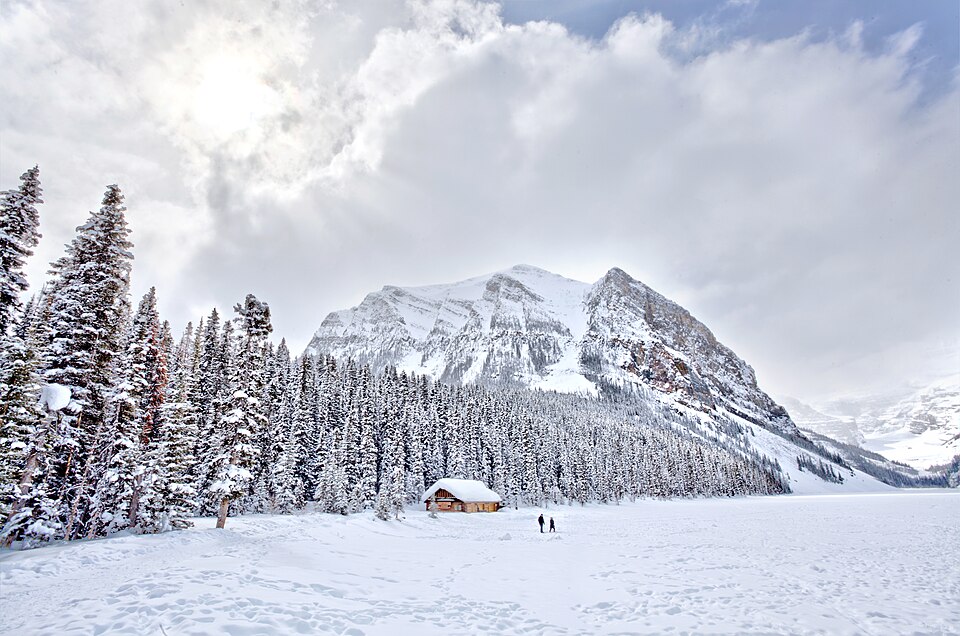
Snow changes the walk. Parks identifies avalanche exposure on this summer route and does not recommend travel from mid-October through mid-June. That is seasonal hazard guidance, not a statement that every date outside it is suitable or that every winter day has the same legal closure. Check the dated trail report, forecast and current bulletins. An old photograph or open highway does not describe the trail above Moraine Lake.
Do not turn a summer colour trip into a snow-season hike simply because you own traction equipment. Use Parks’ avalanche information and appropriate expertise for a separate snow-travel decision. A frontcountry alternative can be the more useful holiday plan.
Wildlife checks and group rules
Check notices for the named trail and your date, then obey signs at the trailhead. A bear warning, a group-size restriction and a closure have different meanings. This guide does not declare a standing four-person rule or confirm that no restriction exists; do not build the visit around meeting strangers at the start to satisfy an assumed rule.
Parks’ hiking preparation asks visitors to travel together, carry bear spray and know how to use it. Use the wildlife response guide and bear-spray preparation before the day. Equipment is useful preparation, not a reason to disregard a restriction or approach wildlife for a picture.
Pack for the whole return
- Weather: warm and weatherproof layers, gloves and eye protection for the actual forecast.
- Travel: suitable footwear, food, water, navigation, headlamp and emergency supplies for a delayed return.
- Communication: leave a trip plan and arrange an emergency method; phone coverage is not dependable across the park.
- Connections: keep the operator’s check-in and return instructions available without relying on a signal.
The packing checklist is a prompt to complete, not a competence assessment. The elevation guide separates named elevations from a personal health conclusion. For a mountain emergency call 911, identify Banff National Park and the exact location; Parks’ hiking page gives 403-762-4506 for a satellite phone. Learn the method before leaving.
Choose the stay and any guide separately
Compare the Lake Louise bases and frontcountry stay shortlist using the actual transport departure. A lakeshore room, village room and ski-area location create different connections. Keep dinner and the next day flexible after the walk.
The retained Expedia Banff accommodation search and GetYourGuide Banff activity results are affiliate links; BanffBound may earn a commission. They are broad searches for the wider trip, not a Lake Louise room offer or a verified guided Larch Valley product. A hotel search does not reserve Moraine access.
If arranging a guided outing, obtain the actual endpoint, participant requirements, pickup, Moraine access, return, equipment and cancellation terms in writing. Confirm what happens if weather or restrictions change the hike. A guide booking should make those arrangements clearer; a general catalogue link does not establish them.
Larch Valley questions
How long is the Larch Valley hike, and where do the figures end?
Parks Canada’s Larch Valley / Minnestimma Lakes profile is 4.5 km one way from Moraine Lake, with 570 m of outward gain and 10 m of outward loss. Its summer estimated return time is 3.5–4 hours and its grade is Moderate. These figures end at the valley/lakes destination, not Sentinel Pass, and exclude the journey to Moraine Lake.
Do I have to continue to Sentinel Pass to see the larches?
No. Larch Valley / Minnestimma Lakes is a separate destination. The Sentinel Pass profile continues farther, is graded Difficult and includes the shared valley approach. Choose the endpoint before leaving and retain the option to turn back sooner; the pass is not a compulsory finish.
Can I drive to the trailhead or use a Lake Louise bus?
Moraine Lake Road is closed to personal vehicles year-round. Arrange an authorised seasonal option and its actual return. A bus to Lake Louise Lakeshore is not arrival at Moraine Lake, and a Lake Connector needs its own valid access arrangement. Parks Canada’s regular shuttle check-in is at the ski-resort Park and Ride; Alpine Start has different instructions.
When will the larches be golden, and can I hike in winter?
Official tourism describes a broad late-September to early-October colour window, not a forecast for your date. Snow, wind and the location change the display. Parks Canada identifies avalanche exposure on this summer hiking route and does not recommend travel from mid-October through mid-June. Neither a colour calendar nor an open road establishes winter hiking suitability.
Is a four-person group always required, and is a guided tour included?
Read the current Parks notices for the exact trail and date; this guide does not establish a standing four-person requirement or the absence of a restriction. Travel together and follow any posted group rule. Independent transport, a hotel or an affiliate search does not include a hiking guide. A guided booking must identify its actual route, pickup, return, inclusions and terms.
Sources and review
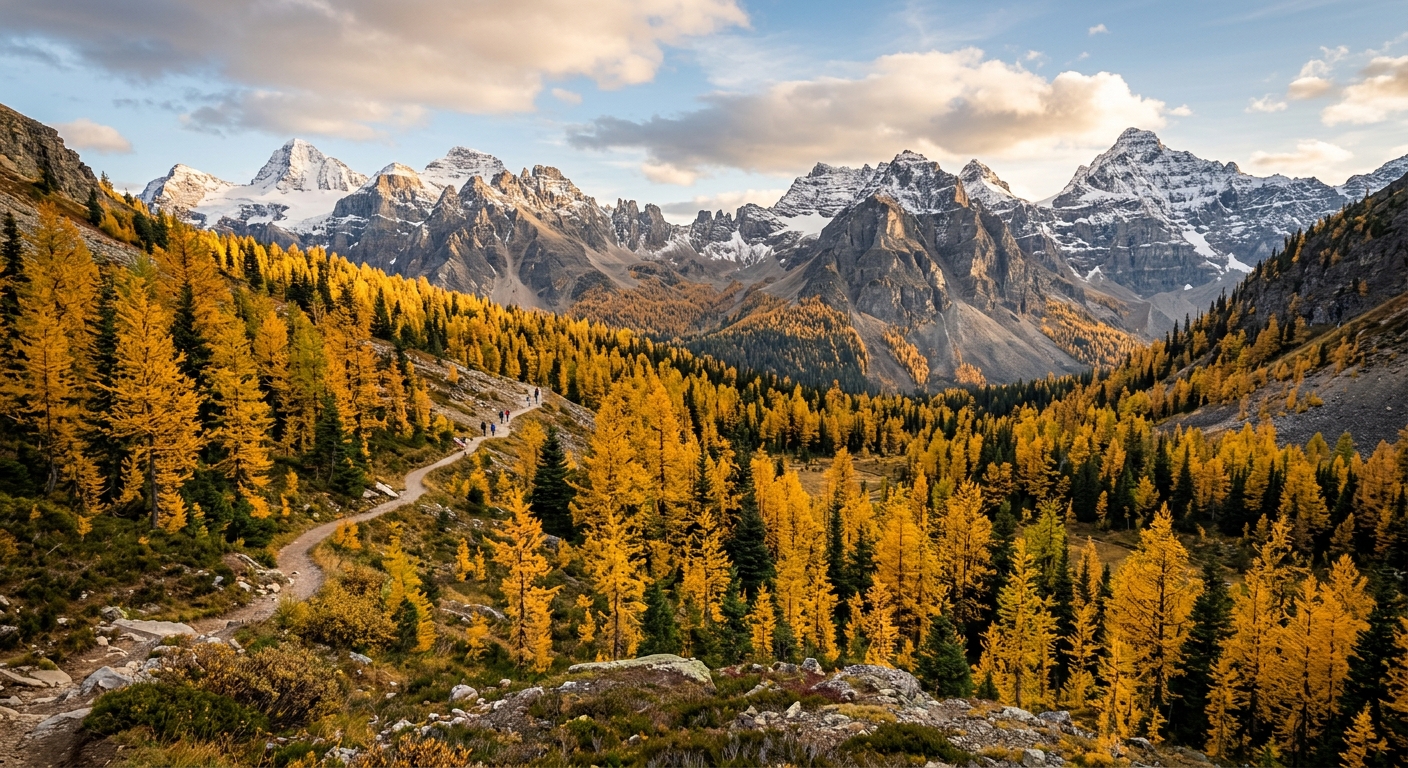
Full guide reviewed October 29, 2026. Parks Canada supplies the summer profile, lake-access rules and preparation guidance; official tourism supplies the broad autumn context. Current reports and notices must be checked for the visit. This is source-based planning, with no live foliage, shuttle or trail feed or invented personal visit. The retained hero is illustrative, not a verified image of this route or current conditions.
Enjoyed this guide? Get weekly Banff tips.