Sentinel Pass via Larch Valley is a pass hike from Moraine Lake, with a full descent back to the lake. Choose it for the longer mountain objective after considering the valley walk on its own. The steep upper switchbacks change the outing; the pass is neither a compulsory end to Larch Valley nor a summit scramble.
Full guide reviewed October 29, 2026. This guide covers the Moraine-side approach. The reviewed trail profile and current Parks summer description identify the route and endpoint; weather, access and the party’s readiness remain separate checks.
One profile from Moraine Lake to the pass
| Measure | Published basis |
|---|---|
| Distance | 5.6 km one way from Moraine Lake |
| Elevation | 750 m outward gain; 50 m outward loss |
| Time | 4.5–5.5 hours estimated return hiking time |
| Grade | Difficult |
| Trailhead | Moraine Lake; begin just beyond Moraine Lake Lodge |
The official detailed profile includes the approach through Larch Valley. The 5.6 km is not an extra distance beginning at the lakes, and the outward gain/loss are not the elevation of the pass above sea level. Do not combine old stage figures with this profile. Do not add the valley’s full distance again.
Difficult is the published summer grade. Compare the sustained climb, upper terrain, full descent and current surface with the least experienced participant. A shorter numerical time than another mountain route does not make this a suitable swap. Keep an earlier turnaround available and a complete return arrangement; no elapsed-time guarantee follows from the table.
Resolve the trailhead and the last return first
Moraine Lake Road is closed to personal vehicles year-round. Use Parks Canada’s actual access options to arrange authorised seasonal transport. Parks shuttles are one option; licensed commercial operators and registered lodge guests have their own arrangements. A room in Banff or Lake Louise does not automatically supply road access or the correct pickup.
Regular Parks shuttle check-in is at the Lake Louise Park and Ride at the ski resort. It is distinct from Lake Louise village, lakeshore and the trailhead at Moraine Lake. Alpine Start departs from the lakeshore under different instructions. For a Roam journey, verify the actual pass and seasonal connector before treating a bus to Lake Louise as a completed Moraine connection.
Parks’ published 2026 Moraine shuttle season ended October 12. No future launch date, departure or return is inferred from it. Follow the official reservation route for the year you intend to travel, and use the transport planning guide to compare the products.
Work backwards from the confirmed last usable departure, including the complete descent, pickup location and any onward bus. Then allow the approach, climbing, breaks and decision time. The first shuttle does not by itself make the pass feasible or remove weather concerns. If the connections do not leave the required margin, choose another outing rather than extending the operator’s timetable in your plan.
Treat the valley as a deliberate decision point
The signed route beyond Moraine Lake Lodge climbs towards the Larch Valley/Minnestimma Lakes area. Use the current map and signs, keeping to the designated trail. Pace the approach so the party still has resources for the upper section and return, rather than measuring progress only against the fastest walker.
Larch Valley is a separate Moderate destination with its own profile, explained in the valley guide. Decide before the day whether it is your preferred endpoint or an earlier turnaround for a pass plan. A valley destination leaves more time for the forest, lakes and full return, with a different amount of walking from the pass outing.
At a suitable stop, check the actual remaining route, surface, weather, time and how the whole party is managing. These checks are more useful than the promise that the hardest section is a particular number of metres. A saved photograph, a completed forest climb or other hikers continuing does not make the pass the right next step.
The upper switchbacks lead to a pass, not a peak
Parks describes steep switchbacks to the high point between Larch Valley and Paradise Valley. Stay on the established line and leave room for other walkers. Avoid cutting bends or moving onto loose ground to overtake or improve a picture. Plan around what is underfoot, not a fixed claim that the route will be dry or clear in a certain month.
The pass is the objective covered here. Mount Temple and Pinnacle Mountain are separate mountaineering objectives, and no summit instructions are supplied. Do not continue onto adjacent terrain because it looks close on a map or because the hiking trail reaches a high point.
A brief pause at the pass still needs a complete descent. Put warm and weatherproof layers where you can reach them without unpacking the whole bag. Treat photographs as optional, use established standing places and avoid obstructing the route. Visibility and a scenic view cannot be reserved with the transport.
Plan the descent; keep Paradise Valley separate
Return by the Moraine-side approach you planned unless a different full journey has been independently assessed and arranged. Descending can take concentration and may be slower than the party expects. Reassess before fatigue, weather or a connection removes the margin; communicate a change while there is still time to act on it.
A crossing into Paradise Valley is not included. Parks publishes Sentinel Pass from Paradise Valley as a different route and notes route-finding on steep rocky slopes, with limited trailhead transit. It is not an equivalent exit from this outing or a casual bypass when Moraine seats are sold out. Do not improvise a through route based on seeing the valley from the pass.
The larch comparison tool keeps the two Moraine-side endpoints distinct. For a completely different outing, compare reviewed trail profiles or keep a flexible day from the outing chooser. Another route needs its own access, demands and return; it is not automatically suitable because it is shorter.
Season, larch colour and avalanche exposure
The profile above is a summer hiking profile. Parks identifies avalanche exposure and does not recommend travel from mid-October through mid-June. The calendar is not an opening notice, and a date outside that period is not a terrain approval. Snow, ice, wind and visibility can materially change the upper section and return.
Read the dated trail report, current bulletins and avalanche information when planning. A traction device, ice axe or a guided product listing is not a substitute for the appropriate skills and route assessment. This guide does not provide a winter approach or snow-travel approval.
If larches motivate the trip, official tourism describes late September to early October as a broad colour window. That is not a pass-specific forecast. Larch Valley can supply the intended forest outing without continuing higher; choose the trip for what you will enjoy if the colour or visibility differs.
Prepare the group, equipment and communication
Use the least experienced person’s requirements when discussing this Difficult hike. An age label, fitness claim or a resort ability category does not assess the whole party on a mountain trail. If someone needs route leadership or lacks the relevant experience, discuss the actual outing with a qualified guide before booking dependent travel.
- Supplies: carry food, water, navigation, suitable footwear, warm/weatherproof clothing and a headlamp for the whole day and a delay.
- Wildlife: read the actual trail notices and obey group-size rules or closures in force. This page establishes neither a permanent four-person rule nor an unrestricted trail.
- Preparation: follow Parks’ bear-spray and emergency-equipment guidance and know how to use what you carry.
- Communication: leave a trip plan, keep return instructions available offline and learn the emergency method before leaving.
Use the packing prompts, wildlife guidance and bear-spray guide to prepare. The elevation guide explains why a number is not a personal risk score. For a mountain emergency call 911 and identify Banff National Park and the exact location; Parks’ hiking guidance gives 403-762-4506 for a satellite phone. Cell coverage is unreliable.
Book the actual route and the wider stay
A guided valley outing and a guided pass outing may have different participant requirements, times and contingency plans. Before paying, ask for the written endpoint, pickup/drop-off, Moraine access, park admission, equipment, food, participant requirements and cancellation terms. Confirm who decides the weather alternative and how it changes the product or charges.
The retained GetYourGuide Banff activity search is an affiliate link; BanffBound may earn a commission. It is a general catalogue, not a verified Sentinel Pass offer or confirmation that a guide handles all logistics. Use the selected provider’s exact written itinerary, not the search label, to decide.
For the surrounding stay, compare the Lake Louise bases and frontcountry accommodation options. Match the room to the actual transport departure and leave the post-hike evening flexible. Those accommodation comparisons contain disclosed affiliate links; they do not reserve a guide, Moraine access or a particular pass outing.
Sentinel Pass questions
What are the current Sentinel Pass via Larch Valley figures?
Parks Canada publishes 5.6 km one way from Moraine Lake, 750 m of outward gain, 50 m of outward loss and a 4.5–5.5-hour estimated summer return for Sentinel Pass via Larch Valley. The grade is Difficult. The approach through Larch Valley is already included; do not add the valley’s full distance again.
Is Sentinel Pass a summit or a route through Paradise Valley?
This guide covers the pass reached from Moraine Lake and a planned return by the same approach. It does not include Mount Temple, Pinnacle Mountain or a crossing into Paradise Valley. The Paradise-side approach is a different route with its own demands, route-finding and transport; it is not a casual workaround for a sold-out Moraine shuttle.
What if I prefer to stop in Larch Valley?
Choose Larch Valley / Minnestimma Lakes as the main destination if that is the outing you want. It has its own Moderate profile and lower total commitment than the Difficult pass profile. Turning back earlier can also be the appropriate decision during a planned pass day; current conditions, the group and the complete return determine the plan.
Does an early shuttle or summer date make the pass suitable?
No. Confirm the actual transport, return and current trail conditions separately. Parks identifies avalanche exposure and does not recommend this summer route from mid-October through mid-June. Snow or ice changes the route; buying a seat, carrying equipment or selecting a calendar month does not assess the group or approve the terrain.
What must I check before paying for a guided Sentinel Pass outing?
Obtain the actual written itinerary: whether Sentinel Pass or Larch Valley is the endpoint, each participant’s requirements, pickup and drop-off, Moraine access, equipment, park admission, cancellation and weather alternatives. A general Banff activity search does not establish a Sentinel Pass product, transport, availability or a guide booking.
Sources and review
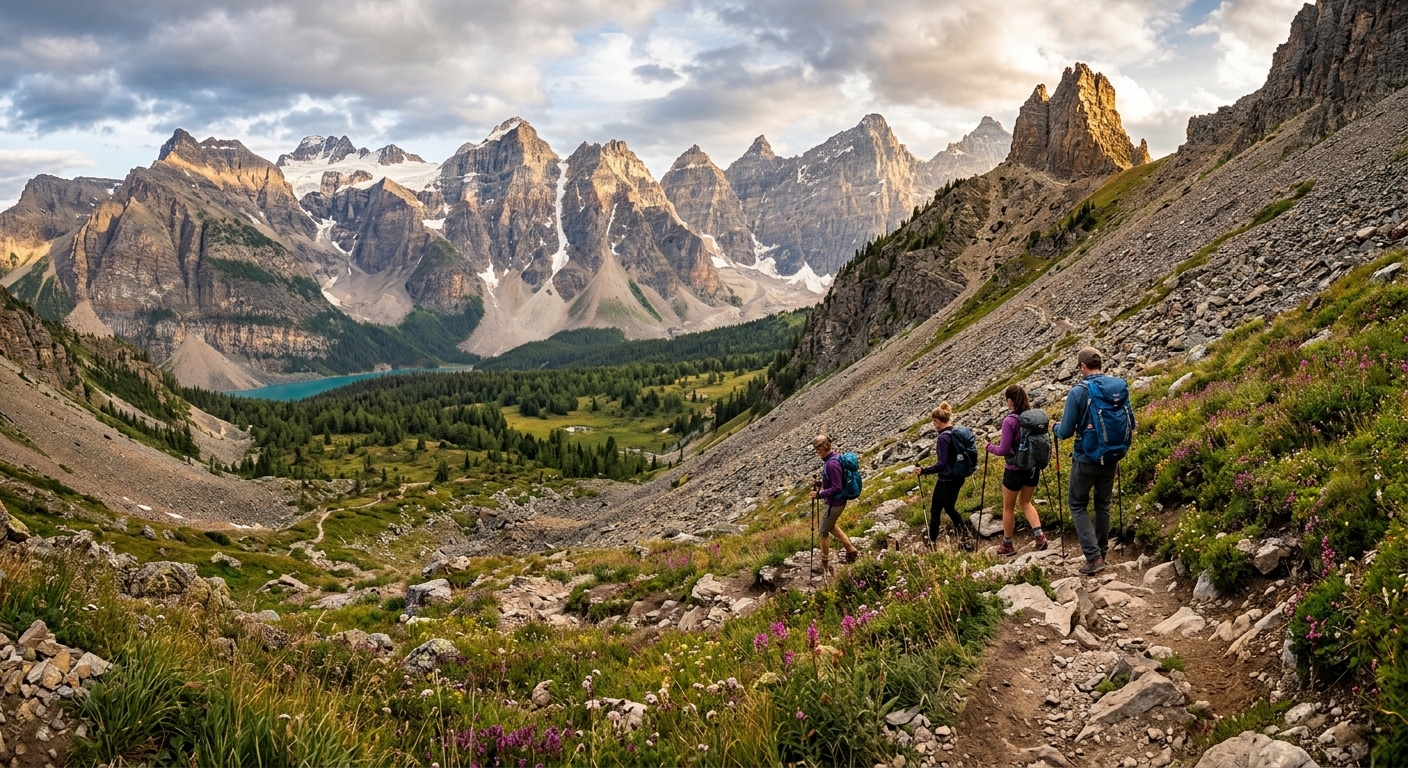
Full guide reviewed October 29, 2026. Primary Parks sources establish the named summer profile, access framework and preparation context. Tourism supplies broad colour-season context. Current report and bulletin retrievals did not establish an open trail or absence of restrictions, and no such outcome is inferred here. The retained hero is illustrative, not a verified image of Sentinel Pass, the route or current conditions.
Enjoyed this guide? Get weekly Banff tips.