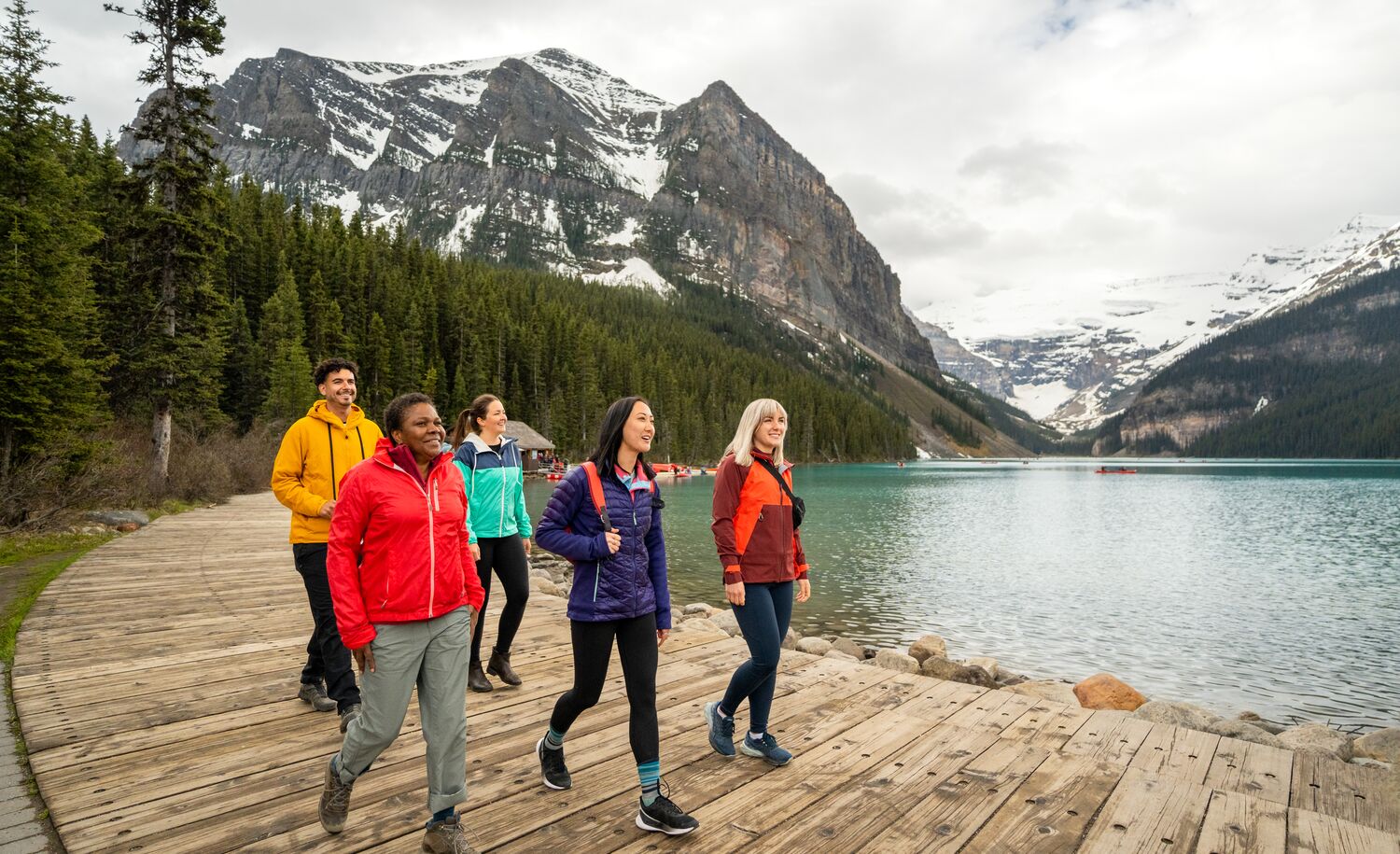
Choose a lake rental, an independent paddle or a guided river trip, then plan the access, equipment and return for that particular outing.
Source review: October 29, 2026. This is a planning guide, not a live operating report.
Check the waterbody before bringing a boat
Banff’s current water activity zones govern where personal craft may go. Moraine Lake permits only its on-site rental craft that remain there. Personal paddling is also prohibited at Bow Lake. Lake Minnewanka has separate restrictions that prohibit personal paddlecraft. A rule for Lake Louise or Two Jack does not apply to the next lake.
For permitted personal craft and gear, clean, drain, dry and carry the required self-certification permit. Parks currently specifies at least 48 hours drying after use within Alberta, BC, Yukon or Northwest Territories, and 30 days after use elsewhere. Read the current permit, including requirements when changing waterbodies. Do not plan a same-day tour of lakes with wet equipment or launch if you cannot meet the conditions.
Yoho has a different watercraft prohibition through March 31, 2027, with exceptions for Emerald Lake rental canoes and authorised commercial operators. Check replacement orders for later dates.
Compare lake outings
These places have different transport and water-use arrangements. None is a promise of warm water, calm conditions or available rentals.
Banff National Park, Alberta
Lake Louise
A lakeshore canoe outing is separate from a visit to Lake Louise village or the ski resort. The Chateau boathouse is at the lake; organise your lakeshore journey and return before adding a rental.
The Chateau publishes first-come rental arrangements and party limits. Its page currently says the boathouse is closed for the season, with a return planned for summer 2027. A transport ticket does not reserve a canoe.
Watercraft: Water Recreation Zone: personal craft require the current cleaning and self-certification conditions.
Choose this for an on-site canoe rental during the operator’s actual season, rather than a trip with your own boat or board. The lodge offers first-come rentals, subject to water level and weather; no advance canoe reservation is offered.
Moraine Lake Road is closed to personal vehicles year-round, with specific authorised exceptions. Arrange the appropriate seasonal transport and leave time for the return. The canoe season is narrower than the full visitor-transport season.
Watercraft: Water Preservation Zone: no personal watercraft. Only the permitted on-site rental craft that remain at Moraine Lake are an exception.
This is a separate journey into BC, not another stop on the Lake Louise–Moraine Lake Connector. The Boathouse Trading Co. near Emerald Lake Lodge supplies its own canoe rentals; confirm its operation and equipment for your date.
The current Yoho watercraft order runs through March 31, 2027. It prohibits personal watercraft, with exceptions for Emerald Lake rental canoes and authorised commercial operators. That end date does not establish the rules after it.
Watercraft: Do not bring your own SUP, kayak, inflatable or canoe under the current order.
Consider the lakes for a Banff-based water outing, with wetland scenery rather than an alpine-lake transport day. Choose a specific legal launch and return with a local outfitter; a rental in town does not establish access or permission everywhere.
If you intend to approach from the Bow River or Echo Creek, obtain the outfitter’s permitted route and return instructions. Do not improvise connections through channels, shore vegetation or private land.
Watercraft: Water Recreation Zone: cleaning and self-certification apply. Shallow water does not remove cold-water, wind or rescue demands.
A lake option for people bringing suitable equipment and a plan for launch, changing conditions and recovery. Two Jack and Lake Minnewanka have different watercraft rules despite being near one another.
Confirm legal shore access, current notices and how you will carry equipment before setting off. A scenic shoreline photograph is not a wind forecast or an assessment of the group’s ability.
Watercraft: Two Jack is in the Water Recreation Zone. Personal paddlecraft are prohibited at nearby Lake Minnewanka under its separate rules.
Another lake to compare for a canoe, kayak or SUP plan near Banff. Choose it on the basis of permitted access, your equipment and the day’s conditions; the lake’s smaller scale is not a beginner-safety rating.
Arrange transport and equipment separately. Ask about entry and exit, board or boat handling, suitable clothing and how everyone would recover after a capsize.
Watercraft: Water Recreation Zone: the same cleaning and self-certification duties apply to boards and paddling gear.
For the two alpine lakes, use Parks Canada’s access and shuttle guide. Check the exact destination, equipment rules and last return; a bus seat and a boat rental are separate arrangements.
Planning a stand-up paddleboard outing
Johnson Lake, Two Jack Lake and Vermilion Lakes are in the Water Recreation Zone. That designation permits an activity under the rules; it does not assess a paddler’s balance, rescue skills or the weather. Boards and related gear need the same cleaning and certification checks as other personal paddlecraft.
If you are learning, arrange instruction and discuss the specific venue with the provider. Before carrying a board to the water, establish a permitted entry and exit, equipment suited to that setting, flotation that fits, and a recovery plan for the whole group. Ask the instructor about board-specific rescue equipment and its use. Do not use an inflatable pool toy as river transport.
A sunny day or shallow shoreline does not make immersion harmless. Choose a shore-based day if wind, cold, visibility or the group’s preparation make the outing unsuitable. For snow-season plans, use the winter guide; these summer water outings are not winter lake-access instructions.
Choose the actual guided river product
A scenic float and a whitewater trip have different demands. Published ages and river grades below belong to the named product, checked October 29, 2026; confirm all requirements before paying.
Banff Adventures Hoodoo float • Banff, Alberta
Guided Bow River scenic float
This guided sightseeing product launches below Bow Falls, near the golf course. It is separate from town canoe rentals and from a whitewater trip. The published minimum age is 2; confirm equipment fit, mobility needs and eligibility with the provider.
Getting there: Use the confirmed raft departure point, not the shop address on Bear Street. The product includes a return shuttle to its base; this does not establish hotel pickup or transport between bundled activities.
Chinook describes its Kananaskis trip as Class 2–3 and publishes a minimum age of 5. This is guided whitewater, with different demands from a scenic float. Ask about the actual participants, current water levels and all eligibility conditions.
Getting there: Self-drive only: the operator’s river base is on Highway 1A near Nakoda Lodge. Follow its confirmed check-in directions; a Banff accommodation booking does not include this journey.
This is a separate Bow River whitewater product, not the Banff scenic float. Chinook lists Class 3–4 and a minimum age of 12. Compare the river demands and participation requirements rather than choosing from the river name alone.
Getting there: Self-drive only to Chinook’s Highway 1A base near Nakoda Lodge. Confirm the booked product, check-in, clothing and return arrangements directly.
Wild Water Adventures • Golden / Yoho area, British Columbia
Kicking Horse whitewater
Different river sections and products have different requirements. For example, Wild Water’s Whitewater Exciter publishes a minimum age of 12 and minimum weight of 90 lb (41 kg). Its milder Gentle product has separate rules; do not transfer these numbers between trips or operators.
Getting there: Trips meet at the River Base, 2750 Beaverfoot Road, Golden, BC. The Canmore administrative office is not the departure. An internal base-to-river shuttle does not mean a transfer from your Banff hotel.
Chinook’s pages currently say its 2026 season has finished and advertise 2027 plans. None of these listings establishes operation today. For Kicking Horse, also read Wild Water’s River Base directions. Confirm check-in time, actual meeting point, travel arrangements, equipment, cancellation terms and the party’s age, weight, health and mobility requirements. Ask the operator about swimming ability and participation demands; there is no universal rule across these trips.
Build a complete water day
Choose the format. A local rental needs a return deadline; an independent route needs appropriate skills, route information and a recovery plan; a guided trip needs the right product and check-in. Decide who can participate before choosing a departure.
Resolve the journey. Save the actual launch or river-base address and confirmation offline. Compare Banff, Lake Louise and Canmore bases, and plan the full return using the transport guide. Do not assume public transport will carry an inflated board, boat or all your gear.
Prepare for cold immersion. Parks warns that cold water can cause hypothermia even in summer. Wear a properly fitted PFD, select suitable clothing and rescue equipment, and carry dry layers, drinking water and a means of communication. Cell coverage may be unreliable. Agree on your plan with someone ashore.
Recheck before launching. Read Parks bulletins, the water rules, weather and the operator’s briefing. Wind, thunderstorms, water levels and ice change the decision; a morning start does not guarantee suitable conditions.
Protect the shoreline. Use permitted access, avoid disturbing wildlife and shoreline vegetation, and take rubbish and equipment away. Clean, drain and dry again after use. Keep photography secondary to boat control and the group’s needs.
Build spare time around the outing with the trip builder, and use the packing guide for the rest of the day. For a mixed group, settle the non-participants’ waiting location, facilities and return transport before separating.
Compare tours and accommodation
Use the direct operator links above to check the named products. A marketplace search can show different activities, locations or dates; inspect the actual listing and provider before booking.
These two search links are affiliate links. BanffBound may earn a commission. Results do not guarantee a particular trip, transport service, price or availability.