Northern Lights Viewing
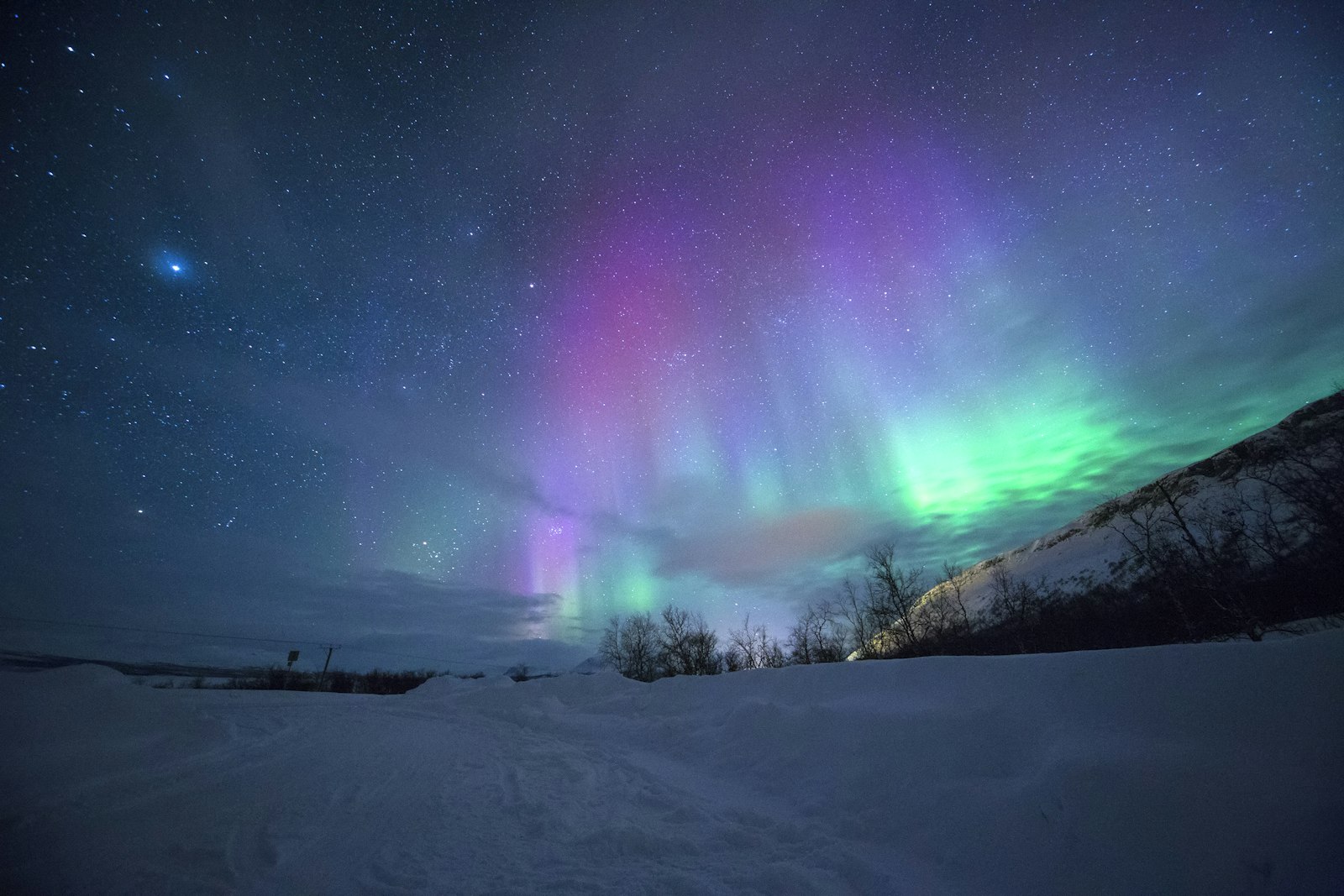
On clear dark nights, the aurora borealis occasionally dances above the Canadian Rockies in brilliant greens, purples, and pinks. Banff's northern latitude (51°N) and dark mountain skies create favourable conditions. Best viewing requires dark skies, clear weather, and elevated solar activity — but when conditions align, the show is absolutely breathtaking.
Where to Experience It
The best spots in and around Banff National Park for northern lights viewing.
📍 Vermilion Lakes
Just 5 minutes west of Banff townsite along Vermilion Lakes Drive. The open lakes provide an unobstructed view to the north — the direction you need to watch for auroras. The still water also creates beautiful reflections. Very accessible with roadside parking. One of Banff's most popular photography spots.
📍 Lake Minnewanka
Banff's largest lake, about 12 km from town. The wide-open shoreline provides expansive views of the northern sky. Much darker than spots closer to town, with minimal light pollution. The parking lot near the dam is the best viewing spot. Dress warmly — it's very exposed to wind.
📍 Two Jack Lake
Located near Lake Minnewanka, this smaller lake is a fantastic aurora viewing spot. The iconic Two Jack Lake viewpoint (with the small rock island) faces north perfectly. Less wind exposure than Minnewanka. Arrive early to claim a spot on busy aurora nights.
📍 Bow Valley Parkway (Highway 1A)
Several pullouts along the Bow Valley Parkway between Banff and Lake Louise offer dark skies away from town lights. Look for wide pullouts with northward views. The drive itself is atmospheric at night — keep watch for wildlife on the road.
Tips & What to Know
Essential advice for making the most of your northern lights viewing experience in Banff.
Check the aurora forecast at spaceweatherlive.com or use the My Aurora Forecast app. A Kp index of 4+ gives the best chances for Banff's latitude.
The aurora is most active between 10 PM and 2 AM. Be prepared for a late night in very cold temperatures.
Clear skies are essential — check Environment Canada weather forecasts and satellite cloud imagery before driving out.
Your camera can often capture aurora colours invisible to the naked eye. Use a tripod, ISO 1600–3200, and a 10–15 second exposure.
Even if the aurora isn't active, Banff's dark skies offer incredible stargazing. The Milky Way is clearly visible from these same locations.
Book Northern Lights Viewing Tours & Experiences
Browse top-rated tours and activities from trusted local operators.
Book Your Banff Stay
Plan the perfect trip — find great deals on hotels and lodges near Banff National Park.
Browse Banff Hotels on Expedia →