Banff Lakes FAQ
Frozen status, swimming safety, why they're blue, and everything else you need to know.
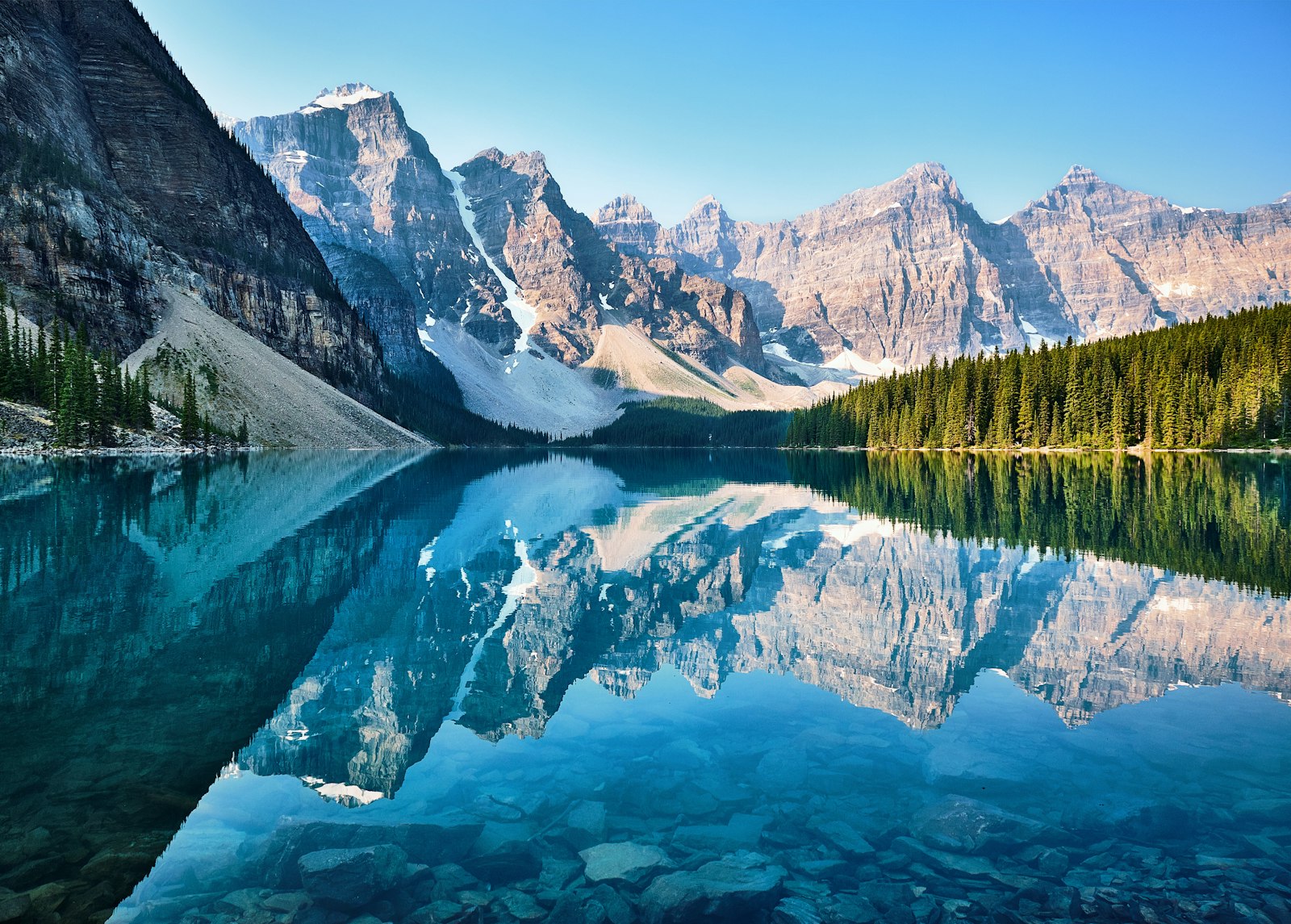
Why Are Banff's Lakes So Blue?
Short answer: rock flour — microscopic particles of glacial sediment.
As glaciers grind slowly against bedrock, they produce an incredibly fine powder (rock flour) that washes into the lakes via meltwater streams. These particles are the perfect size (0.002-0.05mm) to scatter blue and green wavelengths of sunlight while absorbing red wavelengths. The result is the intense turquoise colour.
Why some lakes are bluer than others: The concentration of rock flour varies. Peyto Lake has the highest concentration (fed by Peyto Glacier) and appears the most vivid. Lake Louise and Moraine Lake are fed by smaller glaciers and are slightly less saturated. Johnson Lake has no glacial input and appears green-brown.
Why the colour changes by season: Glacial melt peaks in July-August, flooding the lakes with fresh rock flour and producing the most intense colour. In early June the lakes may still be partially frozen and less vivid. By October, melt slows and the colour fades slightly.
Lake-by-Lake Guide
Lake Louise
Water temperature is 1-4°C even in August. Hypothermia risk in under 5 minutes. People canoe here — they do not swim.
🛶 $135/hour from Fairmont Chateau boathouse
📍 Vehicle or shuttle year-round. Parking fills by 7 AM in summer.
Moraine Lake
Even colder than Lake Louise (1-3°C). The lake is fed directly by glacial meltwater. Swimming would be dangerous.
🛶 $120/hour from Moraine Lake Lodge dock
📍 Shuttle only June-October. Road closed in winter.
Peyto Lake
No swimming access. The lake is viewed from a platform 250m above. No trail to the lakeshore.
📍 Icefields Parkway, 15-min walk from parking.
Lake Minnewanka
Legal to swim but extremely cold (8-12°C in August). Only for experienced cold-water swimmers. No lifeguards, no designated swim area.
📍 Vehicle year-round, 15 min from Banff.
Johnson Lake
The warmest swimmable lake near Banff (up to 18°C in August). Shallow sandy beach. Locals swim here. No lifeguards.
📍 Vehicle, off Lake Minnewanka Road.
Bow Lake
Glacial fed, 2-4°C. Not a swimming lake. Beautiful for photography.
📍 Icefields Parkway, roadside parking.
Vermilion Lakes
Shallow marshland, not suitable for swimming. Important wildlife habitat.
🛶 Bring your own. Calm, flat water ideal for beginners.
📍 Vehicle, 5 min from Banff.