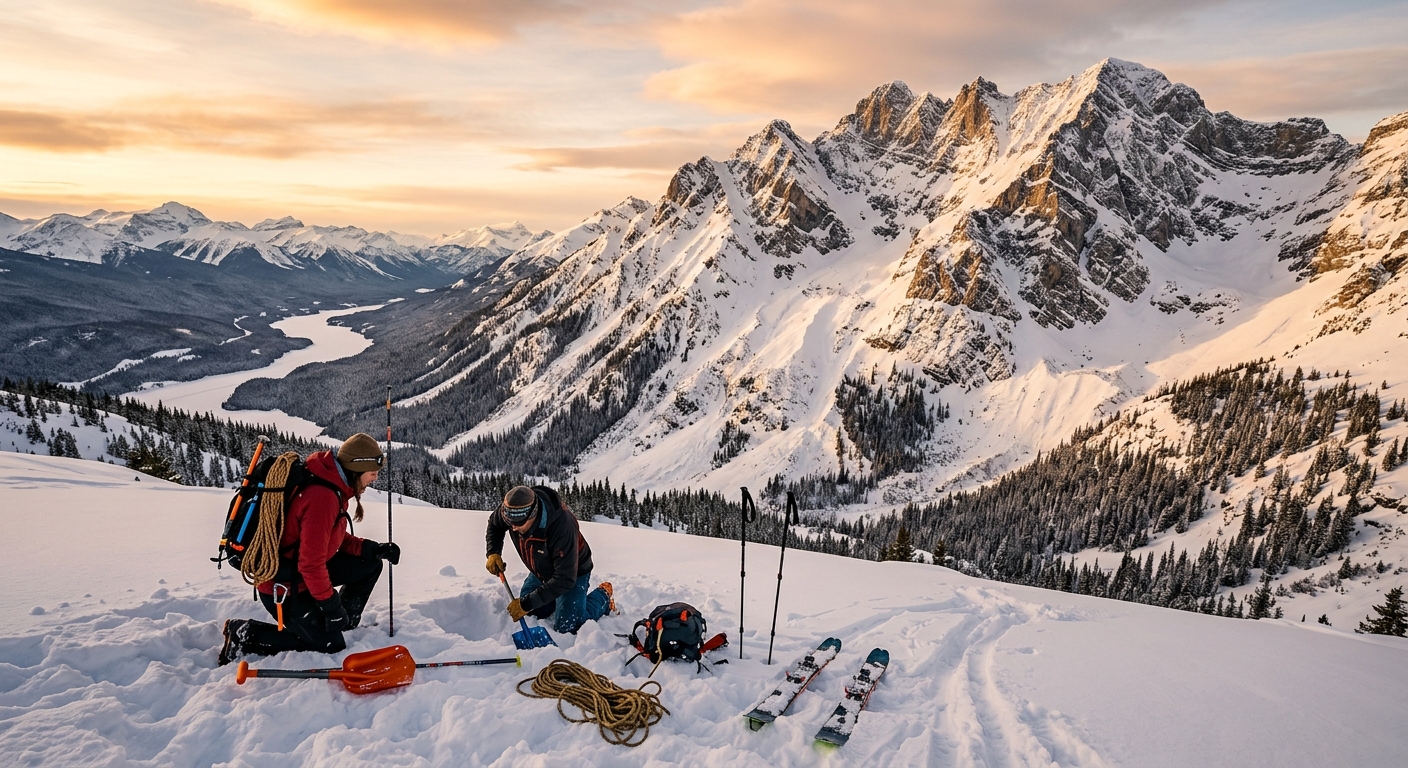
Avalanches are a real and serious hazard in Banff National Park, particularly from November through May. While most summer visitors won't encounter avalanche terrain, anyone venturing into the backcountry during winter or spring — for skiing, snowshoeing, ice climbing, or winter hiking — needs to understand avalanche basics. Even in summer, lingering snowpack on high passes can present risks in early season. Here's what every Banff visitor should know.
What Is an Avalanche?
An avalanche is a rapid flow of snow down a slope. They occur when the snowpack becomes unstable — when a weak layer within the snow can no longer support the weight above it. Avalanches can be triggered naturally (by wind, temperature changes, or new snow loading) or by human activity (a skier, snowshoer, or hiker crossing a loaded slope).
In the Canadian Rockies, avalanches kill several people each year and injure many more. The terrain around Banff — steep mountain slopes, heavy snowfall, and complex wind patterns — creates prime avalanche conditions throughout the winter season.
Avalanche Terrain: How to Recognize It
Avalanche terrain includes:
- Slopes between 25–45 degrees: This is the critical angle range. Steeper slopes may shed snow frequently in small amounts; shallower slopes don't generate enough force. The 30–40 degree range is the sweet spot for large, destructive avalanches
- Open slopes above treeline: Treeless mountain faces and bowls are classic avalanche paths
- Gullies and couloirs: Narrow channels funnel and concentrate avalanche debris
- Below cornices: Wind-formed snow ridges on mountain crests can collapse and trigger avalanches on the slope below
- Runout zones: The flat areas at the bottom of avalanche paths — avalanche debris can travel much further than you'd expect
Look for evidence of past avalanches: broken trees, debris fans at the base of slopes, paths where mature forest is missing on otherwise forested mountainsides.
Checking the Avalanche Forecast
Avalanche Canada publishes daily avalanche forecasts for the Banff-Yoho-Kootenay region throughout the winter season. The forecast includes:
- Danger rating: Low, Moderate, Considerable, High, or Extreme for each elevation band (alpine, treeline, below treeline)
- Problem types: What kind of avalanche problems exist (storm slab, wind slab, persistent slab, deep persistent slab, loose wet, cornices)
- Aspect and elevation: Which slope orientations and elevations are most dangerous
- Travel advice: Specific guidance on safe travel for the current conditions
Check avalanchecanada.ca before any winter backcountry trip. The forecast is updated daily by professional avalanche forecasters who analyse weather data, snowpack observations, and field reports.
Essential Avalanche Safety Equipment
Anyone travelling in avalanche terrain should carry the "three essentials":
- Avalanche transceiver (beacon): A device worn on your body that transmits a signal. If you're buried, rescuers switch their transceivers to search mode to locate you. Everyone in the group must carry one and know how to use it
- Probe: A collapsible pole used to pinpoint a buried victim's location after the transceiver narrows the search area
- Shovel: A compact, sturdy snow shovel for digging out a buried person. Avalanche debris sets like concrete within minutes — you cannot dig someone out with your hands
Having the equipment is not enough — you must practise with it regularly. An avalanche burial survival window is approximately 15 minutes before suffocation becomes likely. Your group must be able to locate and dig out a buried member within that time.
Avalanche Safety Training
If you plan to travel in avalanche terrain, take an Avalanche Skills Training (AST) course:
- AST 1: A two-day introductory course covering terrain recognition, forecast interpretation, basic rescue, and trip planning. This is the minimum for anyone entering avalanche terrain
- AST 2: An advanced course covering snowpack assessment, advanced decision-making, and complex terrain management
- Providers: Several guiding companies in Banff and Canmore offer AST courses throughout the winter season
Safe Winter Activities in Banff
Many winter activities in Banff are in avalanche-safe terrain:
- Valley-bottom trails: Johnston Canyon, Fenland, Bow River trails — all flat and away from avalanche paths
- Ski resorts: Sunshine Village, Lake Louise, and Norquay have professional avalanche control programs. Inbounds skiing is managed for avalanche safety
- Town trails: Tunnel Mountain and other trails near Banff town are in low-angle terrain
- Ice skating: Lake Louise, Vermilion Lakes, and Johnson Lake
Plan a safe winter trip to Banff — book accommodation on Expedia. Book guided winter activities and avalanche-safe tours on GetYourGuide.
Enjoyed this guide? Get weekly Banff tips.