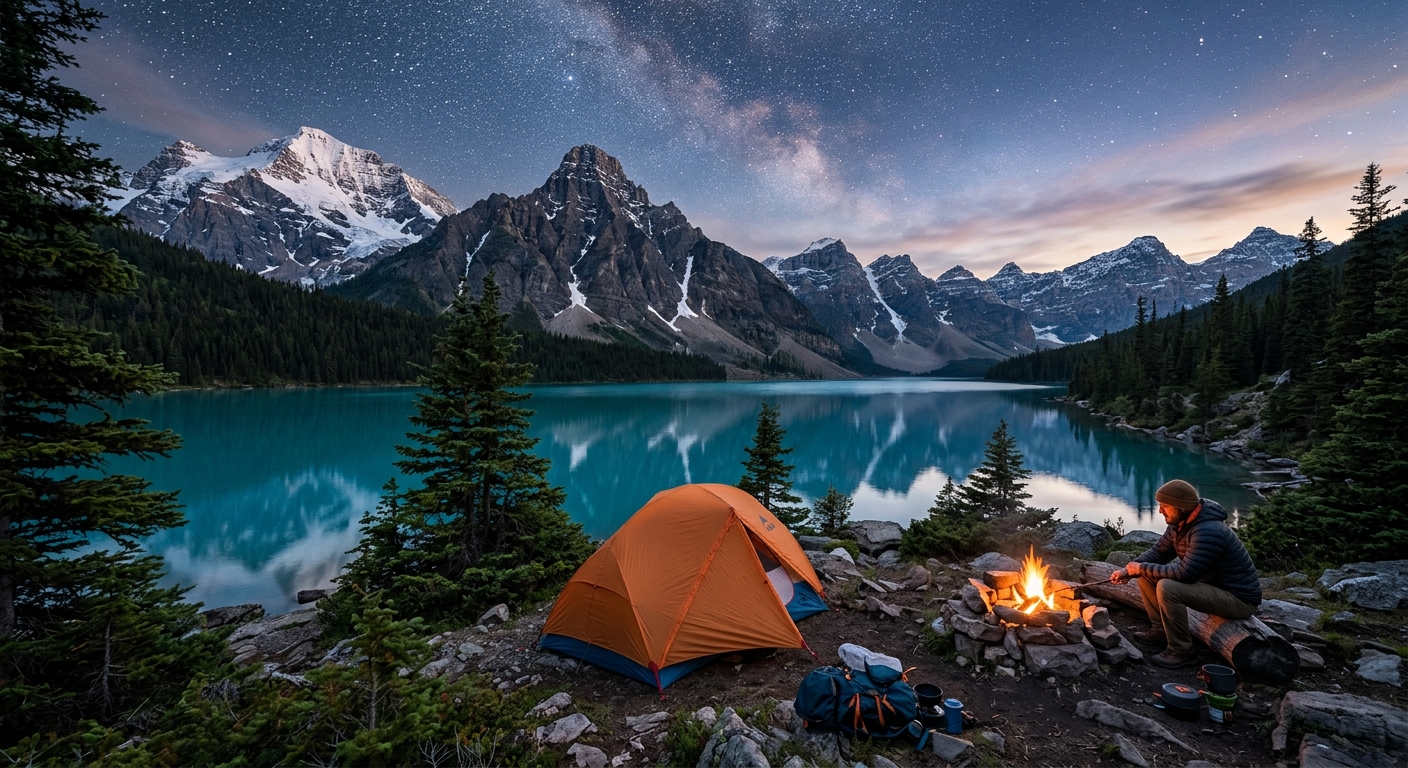
Backcountry camping in Banff means leaving the roads, the crowds, and the campground noise behind. It means sleeping beside an alpine lake, hearing wolves howl at midnight, and waking to mountain views that no hotel window can match. It also means carrying everything on your back, managing bear safety, and treating water from streams. Here's how to do it right.
The Permit System
All backcountry camping in Banff National Park requires a Wilderness Pass:
- Cost: $10.02 CAD per person per night
- How to book: Online through the Parks Canada reservation system or in person at the Banff Visitor Centre
- When to book: Reservations open in January for the following summer. Popular sites (Egypt Lake, Skoki) sell out fast
- What you get: A designated campsite with a cleared tent pad, a bear pole or bear-proof food cache, a pit toilet, and (at most sites) a nearby water source
- Maximum stay: Varies by site, typically 1–3 nights per trip
Best Backcountry Campsites
Egypt Lake
One of the most popular backcountry destinations in Banff, Egypt Lake sits in a beautiful alpine basin surrounded by towering peaks. The hike in from the Sunshine Village access road is approximately 12 km with 640 metres of elevation gain.
- Campsite: 18 tent pads with bear poles, pit toilet, and cooking area
- Shelter: A Parks Canada backcountry shelter is available (book separately)
- Day trips: From camp, explore Pharaoh Lake, Mummy Lake, Scarab Lake, and Whistling Pass — all within a few hours' hike
- Best time: Mid-July to mid-September when snow is clear
Skoki Area
The Skoki region, accessed from the Lake Louise ski area, is classic Canadian Rockies backcountry. Multiple campsites dot the area, and the historic Skoki Lodge offers an alternative to tent camping.
- Access: 11 km from the Lake Louise ski area via the Skoki trail
- Campsites: Several options including Baker Lake, Merlin Meadows, and Hidden Lake
- Terrain: Alpine meadows, mountain passes, and fresh lakes
- Wildlife: Grizzly bears, pikas, marmots, and mountain goats are all present
Mystic Pass & Johnston Creek
A multi-day loop route through the Mystic Pass area offers several backcountry campsites connected by well-maintained trails:
- Johnston Creek campground: 7.5 km from the Bow Valley Parkway. A good first-night stop
- Luellen Lake: A remote lake campsite accessible via Johnston Creek trail
- Mystic campground: Set in a meadow below Mystic Pass with mountain views in every direction
Cascade Amphitheatre
A dramatic alpine cirque below Cascade Mountain, accessed from the Mt. Norquay road. The campsite is 7.5 km from the trailhead with significant elevation gain. The reward: sleeping in a natural amphitheatre of rock with mountain goats as neighbours.
Essential Gear
- Tent: Lightweight 3-season tent (below 2 kg for solo, 2.5 kg for two-person). Must withstand mountain weather
- Sleeping system: Sleeping bag rated to at least -5°C for summer (colder for shoulder season). Sleeping pad with R-value 3+
- Cooking: Lightweight stove (no open fires at most backcountry sites), fuel, pot, and utensils. Bring food that's calorie-dense and lightweight (dehydrated meals, nuts, cheese, tortillas)
- Water treatment: Filter, UV purifier, or chemical treatment. All backcountry water must be treated
- Bear safety: Bear spray (carried on your body, not in your pack). Bear canister or use the provided bear poles/caches at campsites
- Navigation: Physical map and compass. Don't rely solely on phone GPS in the backcountry
- First aid kit: Including blister treatment, pain relief, and emergency supplies
Bear Safety in the Backcountry
- Cook at least 100 metres from your tent: Most backcountry sites have designated cooking areas away from sleeping areas
- Hang or store all food: Use the bear poles or bear-proof caches provided at the campsite. Never store food in your tent
- Scented items: Toothpaste, sunscreen, and deodorant should be stored with food — bears are attracted to any scent
- Make noise on the trail: Travel in groups and talk, clap, or use bear bells, especially near streams and in dense bush where visibility is limited
Leave No Trace
- Pack out ALL garbage, including food scraps and toilet paper
- Use established tent pads and cooking areas
- Wash dishes and bathe at least 70 metres from water sources
- Use the pit toilets provided (or dig a cathole 15 cm deep and 70 metres from water if no toilet is available)
- Don't cut trees, branches, or vegetation
Base your backcountry trip from Banff — book pre/post-trip accommodation on Expedia. Add guided hiking and wilderness tours if you prefer expert-led backcountry experiences.
Enjoyed this guide? Get weekly Banff tips.