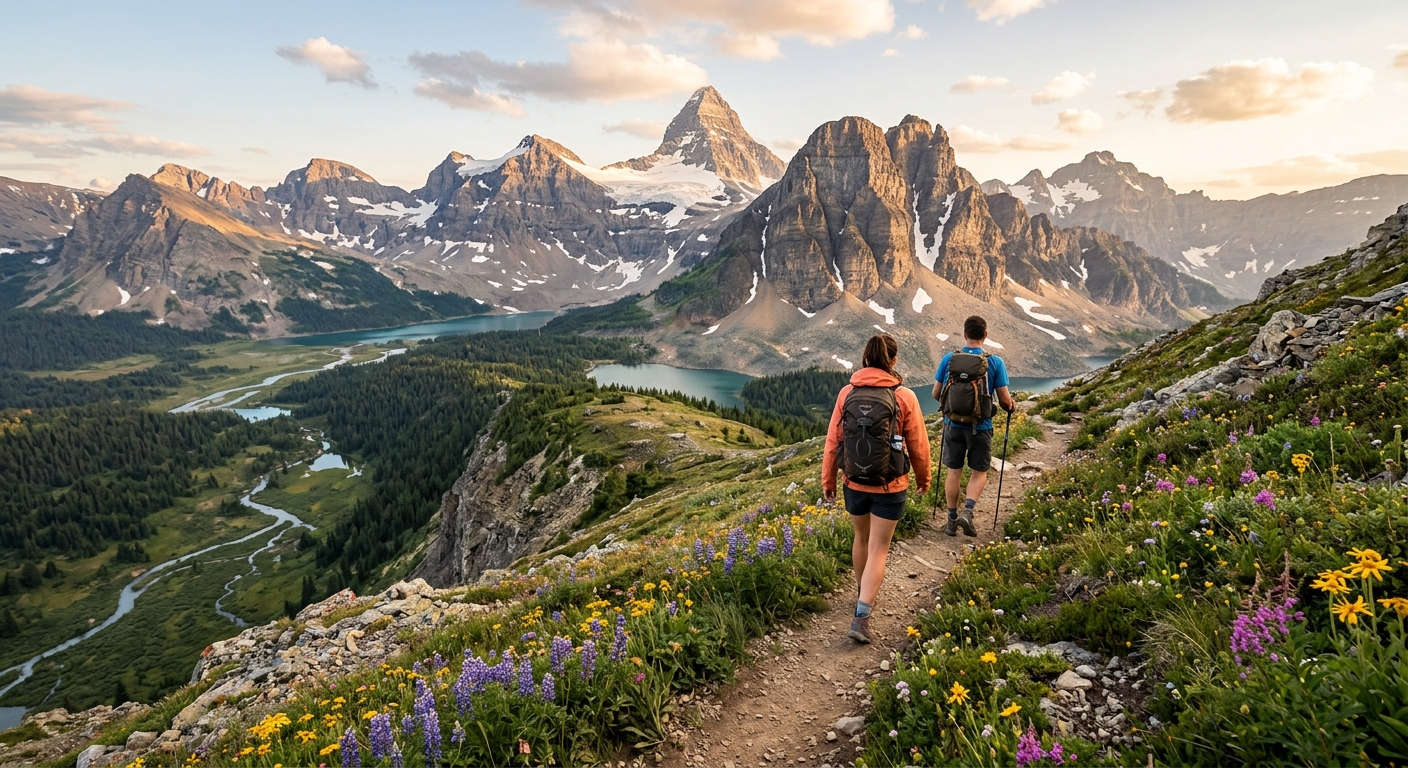
Beyond the popular front-country trails and day hikes, Banff's backcountry offers a world of remote wilderness, clean alpine lakes, wildflower meadows, and genuine solitude. Backcountry camping and multi-day hiking in Banff are exceptional experiences — but they require planning, preparation, and respect for the wilderness. Here's your complete guide.
What Is Backcountry Camping?
Backcountry camping in Banff means hiking to designated campgrounds deep in the wilderness, carrying all your gear, food, and water. There are no roads, no RV hookups, and no showers. What you get instead is silence, stars, wildlife encounters, and some of the most incredible scenery on Earth.
Permits & Reservations
A backcountry camping permit is required for all overnight stays in Banff's backcountry. Permits must be reserved in advance through Parks Canada.
- Cost: $10.50 per person per night
- Booking: Reserve at reservation.pc.gc.ca
- Reservations open: January for the upcoming summer season
- Popular routes sell out fast: Egypt Lake, Skoki, and others can book out within days of opening
A random camping permit is also available for experienced backcountry travellers camping away from designated sites, but is only available in specific zones. Contact Parks Canada for details.
Best Backcountry Routes
Egypt Lake (12.4 km one way, 2-3 days)
One of Banff's classic backcountry destinations. The trail crosses beautiful Healy Pass (2,330m) with panoramic views of the Massive Range before descending to Egypt Lake and its cluster of alpine lakes. A shelter and campground are available. From Egypt Lake, explore day-hike options to Pharaoh, Scarab, and Mummy Lakes.
Skoki Loop (32-40 km, 2-4 days)
Starting near Lake Louise Ski Resort, this loop passes through Boulder Pass, past untouched alpine lakes, through wildflower meadows, and to the historic Skoki Lodge — a backcountry ski touring lodge built in 1931 that serves meals and accommodation (book well in advance). The Skoki area is one of the most beautiful alpine regions in the Rockies.
Sawback Trail (74 km, 4-5 days)
A serious through-hike connecting Banff to Lake Louise through the Sawback Range. This challenging route crosses multiple passes, traverses remote valleys, and offers genuine wilderness solitude. For experienced backpackers only. Five designated campgrounds along the route.
Glacier Lake (9.1 km one way, overnight)
An easier backcountry option starting from the Icefields Parkway. The trail follows the Howse River through valley-bottom forest to Glacier Lake, a large, serene lake beneath towering peaks. The relatively gentle terrain makes this a good introduction to backcountry camping.
Fish Lakes (12 km one way, 2 days)
Accessed from the Icefields Parkway, this route leads to a pair of beautiful subalpine lakes in a remote valley. Less trafficked than Egypt Lake or Skoki, offering genuine solitude.
Essential Gear
- Tent: 3-season minimum, freestanding preferred for rocky tent pads
- Sleeping bag: Rated to -10°C or colder (mountain nights are cold, even in July)
- Sleeping pad: Insulated for warmth and comfort on tent pads
- Backpack: 50-70L for multi-day trips
- Stove & fuel: Fires may be prohibited. A lightweight backpacking stove is essential
- Water filter or purification: Treat all backcountry water
- Bear spray: Carry on your hip, not in your pack. Know how to use it
- Bear canister or hang kit: Food storage cables are provided at most designated campgrounds, but carry a canister as backup
- First aid kit: Including blister care, pain relief, and emergency supplies
- Navigation: Topo map, compass, and/or GPS device. Cell service is nonexistent in the backcountry
Campground Facilities
Designated backcountry campgrounds typically include:
- Cleared tent pads (hard ground, often rocky)
- Pit toilet
- Food storage cables or poles (bear hangs)
- Fire pit (some campgrounds — check your permit)
There is no running water, no electricity, and no garbage service. Pack out everything you bring in.
Safety Essentials
- Register your trip at the Parks Canada visitor centre and tell someone your itinerary
- Check trail conditions and weather forecasts before departure
- Travel in groups when possible — groups of 4+ are recommended in grizzly bear habitat
- Make noise on the trail to alert bears
- Store all food, toiletries, and scented items on bear hangs or in canisters
- Be prepared for weather changes — mountain conditions can shift rapidly
Enjoyed this guide? Get weekly Banff tips.