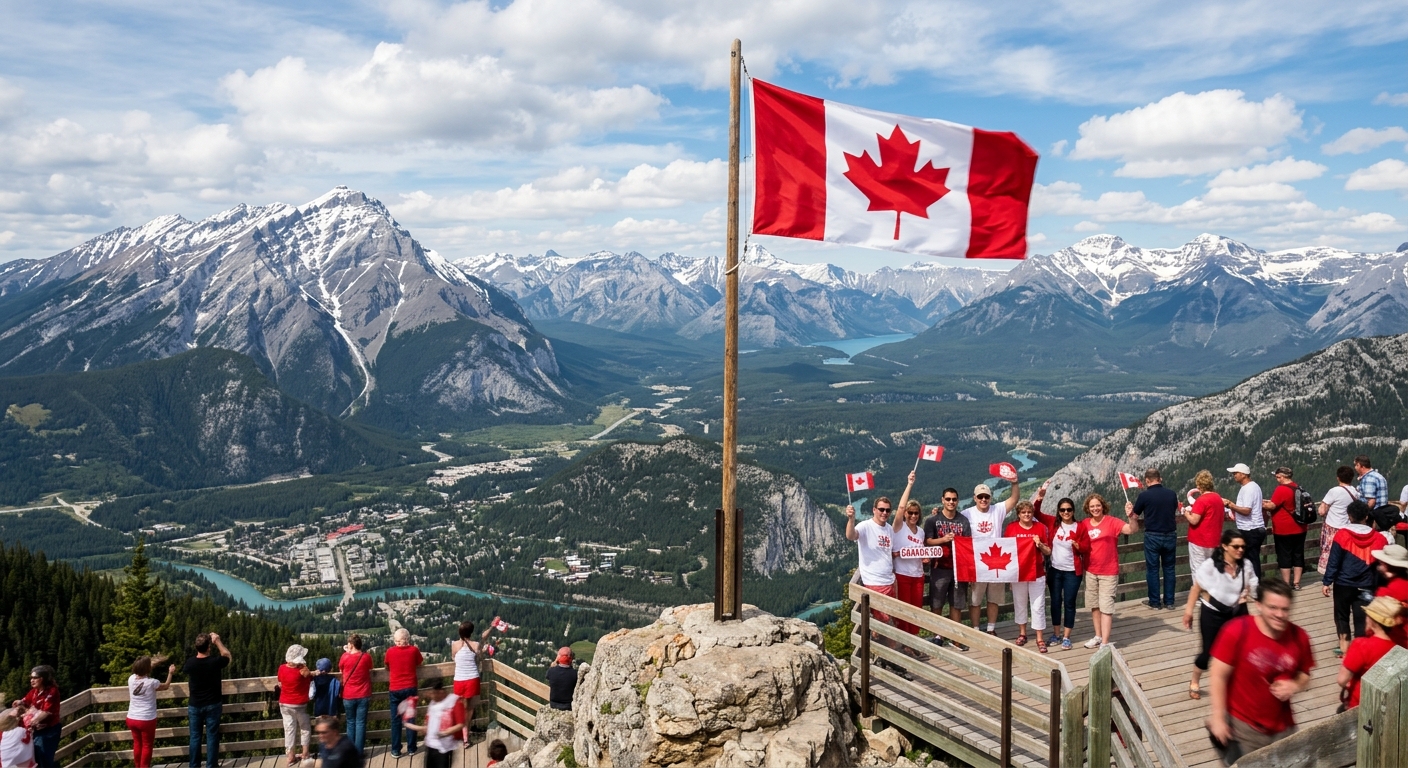
Banff National Park isn't just Canada's most visited national park — it's where the entire Canadian national park system began. Designated a UNESCO World Heritage Site as part of the Canadian Rocky Mountain Parks in 1984, Banff holds a unique place in global conservation history. Understanding why this park matters deepens every visit.
The Birth of Canada's National Parks
In 1883, three Canadian Pacific Railway workers stumbled upon a cave containing hot springs on the side of Sulphur Mountain. The discovery sparked a dispute over who owned the springs, and in 1885, the Canadian government intervened, setting aside a small area around the hot springs as a public reserve. Two years later, in 1887, the Rocky Mountains Park Act formally established what would become Banff National Park — making it Canada's first national park and the third national park in the world (after Yellowstone and Royal National Park in Australia).
UNESCO World Heritage Designation
In 1984, UNESCO designated the Canadian Rocky Mountain Parks — including Banff, Jasper, Kootenay, and Yoho national parks, along with three BC provincial parks — as a World Heritage Site. The designation recognizes:
- Outstanding natural beauty: Mountain landscapes, glacial lakes, canyons, and waterfalls of exceptional scenic quality
- Geological significance: The Burgess Shale fossil beds (in Yoho) contain some of the world's most important fossils from the Cambrian period, over 500 million years old
- Ecological importance: The parks protect a vast, largely intact mountain ecosystem spanning multiple ecological zones
- Glacial features: The Columbia Icefield and hundreds of smaller glaciers represent a globally significant repository of freshwater
The Cave and Basin: Where It All Started
The Cave and Basin National Historic Site in Banff is the birthplace of Canada's national park system. Today, you can visit the original cave, walk through the restored 1914 bathhouse, and learn the story of how a hot springs dispute led to one of the world's great conservation systems. The site also tells the often-overlooked stories of the Indigenous peoples who used these springs for thousands of years before European arrival.
What to See
- The cave: Walk into the original cavern where the hot springs were discovered. Steam rises from warm water in a natural rock basin
- Interactive exhibits: The story of the park's creation, the railway's role, and the evolution of conservation in Canada
- Banff Snail: The hot springs are home to the Banff Springs Snail, one of the world's most endangered species. Tiny, translucent, and found nowhere else on Earth
- Outdoor boardwalk: A short walk through warm-water marshes fed by the springs, with interpretive signs
Indigenous Heritage
Long before European arrival, the Bow Valley was home to Indigenous peoples. The Stoney Nakoda, Blackfoot (Siksika, Piikani, Kainai), Tsuut'ina, and Ktunaxa nations all have deep connections to this land. The hot springs, mountains, and valleys held spiritual, medicinal, and practical significance for thousands of years.
The creation of the national park displaced Indigenous peoples from their traditional territories — a history that Parks Canada has increasingly acknowledged. Look for Indigenous interpretive programs, cultural events, and place-name signage that honours the original stewards of this land.
Why Banff's Heritage Matters Today
Banff's legacy extends far beyond its borders:
- Conservation model: The Canadian national park system, which grew from Banff, now protects over 340,000 square kilometres across the country
- Global influence: Canada's park model influenced national park systems worldwide, from Africa to Southeast Asia
- Wildlife corridors: Banff pioneered the use of wildlife overpasses and underpasses on the Trans-Canada Highway — a model now replicated globally
- Balancing access and protection: Banff continues to grapple with the tension between welcoming millions of visitors and protecting fragile ecosystems — a challenge that defines modern conservation
Heritage Sites to Visit
- Cave and Basin National Historic Site: The birthplace of Canada's parks system
- Banff Park Museum: A beautiful 1903 log building housing natural history specimens collected over a century ago — one of the oldest natural history museums in Western Canada
- Whyte Museum of the Canadian Rockies: Art, photography, and archives documenting the human history of the Rockies
- Fairmont Banff Springs Hotel: Built by the CPR in 1888, this castle-like hotel is a National Historic Site and an icon of Canada's railway era
- Bankhead Ghost Town: The remains of a coal mining town that operated from 1903 to 1922, now a short interpretive trail near Lake Minnewanka
Immerse yourself in Banff's heritage — book your stay on Expedia. Explore heritage tours and guided cultural experiences in Banff.
Enjoyed this guide? Get weekly Banff tips.