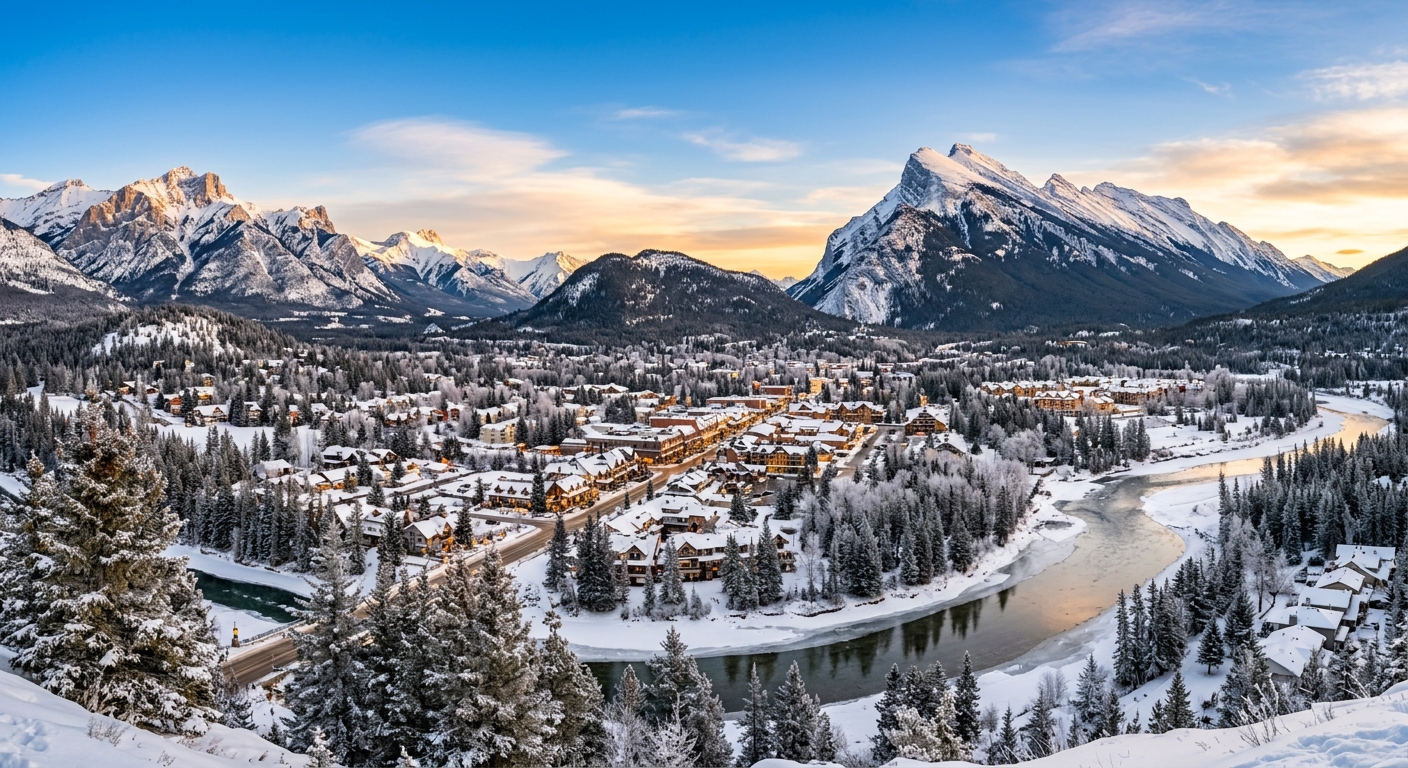
If you've ever seen the temperature in the Canadian Rockies jump from -20°C to +10°C in a matter of hours, you've experienced a Chinook wind — one of the most remarkable weather phenomena in North America. These warm, dry winds are a defining feature of life along the eastern slopes of the Rockies, and they have a profound effect on conditions in Banff and the surrounding region.
What Are Chinook Winds?
Chinook winds (pronounced "shin-OOK") are warm, dry winds that occur on the eastern (lee) side of the Rocky Mountains. The name comes from the Chinook people of the Pacific Northwest. In Alberta, they're sometimes called "snow eaters" because they can melt substantial snowpack in hours.
How They Form
The process is fascinating atmospheric science:
- Moist Pacific air flows eastward from the ocean toward the Rockies
- As the air rises over the mountain barrier, it cools and drops its moisture as rain or snow on the western slopes
- The now-dry air descends rapidly on the eastern side of the mountains
- As it descends, it compresses and warms dramatically — roughly 1°C per 100 metres of descent
- By the time the air reaches the foothills and plains, it can be 20–30°C warmer than the air it displaces
The Chinook Arch
One of the most distinctive visual signs of an approaching Chinook is the "Chinook arch" — a dramatic band of clear blue sky along the western horizon, arching over the Rocky Mountains like a dome. Below the arch, clouds often form a sharp, straight line. When locals see the Chinook arch, they know warmth is coming.
Effects on Banff
Chinooks have significant effects on winter conditions in and around Banff:
- Temperature swings: Temperatures can rise 20–30°C within hours. The most extreme recorded swing was 41°C in under 24 hours in nearby Pincher Creek
- Snow melt: A strong Chinook can melt 30cm of snow in a single day. Roads and trails that were buried can become bare overnight
- Skiing impact: Chinooks can damage ski conditions at lower elevations. Higher resorts like Sunshine Village (2,160m base) are less affected
- Ice conditions: Rapid temperature changes can create dangerous ice on roads as meltwater refreezes when the Chinook passes
When Do Chinooks Occur?
- Season: Most common November through March, though they can occur any time of year
- Frequency: Southern Alberta may experience 20–30 Chinook events per winter. Banff, being in the mountains, gets fewer but still significant events
- Duration: A Chinook can last from a few hours to several days
Chinooks and Health
Many Albertans report that Chinook winds trigger headaches, migraines, and mood changes. While scientific evidence is mixed, the rapid pressure changes associated with Chinooks are measurable and could plausibly affect sensitive individuals. Locals who are prone to Chinook headaches often monitor barometric pressure closely during winter.
Chinooks and Wildlife
Chinooks play an important ecological role in the Rockies:
- Winter grazing: By clearing snow from valleys, Chinooks expose grass and vegetation that elk, deer, and bighorn sheep need to survive winter
- Historical importance: Indigenous peoples and early ranchers relied on Chinook-exposed valleys for winter grazing of horses and cattle
- Avalanche risk: Rapid warming can destabilize snowpack, increasing avalanche danger in the mountains
Experiencing a Chinook as a Visitor
If you're visiting Banff and a Chinook arrives:
- Enjoy it: An unexpected warm day in winter is a gift. Walk the town, sit on a patio, hike low-elevation trails
- Be cautious driving: Roads can be icy as meltwater refreezes, especially in the evening as temperatures drop again
- Check ski conditions: Call the resorts for current snow conditions if skiing is your plan
- Watch for the arch: The Chinook arch over the mountains is a truly beautiful sight — photograph it from open areas east of Banff
Experience the unique weather of the Canadian Rockies — book your Banff stay on Expedia. Add guided tours and activities for whatever weather the Rockies offer.
Enjoyed this guide? Get weekly Banff tips.