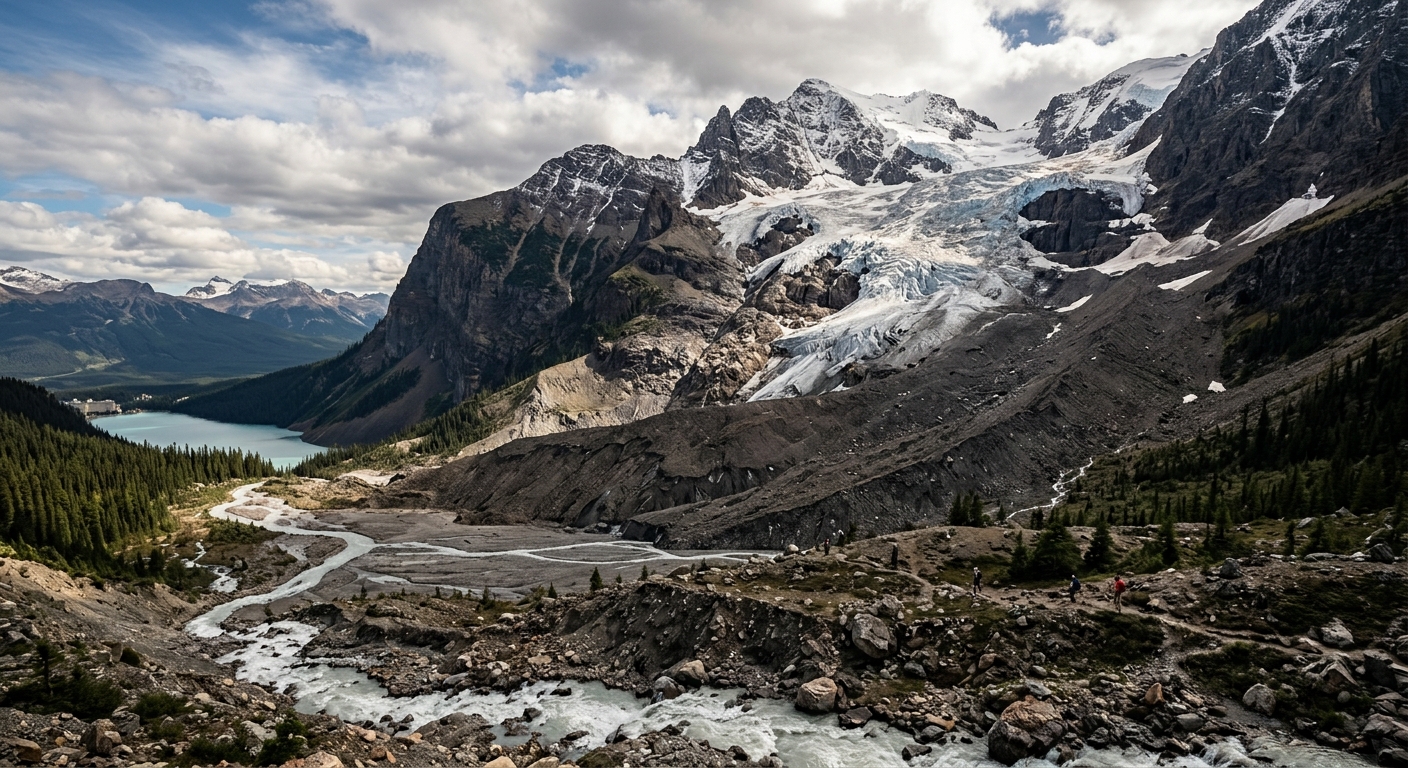
Banff National Park is one of the most visible places on Earth to witness climate change in action. The park's glaciers are retreating, its ecosystems are shifting, and the landscape that millions visit each year is changing in real time. Understanding these changes doesn't diminish the beauty of Banff — it makes every visit more meaningful and more urgent.
Glacier Retreat
The most dramatic evidence of climate change in Banff is the retreat of its glaciers. The park and surrounding areas contain hundreds of glaciers, and virtually all of them are shrinking.
The Columbia Icefield
The Columbia Icefield, visible from the Icefields Parkway, is the largest icefield in the Canadian Rockies. It feeds eight major glaciers, including the Athabasca Glacier — one of the most accessible glaciers in North America. Since the late 1800s, the Athabasca Glacier has retreated over 1.5 kilometres and lost more than half its volume. Markers along the access road show where the glacier's toe stood in previous decades — the retreat is shocking when visualised this way.
Peyto Glacier
Peyto Glacier, which feeds the iconic turquoise Peyto Lake, has lost approximately 70% of its area since 1896. Scientists project it could disappear entirely within the next few decades. When it does, the lake's distinctive colour — caused by glacial rock flour suspended in meltwater — will fade.
Bow Glacier
The Bow Glacier, source of the Bow River that flows through Banff and Calgary, has retreated dramatically. Reduced glacial meltwater affects river flows downstream, impacting ecosystems, agriculture, and municipal water supplies for millions of people.
Temperature Changes
The Canadian Rockies are warming faster than the global average:
- Average temperatures in the region have risen approximately 2°C since the early 1900s
- Winter temperatures have increased more than summer temperatures
- The frost-free season has lengthened by several weeks
- Snowpack is declining, with less snow accumulating in winter and melting earlier in spring
Ecosystem Shifts
Warming temperatures are reshaping Banff's ecosystems in ways both subtle and dramatic:
Treeline Advance
Alpine treeline — the elevation above which trees cannot grow — is creeping upward as temperatures warm. This squeezes alpine meadow habitat, affecting species like pikas, marmots, and mountain goats that depend on open terrain above the trees.
Wildlife Changes
- Grizzly bears: Earlier spring emergence from hibernation as snowmelt advances
- Pikas: These cold-adapted alpine mammals are moving to higher elevations. They can't survive warm temperatures and may eventually run out of habitat
- Pine beetles: Warmer winters have allowed mountain pine beetle populations to explode, devastating whitebark pine forests that provide critical food for grizzly bears and Clark's nutcrackers
- Invasive species: Warming conditions enable non-native plants and insects to establish in previously inhospitable terrain
Wildfire
Warmer, drier conditions are increasing wildfire risk and intensity in the Canadian Rockies. Fire has always been part of the mountain ecosystem, but the fire season is lengthening and fires are burning hotter. Smoke from wildfires (both local and from BC) can affect air quality and visibility in Banff during summer months — an increasingly common occurrence.
What Visitors Can See
- Athabasca Glacier markers: Walk past the markers showing where the glacier stood in 1890, 1925, 1950, 1982 — the retreat is visceral
- Peyto Lake viewpoint: Compare current photos to historical images — the glacier above the lake is dramatically smaller
- Dead whitebark pines: On alpine hikes, look for stands of dead, grey pine trees killed by mountain pine beetles
- Changing lake colours: As glacial input changes, some lakes may shift colour over coming decades
What You Can Do
- Reduce your footprint: Use park shuttles instead of driving. Stay longer in one place rather than making multiple trips
- Support conservation: Donate to Parks Canada or the Banff Centre's environmental programs
- Educate yourself: Visit the Columbia Icefield Discovery Centre and Parks Canada interpretive programs
- Share the story: Your photos and stories from Banff can inspire others to care about these landscapes
- Vote and advocate: Support climate policies that protect places like Banff for future generations
Visit Banff while these glaciers remain — book on Expedia. Explore glacier tours and nature excursions to witness these changes firsthand.
Enjoyed this guide? Get weekly Banff tips.