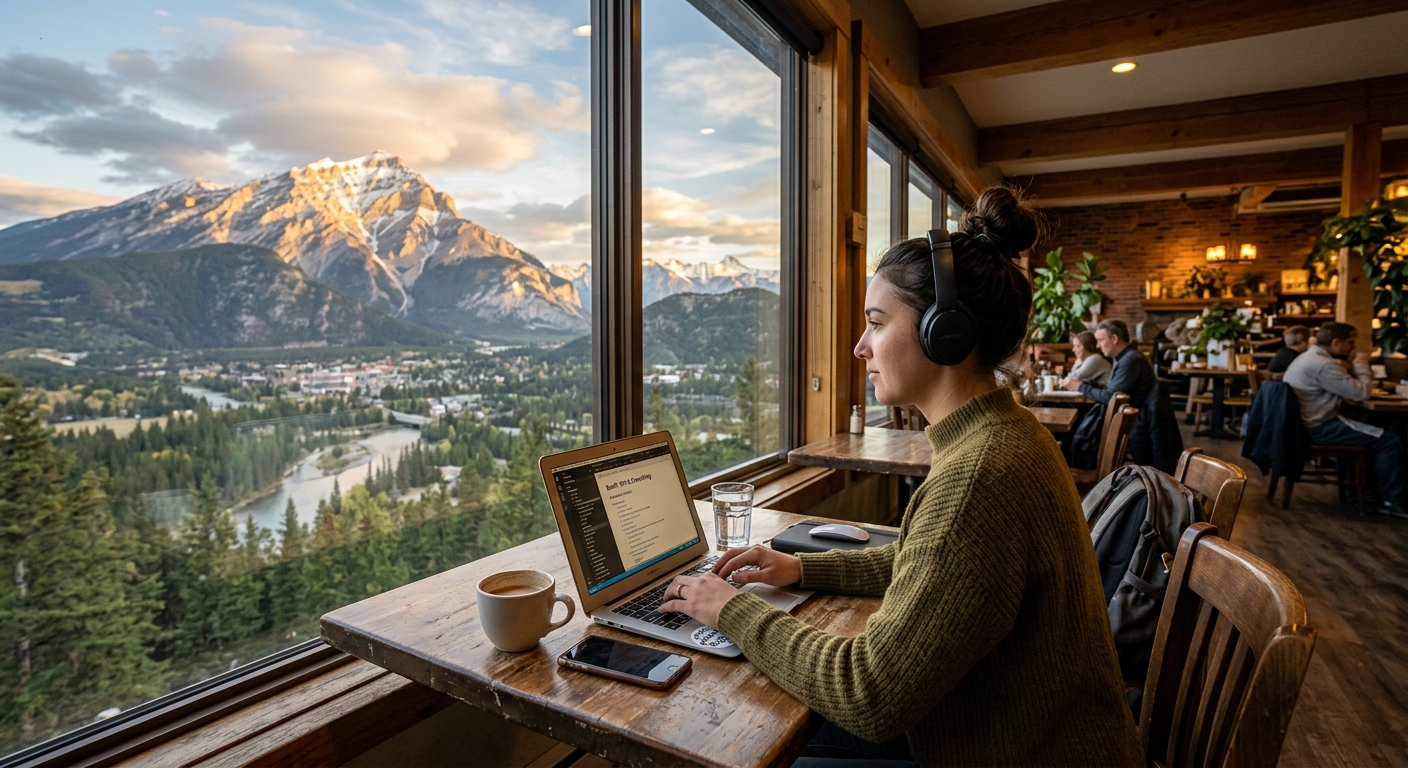
Working remotely from Banff sounds like a dream — and in many ways it is. Morning meetings with mountain views, lunch-break hikes, and sunset photography after closing your laptop. But it also comes with real challenges: spotty wifi in the mountains, limited coworking options, and the cost of mountain-town living. Here's the honest guide to being a digital nomad in Banff.
Internet & Connectivity
Let's address the biggest concern first: internet in Banff is decent but not bulletproof.
- Town of Banff: Most hotels, cafes, and accommodations have reliable wifi. Speeds vary but are generally sufficient for video calls and standard remote work
- Cellular coverage: Telus, Rogers, and Bell all have coverage in the town of Banff and along Highway 1. Coverage drops once you're in the backcountry or in certain valleys
- Backup plan: Always have a mobile hotspot as backup. Telus tends to have the best coverage in the Rockies
- Lake Louise: Wifi is available at the Fairmont and village amenities but is generally slower than in Banff
Where to Work
Cafes with Good Wifi
- Whitebark Cafe: Popular with remote workers. Good coffee, reliable wifi, and a relaxed atmosphere. Gets busy around lunchtime
- Wild Flour Bakery: Excellent pastries and decent wifi. Limited seating, so arrive early
- Evelyn's Coffee Bar: Multiple locations in Banff. Consistent wifi and plenty of seating at the larger locations
- Tooloulou's: A bit off the main drag, often less crowded. Good for focused work sessions
Banff Public Library
The Banff Public Library is a beautiful space with mountain views, free wifi, and a quiet working environment. It's the closest thing to a free coworking space in town. Hours are limited, so check the schedule.
Hotel Lobbies & Common Areas
If you're staying at a hotel with a good lobby or common area, this can be your most reliable workspace. The Fairmont Banff Springs, Moose Hotel, and Mount Royal Hotel all have comfortable common areas with strong wifi.
Canmore Options
Canmore (25 minutes from Banff) has a slightly better digital nomad infrastructure:
- Coworking spaces: Canmore has emerging coworking options — check local listings for current availability
- Cafes: Beamer's Coffee Bar, Communitea Cafe, and Eclipse Coffee Roasters are all laptop-friendly
- Cost: Canmore accommodation is sometimes marginally cheaper than Banff for longer stays
Accommodation for Long Stays
Short-term rentals in Banff are complicated by the town's residency rules, but options exist:
- Hotels with weekly/monthly rates: Some hotels offer discounted rates for extended stays, especially in shoulder season (October–November, April–May)
- Airbnb/VRBO: Limited but available. The town restricts short-term rentals, so inventory is lower than you'd expect
- Canmore rentals: More Airbnb availability and generally more options for month-long stays
- Hostels: Banff has several hostels that work for budget digital nomads. HI Banff Alpine Centre and Samesun Banff are the most established
The Daily Routine
A typical digital nomad day in Banff might look like:
- 7:00am: Early morning hike or sunrise walk at Vermilion Lakes (you're in the mountains — use the mornings)
- 9:00am: Settle into a cafe or your accommodation for focused work
- 12:00pm: Lunch break. Quick walk along the Bow River or grab food on Banff Avenue
- 1:00pm: Afternoon work session
- 4:00pm: Close the laptop. Head to the hot springs, a trail, or the Banff Gondola
- 6:00pm: Dinner at one of Banff's excellent restaurants
- 8:00pm: Stargazing, northern lights watching (in winter), or a quiet evening
Practical Tips
- Time zones: Banff is Mountain Time (UTC-7). If your team is in Europe or Asia, expect early morning or late evening calls
- Shoulder season is best: May–June and September–October offer good weather, fewer tourists, lower prices, and a more relaxed atmosphere
- Budget $150–250/day: Including accommodation, food, activities, and workspace. Banff is not cheap
- Parks Canada pass: Buy a Discovery Pass ($75 CAD/year) for unlimited national park access. It pays for itself in days
- Power backup: Bring a portable battery pack for devices, especially if you're working from cafes or the library
The Reality Check
Banff is an incredible place to work remotely for a few weeks, but it's not a long-term digital nomad hub like Lisbon or Bali. The cost is high, coworking infrastructure is limited, and the small town can feel isolating after a while. The best approach: plan a 2–4 week working trip, sync it with shoulder season, and treat it as a high-quality experience rather than an indefinite base.
Book your digital nomad stay in Banff on Expedia. On your days off, explore guided tours and adventure activities.
Enjoyed this guide? Get weekly Banff tips.