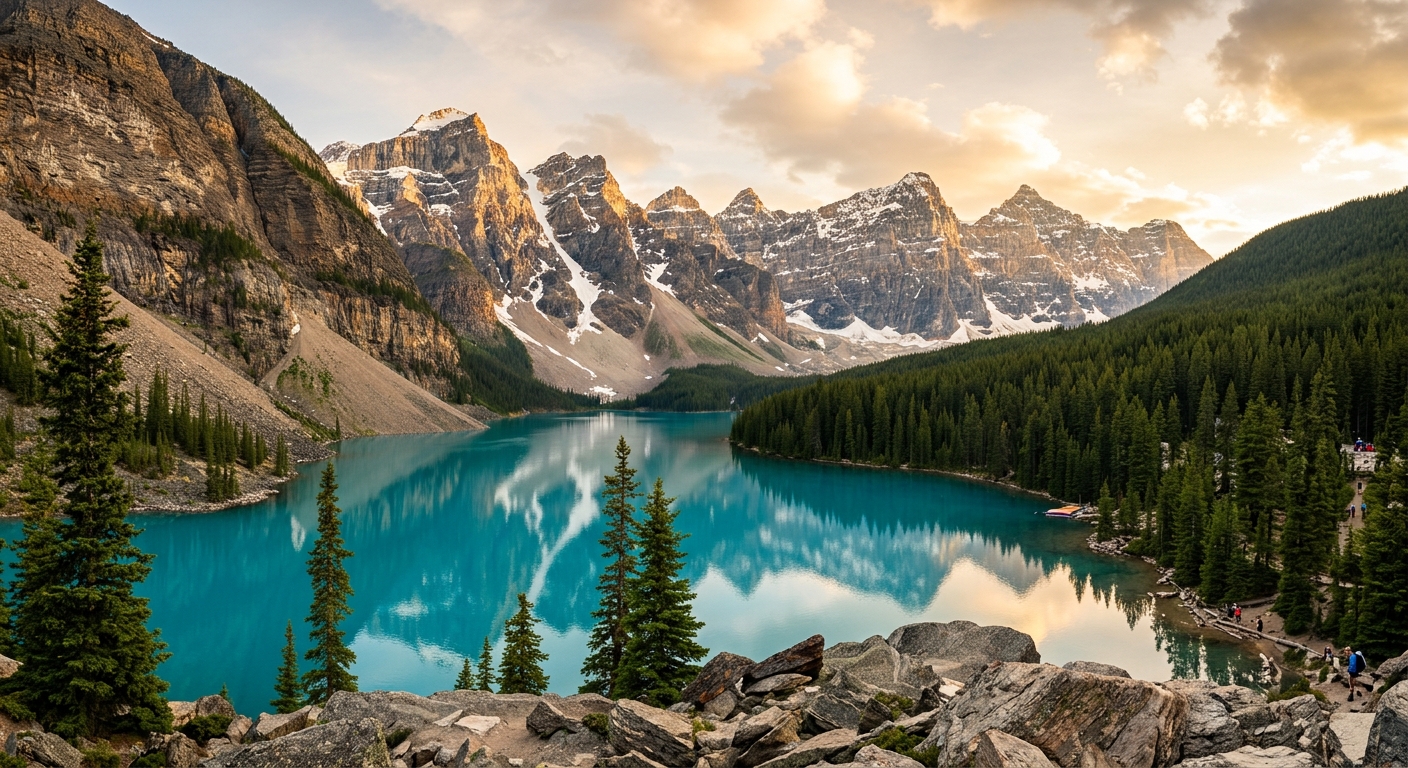
Visiting Banff for the first time is exciting — and a little overwhelming. The park is enormous, the logistics can be tricky, and there's so much to see that planning feels daunting. Here are 20 essential things you need to know before your first visit to make the most of every moment.
Before You Go
- You need a park pass. Every vehicle entering Banff National Park needs a Parks Canada pass. Buy at the gate ($10.50/day per person, $21/day per family) or online. An annual Discovery Pass ($72.25/adult) pays for itself in 7 days
- Book accommodation early. Banff has limited lodging for its popularity. Summer (July-August) and ski season (December-March) fill months in advance. Book on Expedia as early as possible
- Rent a car. While Banff town is walkable, you need a car to reach Lake Louise, Moraine Lake, Lake Minnewanka, and trailheads. No Uber in the park
- Pack layers. Mountain weather changes fast. A sunny morning can become a cold, rainy afternoon. Bring a waterproof jacket, warm layer, and sun protection regardless of season
- Download offline maps. Cell service is limited outside Banff town. Download Google Maps or AllTrails offline maps before you arrive
When You Arrive
- Start early. Parking at popular spots fills by 9 AM in summer. Wake up early — the best light, fewest crowds, and most wildlife sightings happen before 8 AM
- Visit the Banff Visitor Centre. The Parks Canada visitor centre on Banff Avenue has current trail conditions, wildlife advisories, and helpful staff. Stop here on your first morning
- Banff town is small. You can walk end to end in 15 minutes. No car needed in town. Free parking at the train station lot (10-minute walk to centre)
- Carry bear spray. Bears (both grizzly and black) live throughout the park. Buy bear spray at any outdoor shop in Banff ($40-50). Know how to use it before you hike
- Stay on marked trails. Going off-trail damages fragile alpine vegetation that takes decades to recover. It's also dangerous — rescue from off-trail accidents is difficult and expensive
Getting Around
- Use shuttles in peak season. Parks Canada runs shuttle buses to Lake Louise and Moraine Lake from June to October. Book shuttle tickets online — they sell out fast
- Roam Transit is useful. Local buses connect Banff to Tunnel Mountain, Sulphur Mountain, Lake Minnewanka, Canmore, and Lake Louise
- Gas up in town. Banff and Lake Louise have gas stations. There are NO gas stations on the Icefields Parkway — fill up before heading north
Wildlife Safety
- Keep your distance. By law: 100m from bears and wolves, 30m from elk and deer. Use binoculars and telephoto lenses, not your feet
- Never feed wildlife. It's illegal, dangerous, and can result in animals being euthanised. A fed bear is a dead bear
- Elk in town are not tame. Elk roam Banff's streets, especially in fall rut season. They look calm but can charge without warning. Keep your distance
Money & Logistics
- Banff is expensive. Expect to pay $15-20 for lunch, $30-50 for dinner, $200-400+/night for accommodation in summer. Budget accordingly
- Tip 15-20%. Canadian tipping customs are similar to the US. Restaurants, bars, and tour guides expect 15-20%
- Altitude matters. Banff sits at 1,383m. Some visitors feel mild altitude effects — drink extra water, ease into strenuous activity, and allow for acclimatisation
- Two grocery stores. IGA on Marten Street and Safeway on Elk Street. Buy snacks, lunch supplies, and water here to save money on the trails
Plan your first visit with guided tours and activities for a stress-free introduction to the Rockies.
First-Timer Tip: Don't try to see everything. The biggest mistake first-time visitors make is cramming too much into too few days. Pick 2-3 highlights per day, start early, and leave room for spontaneity. Some of the best Banff moments happen when you simply sit by a lake and absorb the beauty.
Enjoyed this guide? Get weekly Banff tips.