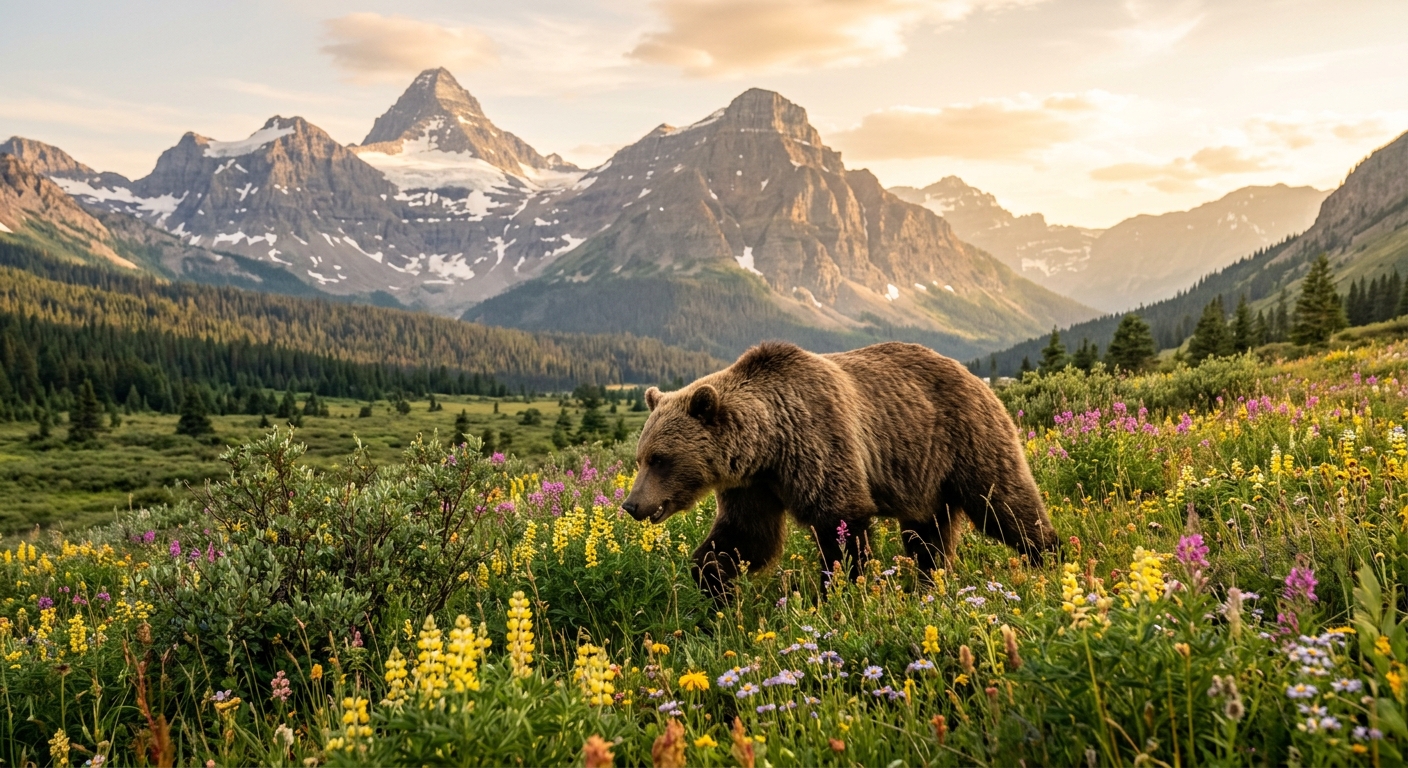
Seeing a grizzly bear in the wild is one of the most powerful wildlife experiences on the planet. Banff National Park is home to an estimated 65 grizzly bears, and while sightings are never guaranteed, knowing where and when to look dramatically increases your chances. This guide covers everything you need to know about finding — and safely viewing — grizzly bears in Banff.
Grizzly vs. Black Bear: How to Tell the Difference
Banff has both grizzly and black bears, and telling them apart matters for safety:
- Grizzly bears: Larger (200–350 kg), prominent shoulder hump, concave (dish-shaped) face profile, shorter rounded ears, longer claws
- Black bears: Smaller (60–140 kg), no shoulder hump, straight face profile, taller pointed ears, shorter claws. Can be black, brown, cinnamon, or even blonde
- Key identifier: The shoulder hump. If you see a prominent hump of muscle above the shoulders, it's a grizzly
Where to See Grizzlies
Bow Valley Parkway (Highway 1A)
This scenic road between Banff and Lake Louise is the most consistent spot for bear sightings in the park. Grizzlies frequent the avalanche slopes and meadows visible from the road, especially in spring when new vegetation grows. Drive slowly and scan the slopes with binoculars.
Icefields Parkway (Highway 93N)
The stretch between Lake Louise and the Columbia Icefield passes through prime grizzly habitat. Bears are often spotted on the open slopes above the road, particularly near the Weeping Wall, Big Bend, and Saskatchewan River Crossing areas.
Lake Minnewanka Area
The forests and shores around Lake Minnewanka support bear activity, particularly in berry season (August–September). The Aylmer Lookout trail sometimes has bear closures due to grizzly activity — a sign that bears are in the area.
Moraine Lake Road
The road and trails around Moraine Lake are frequently visited by grizzlies, leading to regular trail closures and group access requirements. Check the Parks Canada website for current conditions.
When to See Grizzlies
- Spring (May–June): The best time. Bears emerge from hibernation and feed on south-facing slopes, avalanche paths, and road edges. They're hungry and visible
- Summer (July–August): Bears move higher as snow melts. Harder to see from roads but spotted on higher-elevation hikes and alpine meadows
- Late summer (August–September): Hyperphagia — bears feed up to 20 hours a day, consuming 20,000 calories daily. Berry patches and salmon streams (further west) concentrate bears
- Time of day: Early morning (6–9am) and evening (5–8pm) are peak activity times
Bear Safety
Grizzly bears are wild animals that can be dangerous. Follow these rules always:
- Minimum distance: Stay at least 100 metres (10 bus lengths) from all bears. This is Parks Canada law, not a suggestion
- Carry bear spray: On every hike. Carry it on your hip or chest strap where you can reach it in seconds. Know how to use it before you need it
- Make noise on trails: Talk, clap, or use a bear bell. Most bear encounters happen because you surprise a bear at close range
- Hike in groups: Groups of 4+ are involved in virtually zero bear attacks. Bears avoid large groups
- Never run: Running triggers a chase response. Back away slowly while facing the bear
- Store food properly: Use bear-proof containers and never leave food in your tent or on a picnic table
If You Encounter a Grizzly
- Stay calm: Most bears will leave if they know you're there
- Speak in a calm, low voice: "Hey bear, it's okay." This identifies you as human
- Back away slowly: Don't turn your back on the bear
- Make yourself look large: Arms up, stand tall
- If it charges: Stand your ground. Many charges are bluffs. Deploy bear spray at 6 metres
- If it makes contact: Grizzly — play dead (face down, hands behind neck). Black bear — fight back
Responsible Wildlife Viewing
- Use binoculars and telephoto lenses instead of approaching
- Stay in your car when viewing bears from the road. Your car is a safe blind
- Don't block traffic. Pull over safely if you spot a bear
- Report bear sightings to Parks Canada — it helps with management and monitoring
- Never feed bears. A fed bear becomes habituated and eventually has to be destroyed
Base your bear-watching trip in Banff — book on Expedia. Join expert-led wildlife tours for safe, guided grizzly bear viewing.
Enjoyed this guide? Get weekly Banff tips.