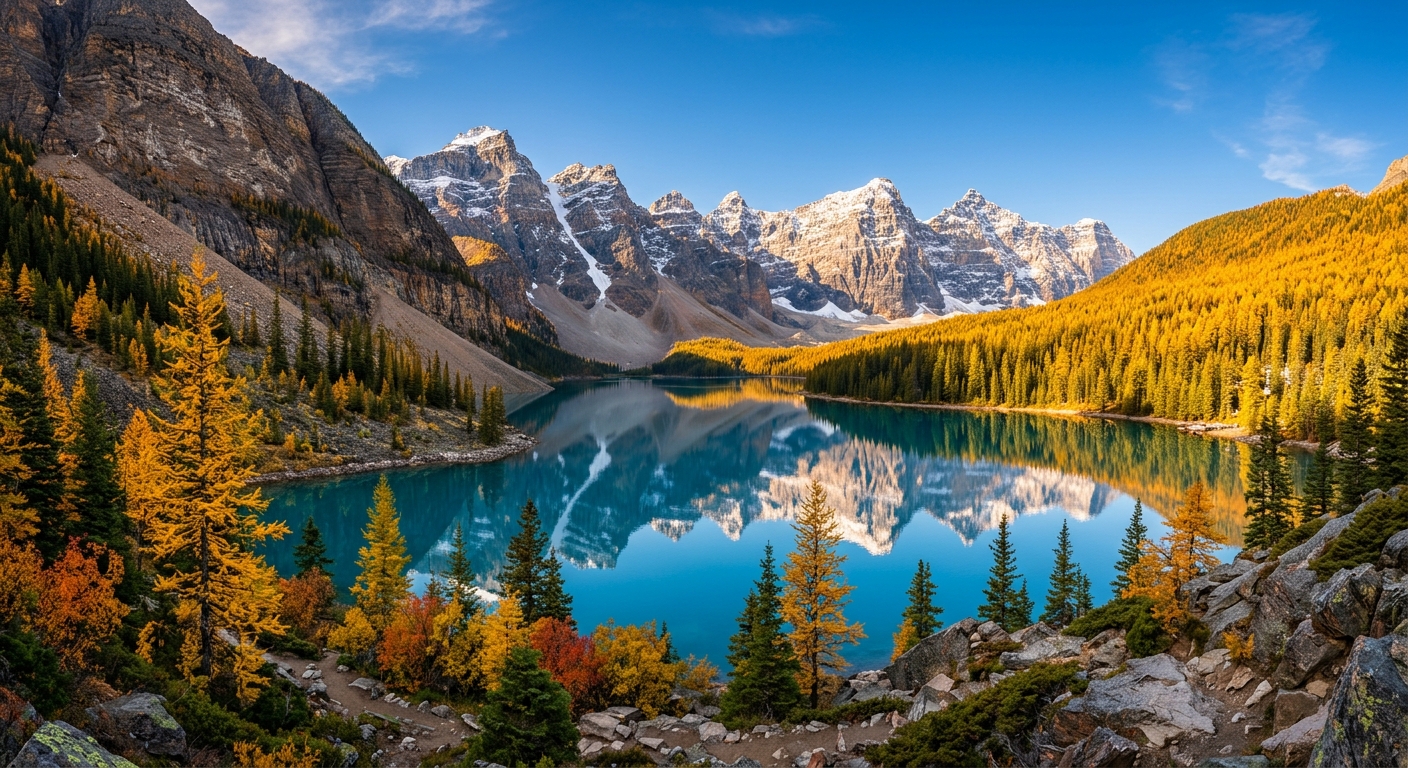
Fall in Banff is when the Canadian Rockies put on their most colourful show. Golden larch trees, fewer crowds, crisp air, and warm autumn light make September and October one of the best times to visit. If you time it right for larch season, you'll witness one of the most striking natural displays in North America.
Weather & Conditions
- September: Daytime highs of 10-18°C, overnight lows around 0-5°C. Clear, crisp days are common. Most trails are still open and snow-free at lower elevations. Higher elevations may see the first dustings of snow
- October: Daytime highs of 3-10°C, overnight lows around -5 to -10°C. Snow becomes more frequent, especially at higher elevations. Some trails and facilities begin closing for the season
Layer up — mornings are cold, middays can be pleasantly warm, and temperatures drop quickly after sunset.
Larch Season: The Main Event
The star attraction of fall in Banff is larch season. Alpine larch trees (Larix lyallii) are one of the few conifers that shed their needles each autumn. Before they drop, the needles turn a brilliant gold that contrasts dramatically against dark evergreen forests, turquoise lakes, and grey mountain peaks.
Larch season typically peaks in the last week of September to the first week of October. The exact timing varies annually depending on temperatures.
Best Larch Hikes
- Larch Valley & Sentinel Pass (from Moraine Lake): The most famous larch hike. 11.6 km round trip, strenuous. Groups of 4+ required during larch season for bear safety
- Lake Agnes & Big Beehive (from Lake Louise): Scattered larches along this classic hike. 10.5 km round trip, moderate
- Cascade Amphitheatre: Larches lining a massive natural amphitheatre. 15.4 km round trip, moderate-strenuous. Fewer crowds
- Taylor Lake & Panorama Meadows: Quiet larch groves. 12.6 km round trip, moderate
- Sunshine Meadows (via Healy Pass): Alpine meadows with scattered larch groves and mountain views
Other Fall Activities
Wildlife Viewing
Fall is one of the best seasons for wildlife in Banff. The elk rut happens in September and early October — you'll hear the haunting bugling calls echoing through the valleys, especially around the Banff Springs Golf Course and the outskirts of town. Bears are in hyperphagia — feeding intensely before hibernation — and are frequently seen along the Bow Valley Parkway and near berry patches.
Keep 30m from elk (especially during rut) and 100m from bears. Both are more unpredictable during fall.
Scenic Drives
The golden colours make every drive remarkable in fall:
- Bow Valley Parkway: Aspens and poplars turn gold along the river. Prime wildlife viewing
- Icefields Parkway: Dramatic mountain scenery with early snow on the peaks and golden colours in the valleys
- Vermilion Lakes: Beautiful sunset reflections with autumn colours framing the lakes
Photography
Fall light in Banff is a photographer's dream. Low-angle sunshine creates warm tones on the mountains, golden larches pop against blue skies, and the first dustings of snow on the peaks add contrast. Vermilion Lakes at sunset, Two Jack Lake under the stars, and any larch-lined trail are must-shoot locations.
Practical Tips for Fall Visitors
- Book larch season early: Moraine Lake shuttle reservations for late September sell out very fast. Accommodation fills quickly during peak larch weeks
- Carry bear spray: Bears are very active in fall. Bear encounters are more common as bears feed before hibernation
- Be prepared for snow: Snowfall can happen at any elevation from late September. Carry extra layers, microspikes, and trekking poles
- Shorter days: Daylight decreases noticeably through fall. Plan hikes for mid-morning starts to ensure daylight return
- Some closures: Moraine Lake Road typically closes by mid-October. Some campgrounds and facilities close in September or October
Where to Stay in Fall
Shoulder-season pricing applies in fall (except during peak larch weekends in late September). Hotels are 20-30% cheaper than summer peak. Look for deals on Expedia.
Enjoyed this guide? Get weekly Banff tips.