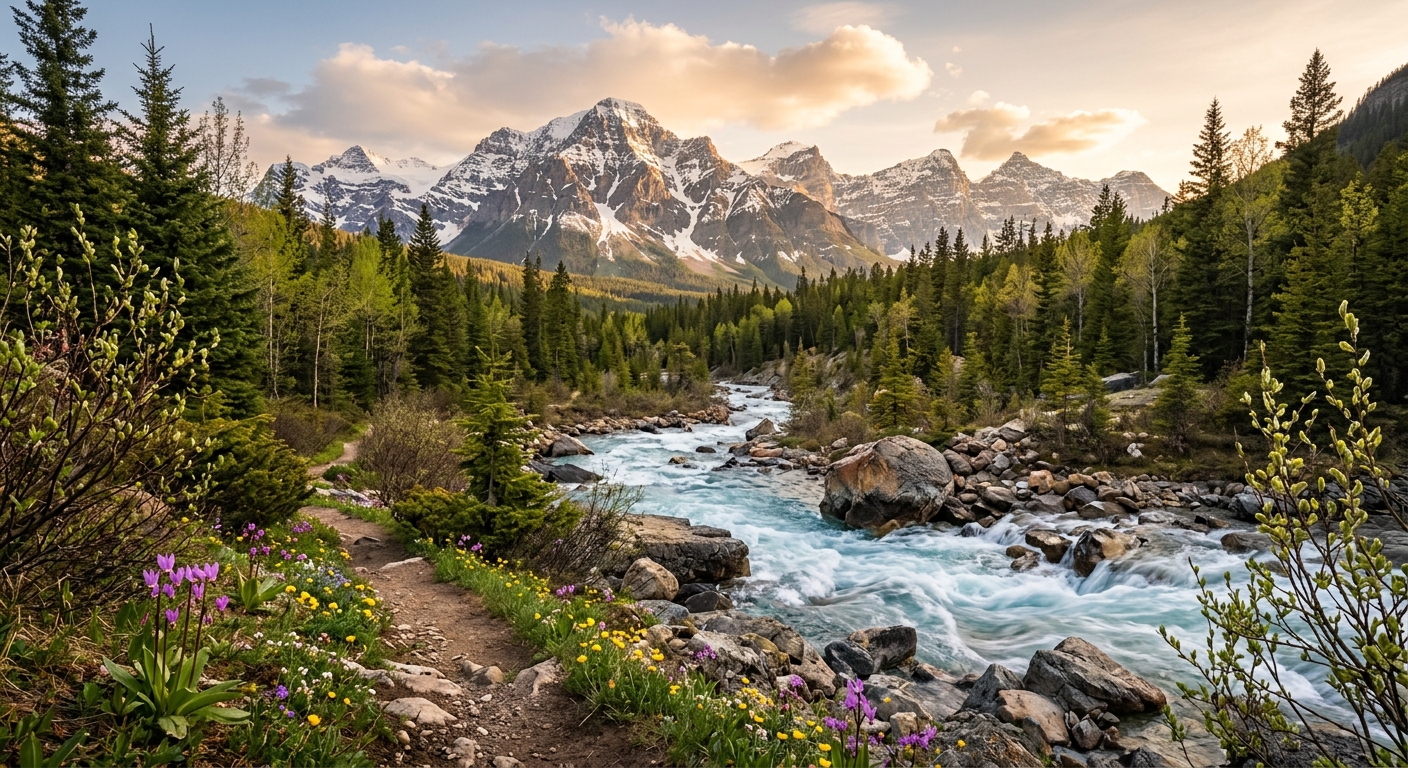
Spring in Banff is the quiet shoulder season that savvy travellers love. From April through May, the park transitions from winter's snow to summer's green, offering thundering waterfalls, fewer crowds, lower prices, and a unique blend of winter and spring experiences. If you don't mind some trail closures and cooler weather, spring might be the best-kept secret in Banff.
Weather & Conditions
Spring weather in Banff is unpredictable and highly variable:
- April: Daytime highs of 5-10°C, overnight lows around -5°C. Snow still covers most trails. The town begins to thaw but the mountains remain firmly in winter's grip
- May: Daytime highs of 10-18°C, overnight lows around 0-5°C. Lower-elevation trails begin opening. Snowmelt drives waterfalls to peak flow
- Late May: The transition accelerates. Some mid-elevation trails become snow-free. Wildflowers begin blooming in the valleys
Dress in layers and be prepared for anything — sunshine, rain, and snow can all happen in the same day.
Why Visit Banff in Spring?
Impressive Waterfalls
Snowmelt turns Banff's waterfalls into thundering torrents. Bow Falls, Johnston Canyon, and Athabasca Falls are all at their most powerful in May and early June. The volume of water crashing through the canyons is dramatic and makes for incredible photography.
Fewer Crowds
Spring is the quietest season in Banff. You'll find shorter lines, easier parking, and a more peaceful experience at every attraction. Even Johnston Canyon — usually packed in summer — can feel nearly empty on a spring weekday.
Lower Prices
Accommodation rates drop 20-40% compared to summer peak. Many hotels and lodges offer spring specials and packages. It's the most affordable time to stay in downtown Banff or at the Fairmont properties.
Find spring deals on Expedia.
Spring Skiing
Sunshine Village stays open until late May — the longest season in Canada. Spring skiing means warmer temperatures, longer days, softer snow, and a festive end-of-season atmosphere. It's some of the most enjoyable skiing of the year.
Wildlife Activity
Spring is an active time for wildlife. Bears emerge from hibernation, elk move through the valleys, and migratory birds return. The Bow Valley Parkway and Vermilion Lakes are excellent for spring wildlife spotting. Keep your distance — bears with cubs are especially protective.
Best Spring Activities
- Johnston Canyon: The Lower and Upper Falls are dramatic in spring. The trail is well-maintained and usually accessible, though ice cleats may be needed in April
- Bow Falls & Surprise Corner: Thundering with snowmelt and easily accessible from downtown
- Banff Gondola: Open year-round, offering views of the snow-to-spring transition from the summit
- Banff Upper Hot Springs: Perfect after a cool spring hike
- Vermilion Lakes: Excellent for wildlife viewing and photography as the lakes thaw
- Tunnel Mountain Hike: One of the first trails to clear of snow, usually accessible by mid-April
- Spring skiing at Sunshine Village: Open through late May
- Scenic drives: Highway 1 and the Bow Valley Parkway are beautiful as the valley greens up
What's Closed in Spring
- Moraine Lake: The road typically doesn't open until late May or early June
- Icefields Parkway: Open but some viewpoints may have limited access. The Columbia Icefield Centre usually opens in late April
- High-elevation trails: Most trails above 2,000m remain snow-covered through May. Lake Agnes, Sentinel Pass, and similar hikes typically open in late June
- Some campgrounds: Many don't open until mid-May. Tunnel Mountain Village II is open year-round
Practical Tips for Spring Visitors
- Pack warm layers AND rain gear — spring weather is highly variable
- Bring ice cleats/microspikes for trails that may still have ice patches
- Check trail conditions at the Banff Visitor Centre before heading out
- Book accommodation for the best selection at shoulder-season rates
- Be bear aware — carry bear spray on all hikes. Bears are active after hibernation
Enjoyed this guide? Get weekly Banff tips.