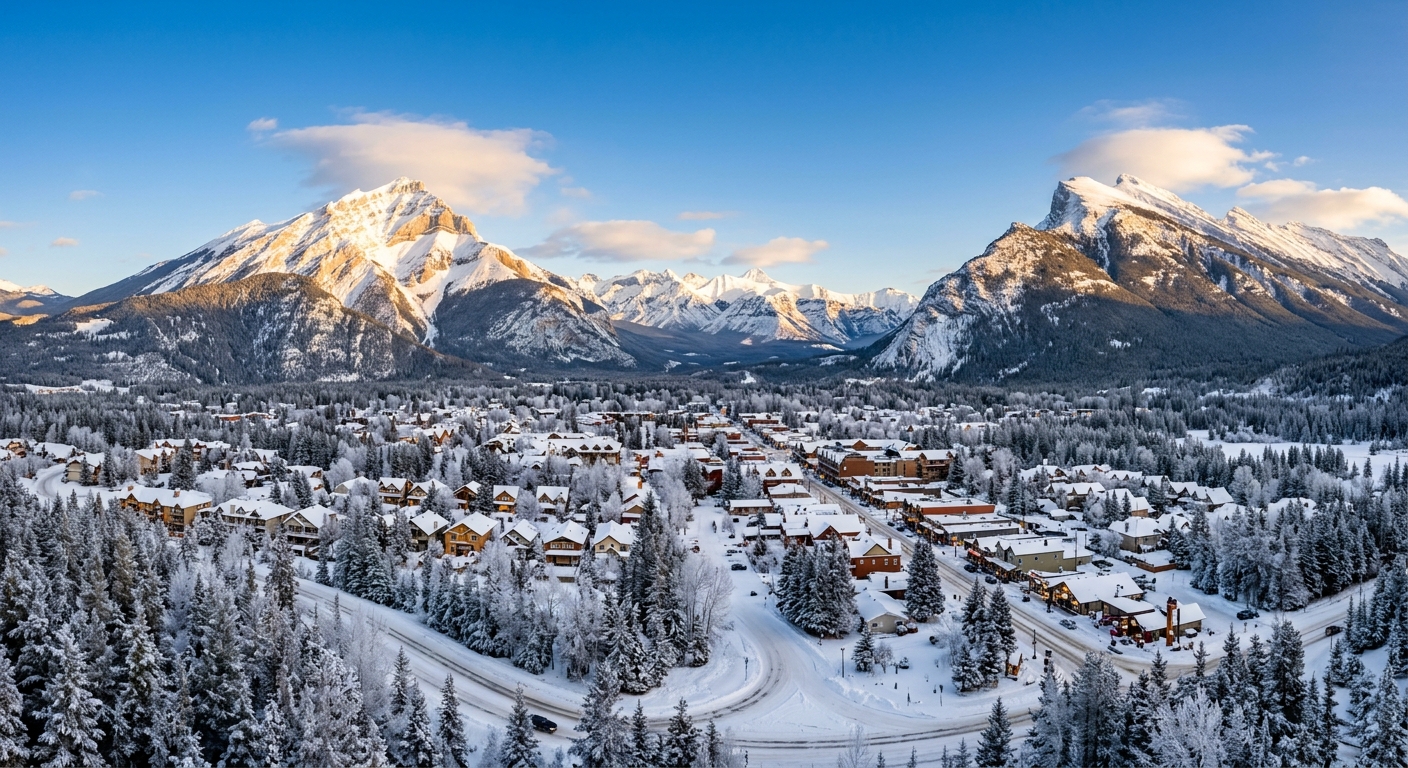
Winter in Banff is pure magic. Snow-covered peaks, frozen waterfalls, world-class skiing, and a fraction of the summer crowds. If you're prepared for the cold, a winter trip to Banff might be even more memorable than summer.
Skiing & Snowboarding
Banff is home to three excellent ski resorts, collectively known as the SkiBig3:
- Sunshine Village: Highest base elevation, longest season (November to late May), and the most natural snow. Over 3,300 acres of terrain.
- Lake Louise Ski Resort: The largest resort with 4,200 acres, beautiful scenery, and terrain for all levels. Famous for its back bowls.
- Mt. Norquay: The closest to town (6 minutes), smallest of the three, but excellent for families and night skiing. Home to the Via Ferrata in summer.
A SkiBig3 lift ticket gives you access to all three resorts, and multi-day passes offer significant savings. See our complete Banff skiing guide for 2026-27 lift ticket prices, Ikon Pass details, ski & stay deals, and how to get to the slopes.
Johnston Canyon Ice Walk
One of the most popular winter activities. Strap on ice cleats and walk along the frozen canyon to see the Lower and Upper Falls transformed into massive ice pillars. Guided tours are recommended as the trail can be icy and slippery.
Ice Skating
Skate on the frozen surface of Lake Louise with the Chateau and Victoria Glacier as your backdrop -- one of the most scenic skating experiences in the world. Rentals are available on-site. Vermilion Lakes and Two Jack Lake also freeze for skating in good conditions.
Banff Upper Hot Springs
There's nothing quite like soaking in naturally heated mineral pools (37-40°C) while snow falls around you and mountains tower overhead. Open year-round, but winter is when it's most atmospheric.
Dog Sledding
Mush through snowy wilderness with a team of Alaskan huskies. Several operators near Canmore and Lake Louise offer half-day and full-day tours through the backcountry.
Northern Lights
Banff's dark skies and northern latitude make it possible to see the aurora borealis on clear winter nights. Best viewing spots include Vermilion Lakes, Lake Minnewanka, and Two Jack Lake. Download an aurora forecast app and be ready to head out when activity spikes.
What to Pack for Winter
- Thermal base layers (merino wool recommended)
- Insulated waterproof jacket and pants
- Warm hat, gloves, and neck gaiter/balaclava
- Insulated, waterproof winter boots with good grip
- Hand and toe warmers
- Sunglasses and sunscreen (the sun reflects intensely off snow)
Enjoyed this guide? Get weekly Banff tips.