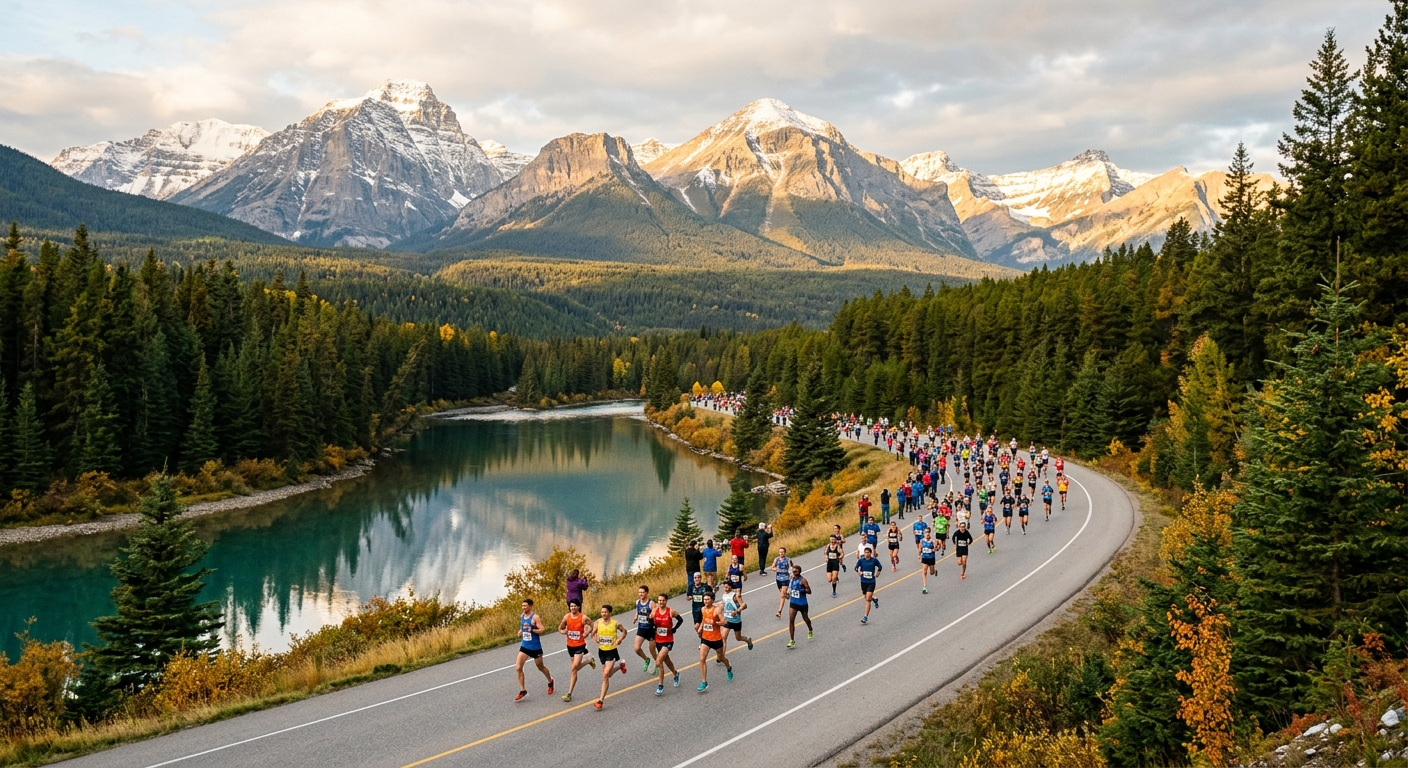
Running a marathon in Banff National Park is a bucket-list experience for endurance athletes. The combination of mountain scenery, clean alpine air, and a challenging course through one of the world's most beautiful landscapes makes the Banff Marathon unlike any urban race. Here's everything you need to know to prepare, race, and enjoy this impressive event.
The Course
The Banff Marathon course takes runners through the heart of the national park:
- Start/Finish: Banff town centre, near Central Park
- Route: Out-and-back along the Bow Valley Parkway and scenic roads within the park
- Surface: Paved roads, closed to traffic during the race
- Elevation: The course sits at approximately 1,400 metres above sea level, with rolling hills throughout
- Scenery: Expect mountain panoramas, river views, dense forest sections, and possible wildlife sightings along the course
Race Distances
- Full Marathon: 42.2 km — the flagship event
- Half Marathon: 21.1 km — same incredible scenery, half the distance
- 10K: An accessible option for newer runners
- Kids' Run: A short fun run for young participants
Training for Altitude
The biggest challenge of the Banff Marathon isn't the distance or hills — it's the altitude. At 1,400 metres, the air contains about 15% less oxygen than at sea level, which significantly affects performance:
- Expect slower times: Most runners are 5–10% slower at altitude compared to sea-level races
- Arrive early: If coming from low elevation, arrive 2–3 days before the race to begin acclimatizing
- Hydrate aggressively: The dry mountain air dehydrates you faster. Increase water intake from the moment you arrive
- Adjust your pace: Start slower than your usual race pace. The altitude will catch up with you in the second half if you go out too fast
- Hill training: The course has rolling hills — include hill repeats in your training
Registration & Logistics
- Registration: Opens months in advance online. The event sells out, especially the half marathon
- Race weekend: Typically held in June, when weather is favourable and trails are clear
- Packet pickup: Usually the day before at a designated location in Banff
- Start time: Early morning (around 7am for the full marathon) to take advantage of cool temperatures
Race Day Tips
- Dress in layers: Morning temperatures can be near freezing, warming to 15–20°C by midday
- Sunscreen and hat: UV is intense at altitude — protect yourself even on cloudy days
- Fuel strategy: Test your nutrition plan at altitude before race day. Some runners find their stomach is more sensitive at elevation
- Enjoy the scenery: This is one of the most beautiful marathon courses in the world — look up occasionally
- Wildlife: Don't be surprised if you see elk, deer, or even bears near the course. Course marshals monitor for wildlife
Post-Race Recovery
- Banff Upper Hot Springs: A soak in the mineral hot springs is the perfect post-marathon recovery
- Restaurants: Celebrate with a meal at The Bison, Park Distillery, or The Maple Leaf
- Rest day hike: The next day, take an easy walk to Bow Falls or along the Fenland Trail to loosen up
Book your race weekend accommodation on Expedia well in advance — hotels fill up fast during marathon weekend. Explore guided tours and activities for the days surrounding your race.
Enjoyed this guide? Get weekly Banff tips.