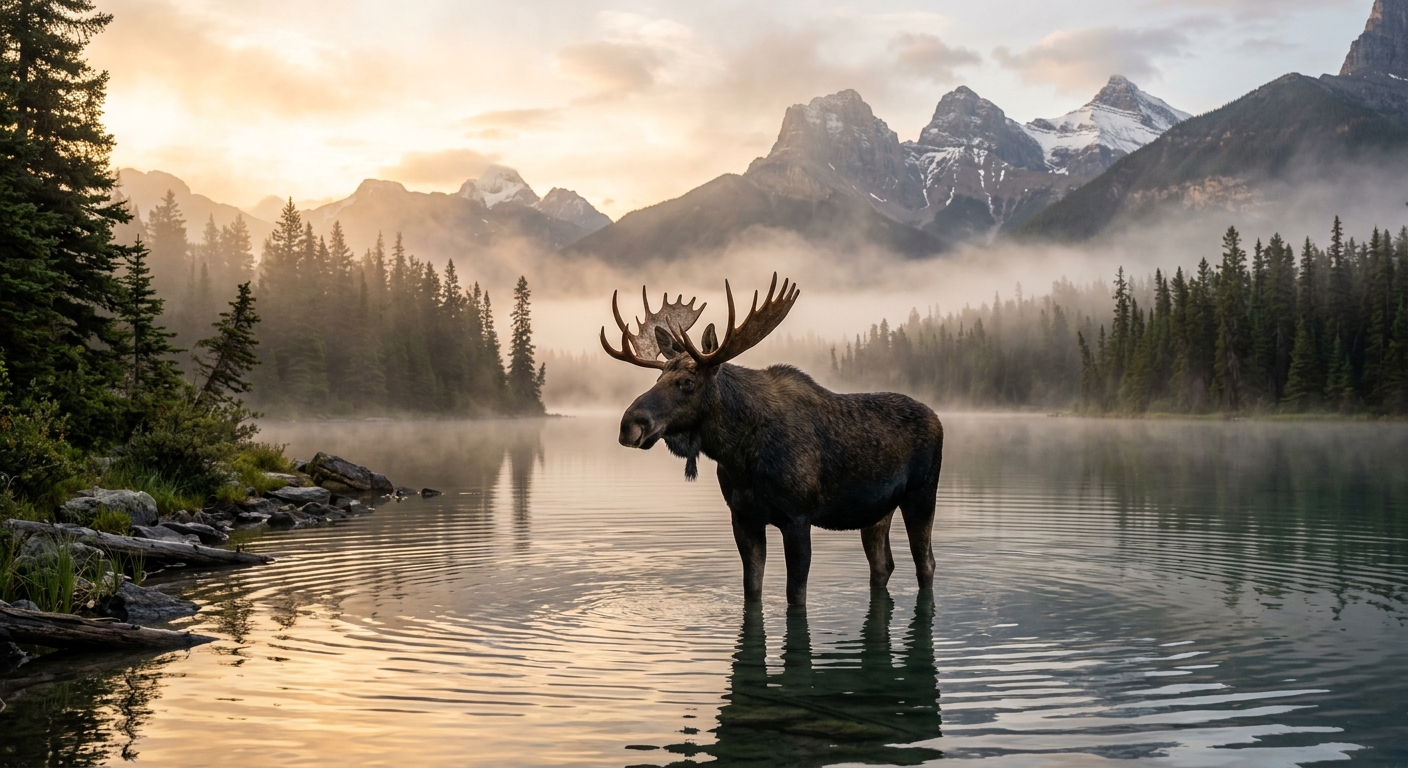
Moose are the largest members of the deer family, standing up to 2 metres tall at the shoulder and weighing up to 700 kg. Despite their size, they're surprisingly elusive in Banff National Park. The park's moose population is relatively small compared to other large mammals, making a sighting genuinely special. Here's how to find them.
Where Moose Live in Banff
Moose prefer specific habitats, and knowing this narrows your search considerably:
- Wetlands and marshes: Moose are semi-aquatic feeders. They wade into ponds and marshes to eat aquatic plants like water lilies and pondweed
- Willow thickets: Willows are a primary food source. Look for moose in dense willow patches along rivers and streams
- Forest edges: Where dense forest meets open meadow or wetland, moose browse on shrubs and young trees
- River valleys: The Bow Valley, Spray Valley, and areas along the Icefields Parkway have suitable moose habitat
Best Locations for Moose Sightings
Bow Valley Parkway
The meadows and wetlands along this scenic road between Banff and Lake Louise are good moose habitat. Drive slowly at dawn or dusk and scan the edges of clearings and willow patches.
Vermilion Lakes
The marshy shoreline and willow thickets around Vermilion Lakes are classic moose habitat. Visit at dawn for the best chance — moose are most active in the early morning.
Waterfowl Lakes (Icefields Parkway)
The wetlands around the Waterfowl Lakes, about 60 km north of Lake Louise, are a known moose area. The marshy edges of the lakes provide ideal feeding grounds.
Spray River Valley
The Spray Valley south of Banff has willow-rich meadows and quiet forest that moose favour. The Spray River trail can produce sightings, especially early in the morning.
Peter Lougheed Provincial Park
Just south of Banff in Kananaskis Country, the wetlands in Peter Lougheed Provincial Park have a higher moose density than Banff itself. The road around Upper and Lower Kananaskis Lakes is a good moose-spotting drive.
Best Time to See Moose
- Season: May to October offers the best viewing. In winter, moose move to lower-elevation forests and are harder to find
- Time of day: Dawn (first light to 9am) and dusk (5pm to dark) are when moose are most active
- Rut: September and October is mating season. Bull moose are more visible as they move through their range seeking cows
- Summer mornings: Early morning visits to Vermilion Lakes or the Bow Valley Parkway give you the best odds
Identifying Moose
Moose are distinctive and hard to confuse with other animals:
- Size: Enormous — significantly larger than elk. Adult bulls stand 1.8–2.1 metres at the shoulder
- Antlers: Bulls have broad, flat, palmate antlers (like open hands), unlike the branching antlers of elk
- Body shape: Long legs, humped shoulders, and a large overhanging muzzle (called a bell)
- Colour: Dark brown to black, with lighter lower legs
- Behaviour: Often standing in or near water. They're generally solitary (unlike elk, which travel in herds)
Safety Around Moose
Moose may look docile, but they can be aggressive, especially:
- Cows with calves: A mother moose protecting her young is among the most dangerous animals in North America. She will charge without warning
- Bulls in rut: During mating season, bulls are unpredictable and territorial
- Surprised moose: Like all wildlife, a moose that feels cornered or surprised may attack
Maintain at least 30 metres distance. If a moose pins back its ears, raises the hair on its neck, or licks its lips, it's agitated — back away immediately. Unlike bears, if a moose charges, get behind a large tree or obstacle. Moose don't typically chase once they've driven you away.
Book your Banff wildlife trip on Expedia. Add guided wildlife tours for expert naturalist-led animal spotting.
Enjoyed this guide? Get weekly Banff tips.