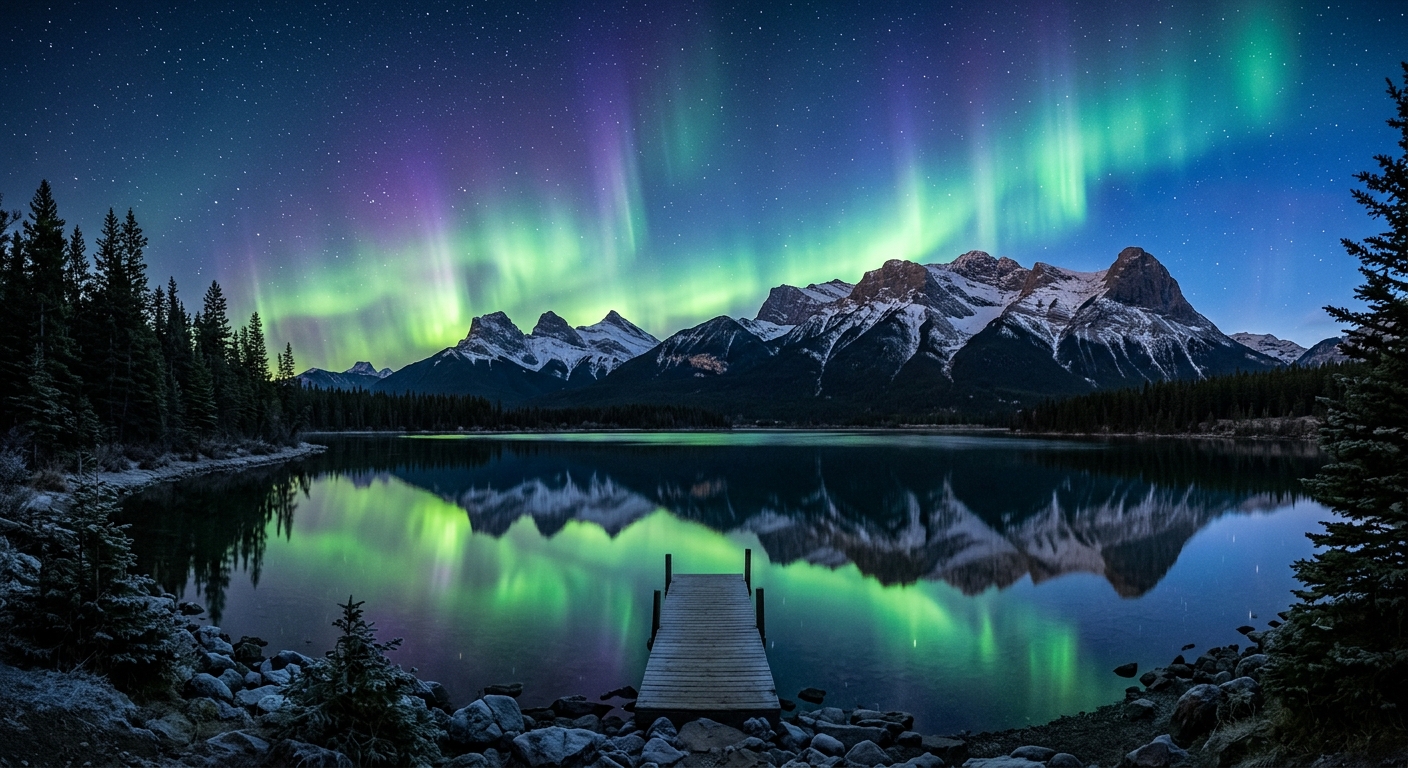
Seeing the Northern Lights (Aurora Borealis) dancing above the Canadian Rockies is one of life's great natural spectacles. Banff's location — 51°N latitude, minimal light pollution as a Dark Sky Preserve, and dramatic mountain skylines — makes it one of the best places in southern Canada to witness the aurora. While sightings aren't guaranteed, with the right preparation and timing, your chances of seeing this celestial light show are excellent.
When Can You See the Northern Lights in Banff?
The Northern Lights are visible year-round when conditions align, but your best chances are during months with the longest, darkest nights:
- Best months: October through March (long dark hours)
- Peak viewing hours: 10pm to 2am (though aurora can appear any time after dark)
- Solar cycle: We are currently near solar maximum (2024–2026), meaning solar activity is at its highest in 11 years. This significantly increases the frequency and intensity of aurora displays — making now an exceptional time to visit
Where to Watch
The key is finding an open area with dark skies and an unobstructed view to the north:
1. Vermilion Lakes
The top aurora viewing spot near Banff. The open lakes face north with Mount Rundle providing a dramatic silhouette. Just 5 minutes from town, the dark skies and water reflections create impressive photography conditions.
2. Lake Minnewanka
Further from town means darker skies. The large, open lake provides an expansive northern horizon. The parking lot is accessible at night and offers an easy setup spot.
3. Two Jack Lake
The open shoreline and mountain backdrop make this an excellent aurora location. Less visited at night than Vermilion Lakes, it offers a more private experience.
4. Bow Lake (Icefields Parkway)
If you're willing to drive, the Icefields Parkway offers some of the darkest skies in the park. Bow Lake's open setting and high elevation provide pure viewing conditions.
5. Cascade Ponds
A quiet spot along the Lake Minnewanka road with picnic tables where you can set up comfortably. Dark skies and a north-facing view.
How to Predict the Northern Lights
The aurora is driven by solar activity. Use these tools to plan your viewing:
- My Aurora Forecast app: Shows real-time aurora probability, KP index, and alerts. The most user-friendly option
- SpaceWeatherLive.com: Detailed solar wind data, KP index forecasts, and aurora oval maps
- NOAA Space Weather Prediction Center: The scientific source for aurora forecasts
- KP Index: A measurement of geomagnetic activity. For Banff (51°N), a KP of 3–4 can produce visible aurora low on the horizon. KP 5+ produces brilliant, overhead displays
Camera Settings for Aurora Photography
- Mode: Manual
- Aperture: As wide as possible (f/2.8 or wider ideal)
- ISO: 1600–6400 (adjust based on brightness)
- Shutter speed: 5–15 seconds (shorter for fast-moving curtains, longer for faint displays)
- Focus: Manual focus to infinity (use live view to focus on a bright star)
- Tripod: Essential — no handheld aurora photography works
- Lens: Wide-angle (14–24mm) to capture the sweeping curtains above the mountains
Tips for Success
- Be patient — aurora activity comes in waves. You might wait an hour before a bright display erupts
- Your camera sees aurora better than your eyes. If the sky looks slightly green or hazy to the north, try a test photo — you may be seeing a faint aurora
- Dress extremely warmly — you'll be standing still in the cold for extended periods. Layers, thermos, and a camp chair make the wait comfortable
- Avoid full moon nights — moonlight washes out fainter aurora displays
- Carry bear spray when leaving your vehicle at night
Want a guided aurora experience? Book a Northern Lights tour in Banff with expert guides who know the best spots and conditions.
Enjoyed this guide? Get weekly Banff tips.