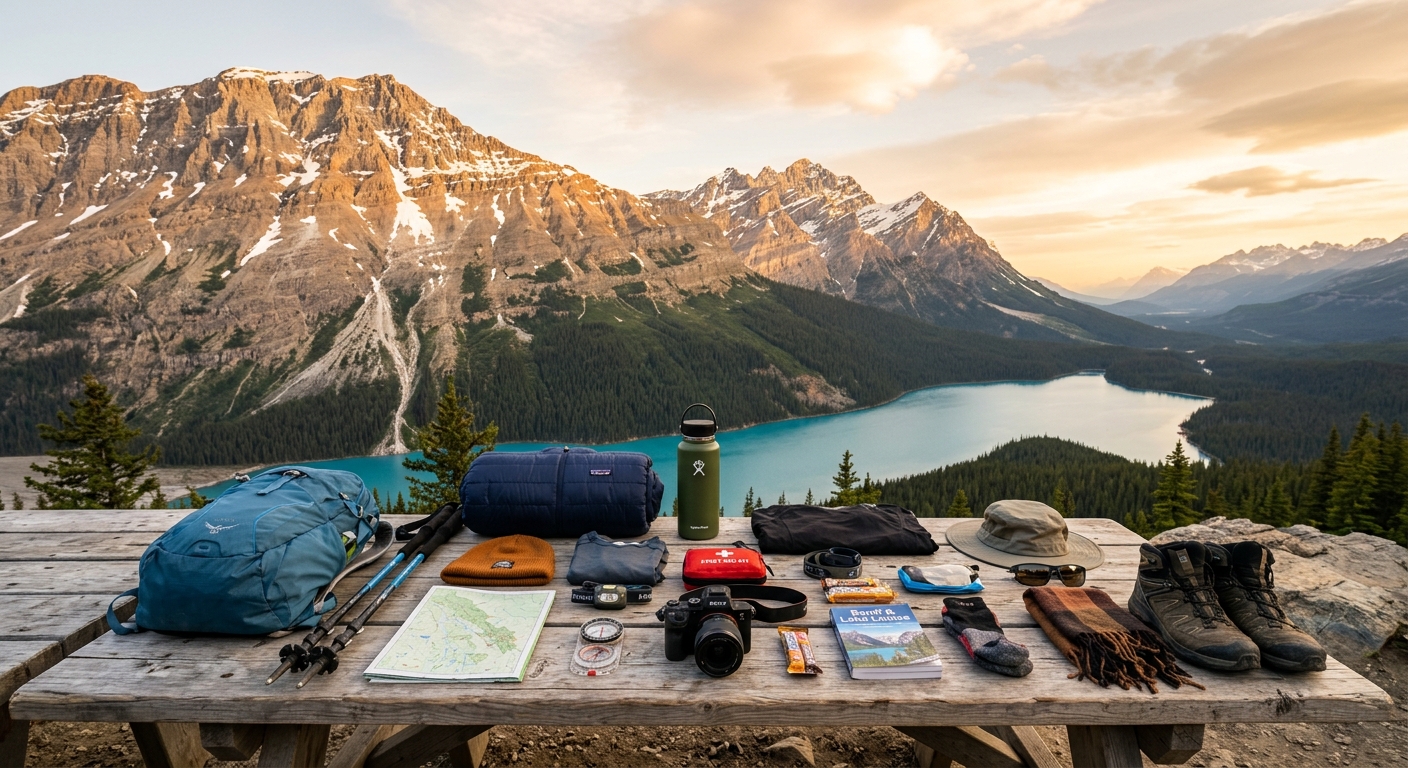
Packing for Banff requires planning for mountain weather that can change dramatically — sometimes within the same day. For anyone visiting in summer or winter, this comprehensive packing list ensures you'll be comfortable and prepared for everything the Canadian Rockies throw at you.
Summer Packing List (June-August)
Clothing
- Moisture-wicking base layers: 3-4 t-shirts in synthetic or merino wool — avoid cotton on hikes
- Light fleece or down jacket: A packable down jacket is essential even in summer. Mornings and evenings can drop to 5-10 degrees
- Rain jacket: A waterproof, breathable shell is non-negotiable. Afternoon thunderstorms are common
- Hiking pants: 2 pairs of quick-dry hiking pants or convertible pants
- Shorts: For warm afternoons in town and easy trails
- Warm hat and gloves: Yes, even in summer, if you're doing high-elevation hikes
- Swimsuit: For the hot springs and lake dipping (for the brave)
Footwear
- Hiking boots: Sturdy, waterproof, broken-in boots. The single most important item you'll pack
- Casual shoes or sandals: For town exploring and post-hike comfort
- Wool hiking socks: 3-4 pairs of merino wool socks. Prevents blisters and manages moisture
Winter Packing List (November-March)
Clothing
- Thermal base layers: Merino wool tops and bottoms — the foundation of warmth
- Insulated down or synthetic jacket: A jacket rated to at least -20 degrees
- Waterproof outer shell: Wind and snow protection over your insulating layers
- Insulated snow pants: Essential for any outdoor winter activity
- Warm toque (beanie): Wool or fleece-lined, covering your ears
- Insulated gloves + liner gloves: Bring both. Liners are useful for phone use and photography
- Neck gaiter or balaclava: A neck gaiter for face protection on very cold days
- Wool socks: 4-5 pairs of thick merino wool socks
Footwear
- Insulated winter boots: Waterproof, warm, with good traction
- Ice cleats/microspikes: Attach to boots for icy trails and sidewalks — a game-changer
Year-Round Essentials
- Sunscreen (SPF 50+): UV is stronger at altitude. Apply even on cloudy days
- Sunglasses: Polarized sunglasses. Glare off snow and water is intense
- Reusable water bottle: An insulated water bottle. Stay hydrated at altitude. Banff tap water is excellent
- Daypack: A 20-30L daypack for day hikes and excursions
- Bear spray: Available at outdoor shops in Banff if you're hiking. Don't fly with it
- Camera: You'll regret not having one. Even a phone camera will do
- Portable charger: A portable charger — cold drains batteries fast
- First aid kit: A basic first aid kit including blister treatment, pain relief, and antihistamines
Shoulder Season Extras (April-May, September-October)
Shoulder seasons require the most versatile packing. Expect anything from warm sunshine to snowfall in a single day:
- Pack both summer and lightweight winter layers
- Waterproof everything — rain and wet snow are common
- Microspikes for trails that may still have ice patches
- Extra warm layers for larch season hikes in September (high-elevation starts are cold)
What NOT to Pack
- Cotton clothing: Gets wet, stays wet, and loses all insulation. Stick to synthetics and wool
- Jeans for hiking: Heavy, slow-drying, and restrictive. Save them for town
- Excessive formal wear: Banff is casual. Even nice restaurants welcome smart-casual attire
- Bear spray from home: You can't fly with it. Buy it in Banff and dispose of it before your flight home
Packing Tip: Layer, layer, layer. A sunny morning hike can turn into a cold, windy summit. Dress in a moisture-wicking base, insulating mid-layer, and waterproof outer shell — add or remove layers as conditions change. This system works year-round in the Rockies.
Enjoyed this guide? Get weekly Banff tips.