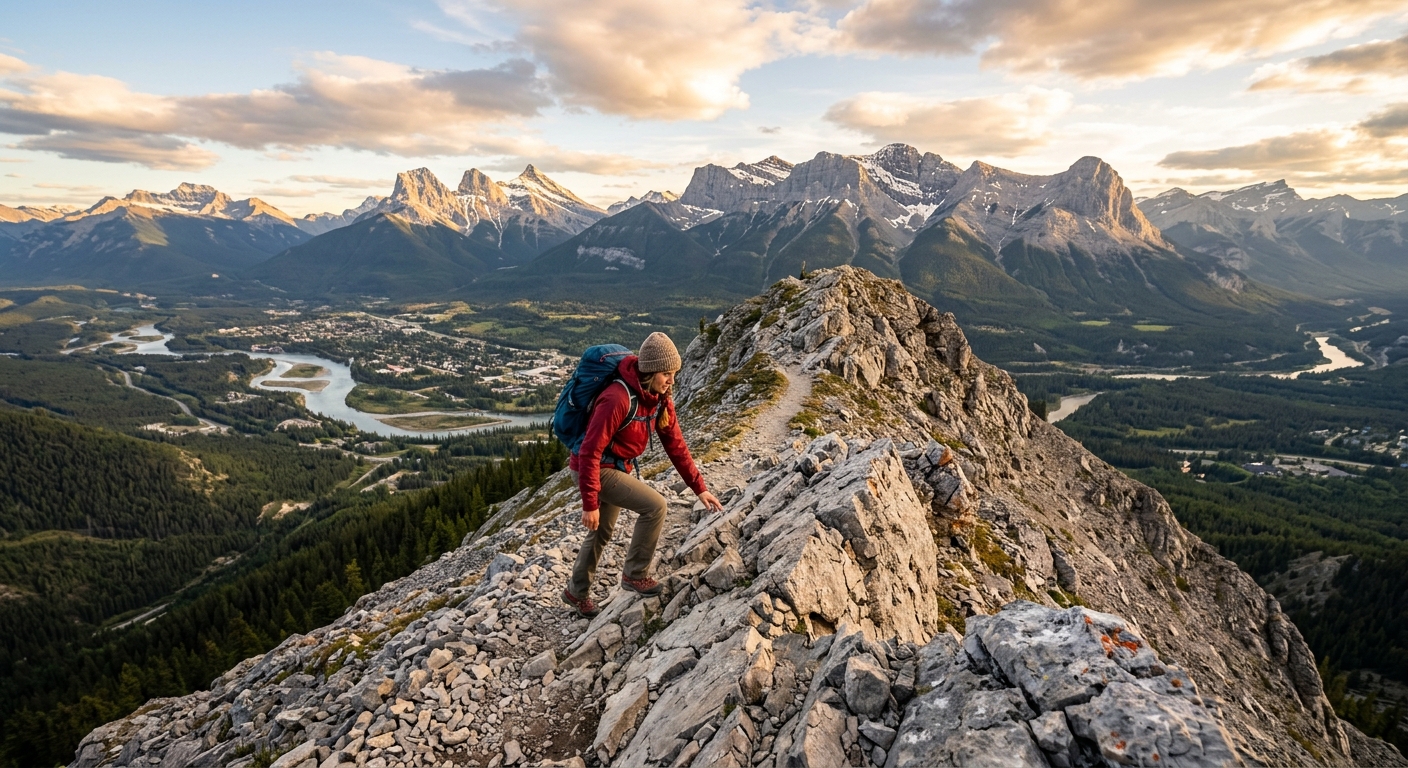
Scrambling sits between hiking and rock climbing — it involves ascending steep, rocky terrain using your hands for balance and support, but without ropes or technical climbing equipment. The Canadian Rockies around Banff offer some of the best scrambling in North America, with peaks ranging from beginner-friendly routes to exposed ridges that challenge experienced scramblers. Here's how to get started.
What Is Scrambling?
Scrambling is ascending steep terrain where you need to use your hands to maintain balance and progress. It differs from hiking (where your hands stay free) and rock climbing (which requires ropes, harnesses, and protection). In the Yamnuska Difficulty System (YDS) used in the Rockies, scrambles are typically rated as moderate, difficult, or exposed.
The key distinction: on a scramble, a fall could result in serious injury or death on exposed sections, but the technical difficulty of the actual moves is relatively low. The challenge is often mental — dealing with exposure (height), loose rock, and route-finding — rather than physical strength.
Best Beginner Scrambles Near Banff
Ha Ling Peak (Canmore)
The most popular scramble in the area and the classic starting point for beginners.
- Elevation gain: 770 m
- Distance: 7.6 km return
- Time: 4–6 hours
- Rating: Easy scramble
- Highlights: 360-degree views from the summit, clear trail with minimal route-finding, and a well-worn path to the top
- Note: The final summit ridge is narrow with some exposure but not technically difficult
Mount Fairview (Lake Louise)
A straightforward scramble above Lake Louise with remarkable aerial views of the lake and surrounding peaks.
- Elevation gain: 1,015 m
- Distance: 10.6 km return
- Time: 5–7 hours
- Rating: Easy scramble
- Highlights: Direct views down to Lake Louise and Moraine Lake, looking across to the Victoria Glacier
Cascade Mountain (Banff)
The prominent peak overlooking Banff town, Cascade Mountain offers a long but rewarding scramble via the south ridge.
- Elevation gain: 1,580 m
- Distance: 19.4 km return
- Time: 8–12 hours
- Rating: Moderate scramble
- Highlights: Standing on the summit of the mountain that dominates Banff's skyline. The views are remarkable
- Note: Long day — start very early. The final summit pyramid involves some exposed scrambling
East End of Mount Rundle (EEOR)
Another Canmore classic — the East End of Rundle is a steep but non-technical scramble up the most accessible peak in the area.
- Elevation gain: 830 m
- Distance: 6.6 km return
- Time: 4–6 hours
- Rating: Easy to moderate scramble
- Highlights: Views of the Spray Lakes, Canmore, and the entire Bow Valley. Relatively short approach
Essential Scrambling Gear
- Helmet: Non-negotiable. Rockfall is the primary hazard on scrambles. A climbing helmet protects against falling rocks from other parties and loose rock you may dislodge
- Sturdy boots: Stiff-soled hiking boots with good ankle support and grip. Running shoes are not appropriate for scrambling
- Gloves: Lightweight work gloves or leather gardening gloves protect your hands from sharp rock
- Trekking poles: Useful for the approach but typically stowed during the scrambling sections
- Layers: Summits are cold and windy. Bring a warm jacket and windbreaker even in summer
- Route description: Carry a printed route description or guidebook. Phone batteries die in the cold, and GPS signals can be unreliable in steep terrain
Safety Rules for Scrambling
- Never scramble alone: Go with at least one partner, ideally someone with experience
- Check conditions: Snow on a scramble route dramatically increases danger. Most routes are only safe when snow-free (July–September)
- Start early: Afternoon thunderstorms are common in the Rockies. Be off the summit by early afternoon
- Know how to turn around: If conditions deteriorate, the route feels beyond your ability, or the weather changes — descend. The mountain will be there next time
- Test rock before committing: Rockies limestone can be loose. Test handholds and footholds before weighting them
- Stay close together: Don't spread your group across a rock face. Rocks kicked loose by one person endanger those below
Resources
The essential guidebook is Scrambles in the Canadian Rockies by Alan Kane — the definitive reference with route descriptions, difficulty ratings, and approach information for hundreds of peaks.
Stay in Banff or Canmore for easy access to scrambling peaks — book on Expedia. For guided mountain experiences, check GetYourGuide.
Enjoyed this guide? Get weekly Banff tips.