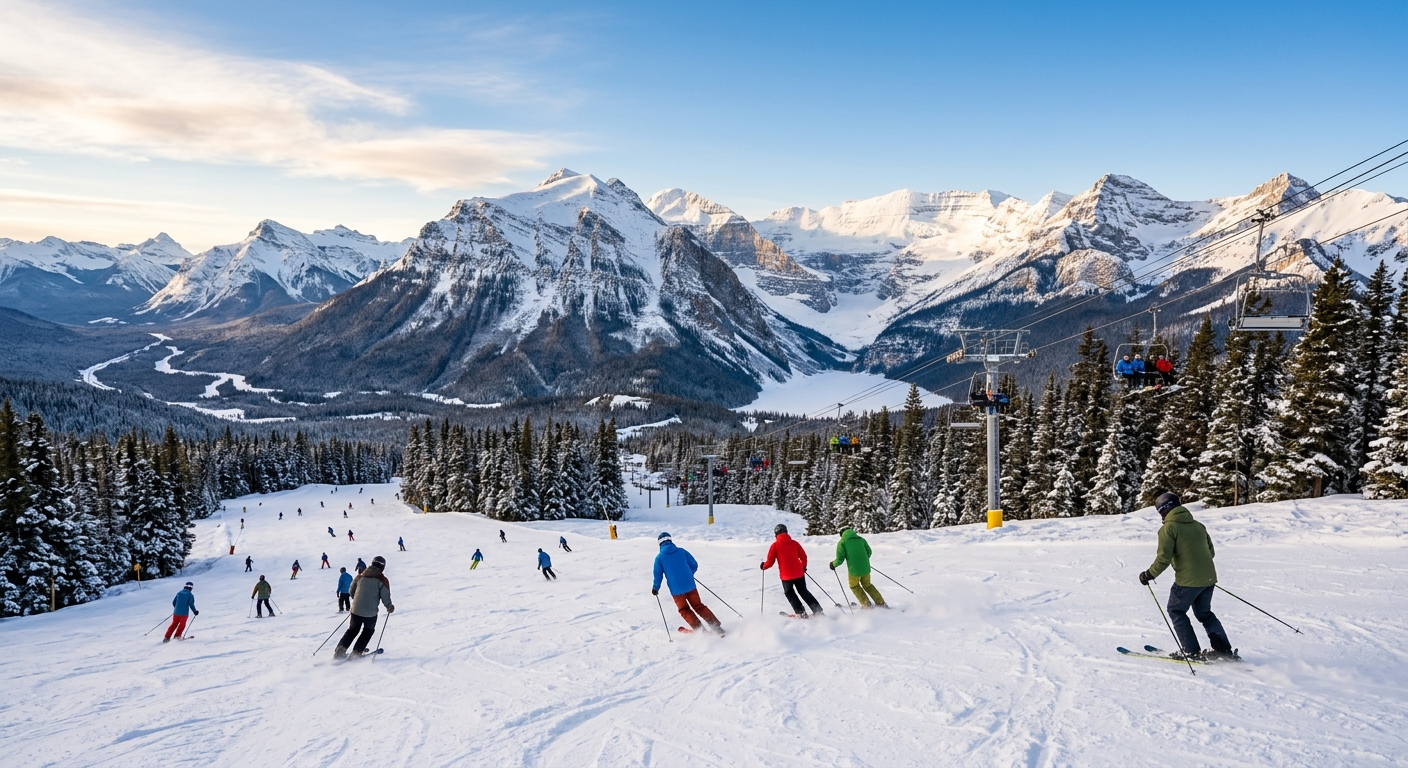
Banff National Park is home to SkiBig3: three world-class resorts (Banff Sunshine, Lake Louise, and Mt. Norquay) that you can ski on a single lift ticket. Between them you get more than 7,700 acres of terrain, one of the longest seasons on the continent, and some of the most jaw-dropping mountain scenery anywhere. This is your complete, up-to-date guide to skiing Banff for the 2026-27 season, from lift tickets and passes to where to stay, gear, and getting to the slopes.
2026-27 Banff Ski Season Dates
Banff has one of the longest ski seasons in North America thanks to high elevation and reliable snowfall. Exact opening days depend on conditions each year, but the typical windows are:
- Banff Sunshine: early-to-mid November through late May (the longest season in Canada, and it even runs a short summer-skiing window in late June)
- Lake Louise: early November through early May
- Mt. Norquay: early November through early April, with night skiing on select evenings
The best powder usually falls in January and February. Late March and April deliver spring skiing with longer days, softer snow, and the best deals of the year.
The Three Resorts Compared
Banff Sunshine Village
- Terrain: 3,358 acres across three mountains
- Vertical: 1,070m
- Season: November to late May (longest in Canada)
- Best for: advanced skiers, powder chasers, and those who want the longest season
- Highlights: Highest base elevation (2,160m), most natural snowfall, Delirium Dive (experts only), and the only ski-in/ski-out hotel in the park at Sunshine Mountain Lodge
Lake Louise Ski Resort
- Terrain: 4,200 acres, the largest in the Canadian Rockies
- Vertical: 1,000m
- Season: November to early May
- Best for: all levels, families, and those wanting variety
- Highlights: Remarkable scenery, famous back bowls for experts, excellent grooming for intermediates, and a friendly village base
Mt. Norquay
- Terrain: 190 acres
- Vertical: 503m
- Season: November to April
- Best for: families, beginners, night skiing, tubing, and quick sessions
- Highlights: Just 7 minutes from Banff town, affordable, night skiing on select evenings, and excellent for learning
Quick take: choose Sunshine for the deepest snow and longest season, Lake Louise for scenery and sheer size, and Norquay for convenience, beginners, and night skiing. With a SkiBig3 ticket you don't have to choose, you can ski all three.
Lift Tickets, Passes & How to Save
A SkiBig3 lift ticket gives you access to all three resorts on one ticket, plus the free SkiBig3 ski shuttle, hotel or in-town lift-ticket delivery, and flexible grace days on multi-day tickets. Multi-day tickets (3+ days) are the best value and let you sample each mountain.
The single biggest way to save: buy online at least 21 days in advance to save up to 25%. As a guide, an early-season 3-day adult ticket starts around CAD $418 booked ahead, versus roughly $500-600 at the window; single-day window rates run about $140-170 depending on resort and date. Kids 5 and under generally ski free. Always check current dated pricing before you book, as rates rise as the date approaches.
Planning lessons, rentals, or a guided ski day alongside your tickets? You can compare Banff ski experiences, lessons and rental packages here.
Ikon Pass & Mountain Collective
SkiBig3 is a proud Ikon Pass destination, so if you already ski elsewhere your pass may cover Banff:
- Ikon Pass: up to 7 days across Banff Sunshine, Lake Louise & Norquay, with no blackout dates
- Ikon Base Pass: up to 5 days, with blackout dates (for 2026-27: Dec 26-30 2026, Jan 16-17 2027, and Feb 13-14 2027)
- Ikon Session Pass: 2, 3, or 4 total days
- Mountain Collective: 2 days plus 50% off additional days
Rule of thumb: if you're skiing roughly five or more days this winter (here or elsewhere), a season pass usually beats buying daily tickets. For a shorter trip, a multi-day SkiBig3 ticket is simplest.
Ski & Stay Packages: The Best-Value Way to Book
Bundling accommodation with lift tickets typically saves 20-30% versus booking separately, and it's how most visitors book a Banff ski trip. You can stay ski-in/ski-out at Sunshine Mountain Lodge, slopeside near Lake Louise, or in Banff town for the best dining and après scene (most people choose town and ride the free shuttle). Compare Banff ski & stay hotel deals on Expedia, read our Banff ski-in/ski-out guide, or browse the full directory of 95+ Banff hotels.
Getting to the Resorts
The free SkiBig3 ski shuttle connects Banff and Canmore hotels to all three resorts, so you don't need a car to ski. If you'd rather drive, note that winter tires or chains are required on mountain park roads in the cold months and conditions can be icy. From Calgary International Airport it's about a 90-minute drive to Banff. Search car rentals with winter tires on Expedia, and see our Calgary to Banff guide and winter driving guide before you set off.
Gear Rental & What to Pack
Renting from shops in Banff town (Monod Sports, Ski Hub, Snowtips-Bactrax) is usually cheaper than renting at the resort, and most offer multi-day discounts. You can also book ski rental and lesson packages in advance here.
Whatever you rent, bring your own personal essentials, both to save money and to stay comfortable when temperatures dip to -20°C or colder. The items worth owning:
- Quality ski goggles (a spare low-light lens is gold on grey days)
- Merino wool base layers (top and bottom)
- Insulated gloves or mittens
- Hand & toe warmers (essential for deep-cold days)
- A ski helmet
- Merino ski socks and a neck gaiter or balaclava
For a full head-to-toe list, see our Banff packing list.
Ski & Snowboard Lessons
All three resorts run ski and snowboard schools with group and private lessons. Mt. Norquay is the best value for first-timers, with beginner packages that bundle a lift ticket, rental, and group lesson. Group lessons start around $89 CAD and private lessons around $159 CAD. Book lessons and beginner packages here.
Snow Conditions & Best Time to Ski
Banff's resorts receive roughly 750-900 cm of snowfall annually. Sunshine Village's high elevation and Continental Divide position give it the most consistent natural snow. The deepest, most reliable powder falls in January and February; the Christmas-New Year and March-break weeks are the busiest and priciest; and late March into April is the sweet spot for sunshine, soft snow, and the best value. Check live Banff conditions before you go.
Beyond the Slopes: Winter in Banff
Not skiing every day? Banff's winter is packed with other adventures, perfect for rest days and non-skiers in your group:
- Dog sledding through the Rockies
- Johnston Canyon ice walk past frozen waterfalls
- Snowshoeing and cross-country skiing
- Chasing the Northern Lights
- Ice skating on Lake Louise and tubing at Mt. Norquay
- Warming up with the best après-ski in Banff
You can browse and book guided winter experiences here. For a full winter itinerary, see our winter Banff itinerary.
Banff Skiing FAQ
Which Banff ski resort is best for beginners?
Mt. Norquay is the friendliest for first-timers thanks to gentle learning terrain, good-value beginner packages, and its location just minutes from Banff town. Lake Louise is also excellent for progressing intermediates.
Can I ski all three Banff resorts on one ticket?
Yes. A SkiBig3 lift ticket covers Banff Sunshine, Lake Louise, and Mt. Norquay, and includes the free ski shuttle between them. Ikon and Mountain Collective passes also cover all three.
How much does it cost to ski in Banff?
Single-day window tickets run roughly CAD $140-170. Multi-day SkiBig3 tickets bought online 21+ days ahead save up to 25% (a 3-day adult ticket starts around $418 early season). Ski & stay packages bundle lodging and lift tickets for 20-30% savings.
Do I need a car to ski in Banff?
No. The free SkiBig3 ski shuttle runs from Banff and Canmore hotels to all three resorts. A car adds flexibility, but if you drive, winter tires are required on park roads.
When is the best time to ski Banff?
January and February for the deepest powder, late March and April for sunshine and value, and December for early-season and holiday atmosphere (also the most crowded).
Is the Ikon Pass worth it for Banff?
If you'll ski about five or more days this season, an Ikon or SkiBig3 season pass usually beats daily tickets. The Ikon Pass gives up to 7 days at SkiBig3 with no blackouts; the Base Pass gives up to 5 days with blackout dates.
Enjoyed this guide? Get weekly Banff tips.