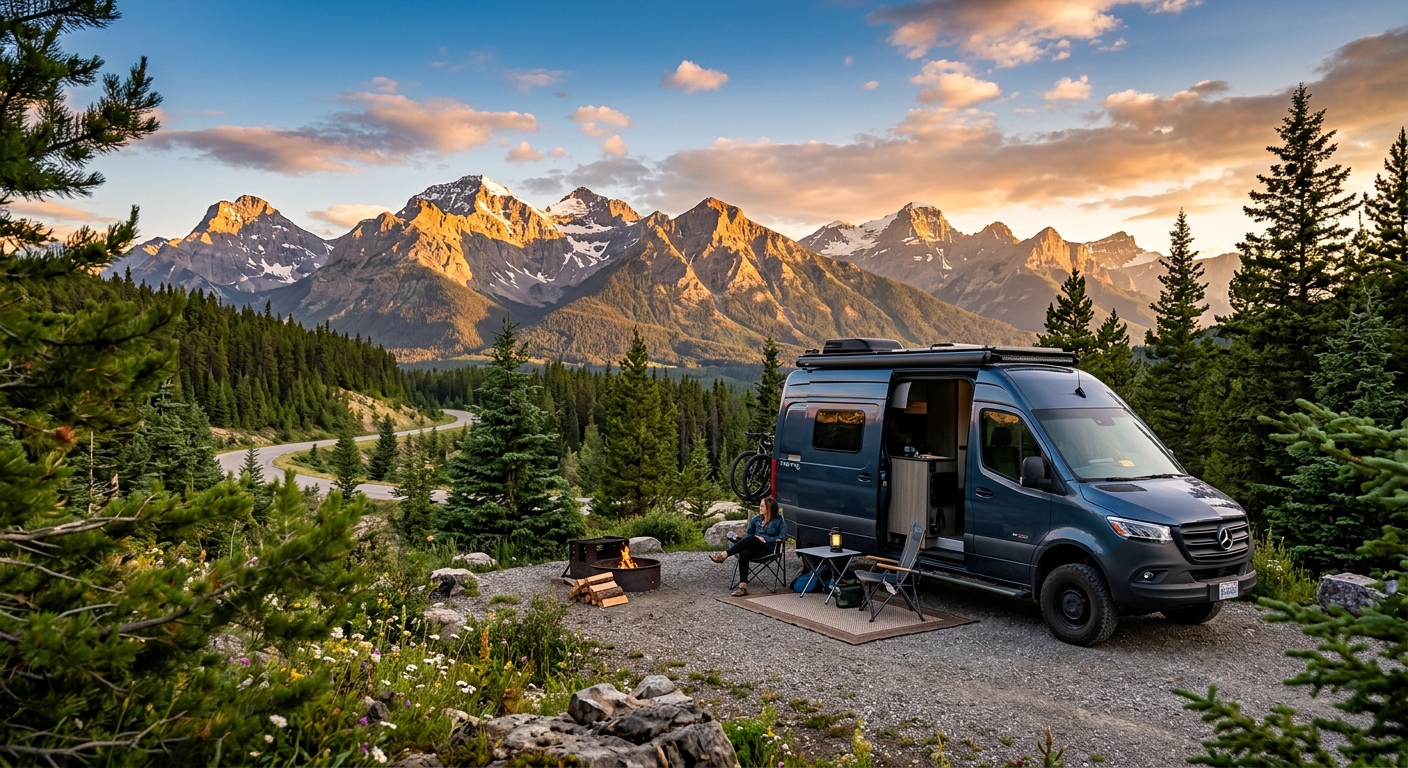
Banff National Park was designated a Dark Sky Preserve by the Royal Astronomical Society of Canada in 2017, making it one of the largest accessible dark sky preserves in the world. With minimal light pollution, high elevation, and dry mountain air, Banff offers notable stargazing that rivals any location on Earth. Here's your complete guide to experiencing the night sky in the Canadian Rockies.
What Is a Dark Sky Preserve?
A Dark Sky Preserve is an area with minimal artificial light pollution where darkness is protected for wildlife, ecosystems, and human enjoyment of the night sky. Parks Canada actively manages lighting in Banff to reduce light pollution — streetlights are shielded, and there are strict guidelines on outdoor lighting. The result is incrediblely dark skies just minutes from town.
What Can You See?
On a clear night in Banff, you can see:
- The Milky Way: Our galaxy's band of light stretches dramatically across the sky from horizon to horizon. In Banff's dark skies, the dust lanes, star clouds, and structure of the Milky Way are visible to the naked eye
- Thousands of stars: Far more than you can see from any city. Constellations pop out in incredible detail
- Planets: Jupiter, Saturn, Mars, and Venus are regularly visible, sometimes brightly enough to cast shadows
- Meteor showers: The Perseids (August), Geminids (December), and other meteor showers are impressive from dark-sky locations
- Northern Lights (Aurora Borealis): Banff is far enough north to see the aurora on active nights, particularly during solar maximum years. Green, purple, and red curtains dancing across the sky above mountain silhouettes is a once-in-a-lifetime experience
- Satellites: The International Space Station and other satellites are regularly visible crossing the sky
Best Stargazing Spots
1. Vermilion Lakes
Just 5 minutes from Banff town. The open water reflects the stars, and the wide-open sky over the lakes provides an unobstructed view. Mount Rundle and the Milky Way make for incredible astrophotography compositions. The second and third lakes are the darkest.
2. Two Jack Lake
About 12 km from Banff. The famous lakeside scene is even more magical under the stars. The Milky Way arcs over Mount Rundle and reflects in the lake. This is one of the most photographed stargazing locations in the Canadian Rockies.
3. Lake Minnewanka
Banff's largest lake offers a very dark sky — you're further from town lights here. The lake's length provides a dramatic foreground with mountain silhouettes. The parking lot at the lake is a convenient viewing spot.
4. Cascade Ponds
Small, quiet ponds along the Lake Minnewanka road. Dark skies, no crowds, and picnic tables where you can set up comfortably. A great spot for a relaxed stargazing session.
5. Bow Lake (Icefields Parkway)
If you're camping along the Icefields Parkway, Bow Lake offers some of the darkest skies in the park. The nearest town lights are far away, and the open lakeshore provides an unobstructed horizon. The turquoise water won't be visible at night, but the star reflections are magical.
6. Peyto Lake Viewpoint (Bow Summit)
The high elevation (2,088m) puts you above much of the atmosphere for clearer views. The parking area is accessible at night, and the darkness is profound. Not recommended for solo night visits — bring a companion and bear spray.
Best Times for Stargazing
- New moon periods: The darkest skies occur during the new moon or within a few days of it. Check a moon phase calendar when planning your trip
- Winter (December-February): The longest nights, driest air, and most transparent skies. The Milky Way core is below the horizon but winter constellations (Orion, Taurus, Gemini) are beautiful. Dress very warmly
- Summer (June-August): The Milky Way core is visible and the temperatures are comfortable for extended stargazing. Nights are shorter but still get properly dark between 11pm and 4am
- Fall (September-October): Excellent combination of dark skies, comfortable temperatures, and the Milky Way still visible. Perhaps the ideal stargazing season
Northern Lights Tips
Seeing the Aurora Borealis in Banff is possible but not guaranteed. Your chances increase with:
- High solar activity (check aurora forecasts: SpaceWeatherLive or the My Aurora Forecast app)
- Clear, dark skies (no clouds, new moon)
- Looking north from an open location (Vermilion Lakes is ideal — it faces north)
- Being patient — aurora can appear and disappear throughout the night
- Winter months offer longer dark hours but colder temperatures
Equipment & Tips
- Eyes only: No equipment needed. Give your eyes 20-30 minutes to fully adjust to the dark. Avoid looking at your phone screen (use red-light mode if you must)
- Binoculars: A pair of 7x50 or 10x50 binoculars reveals star clusters, nebulae, and details invisible to the naked eye
- Camera: For astrophotography, use a tripod, wide aperture (f/2.8 or wider), high ISO (1600-6400), and 15-25 second exposures
- Dress warmly: You'll be standing still in the cold. Even summer nights in the mountains can drop to 5°C
- Red headlamp: Preserves your night vision while providing enough light to move safely
- Star chart app: Apps like Stellarium or Sky Guide help identify what you're seeing (use night mode)
- Bear safety: Carry bear spray when stargazing away from your vehicle. Make noise when walking in the dark
Guided Stargazing
For a deeper experience, consider a guided stargazing tour. Local astronomers lead groups to prime viewing spots with telescopes, laser pointers, and expert knowledge of the night sky. Book a guided stargazing tour in Banff for a memorable evening.
Enjoyed this guide? Get weekly Banff tips.