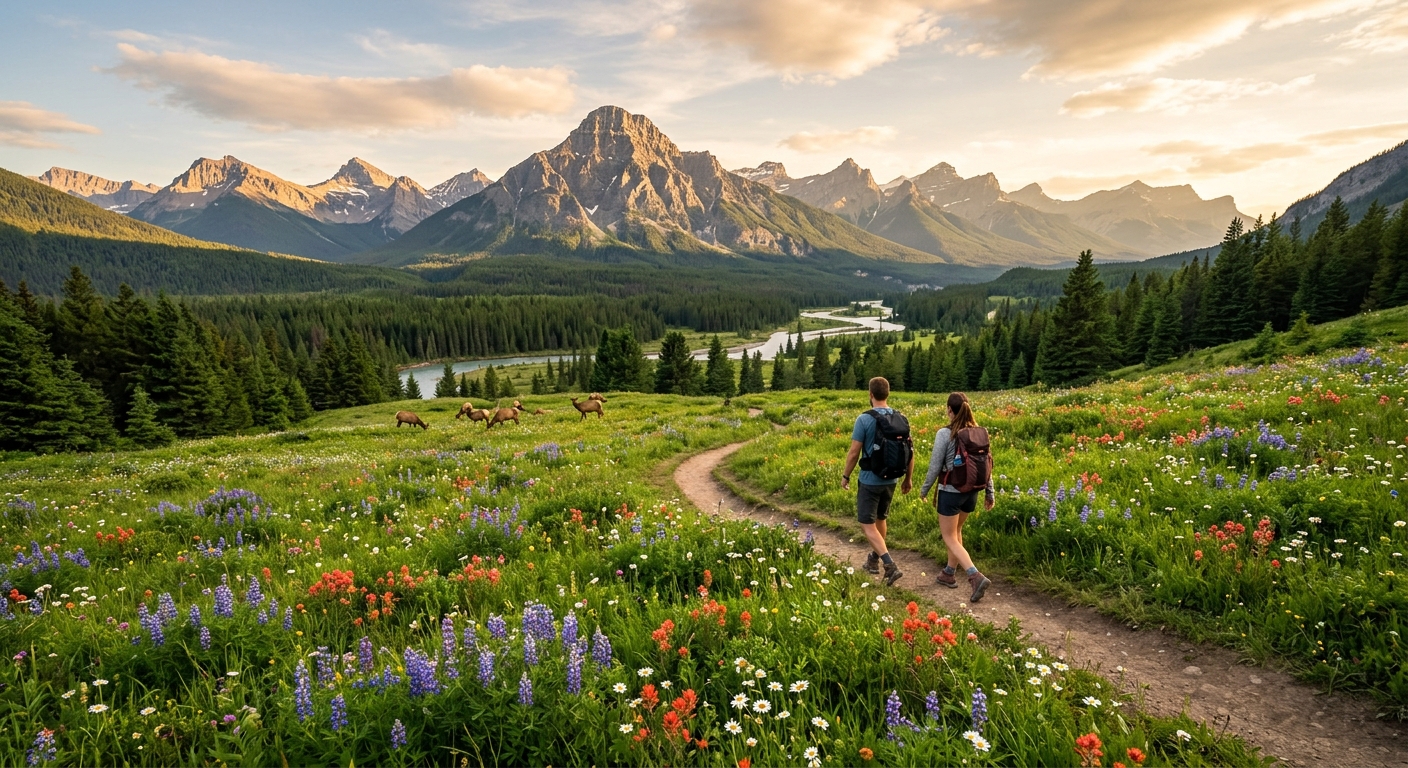
Summer is the best season for wildlife viewing in Banff National Park. Longer days, active animals, and accessible trails mean you'll have plenty of opportunities to spot everything from grizzly bears to marmots. Here's a month-by-month guide to what you can see and where to find it.
May: The Awakening
May is when Banff comes alive after winter. Snow is melting at lower elevations, and animals are emerging from hibernation or returning from winter ranges.
- Grizzly bears: Emerging from dens, often seen on south-facing slopes near avalanche paths where early vegetation grows. The Bow Valley Parkway and Icefields Parkway are prime spots
- Black bears: Also emerging, often near roadsides where dandelions and other early greens appear
- Elk: Calving season begins. Watch for elk cows in meadows near the town of Banff. Keep your distance — mothers are protective
- Bighorn sheep: Rams and ewes are often seen along the road to Lake Minnewanka and on Mount Norquay
June: Peak Activity
June brings warmer temperatures and longer daylight, making it one of the best months for wildlife encounters.
- Bear families: Grizzly and black bear mothers with cubs of the year are active. The Bow Valley Parkway at dawn is your best bet
- Deer: Mule deer and white-tailed deer are common in forests and meadows throughout the park
- Hoary marmots: These large, friendly rodents emerge on alpine meadows. Listen for their sharp whistle on hikes above treeline
- Birds: Songbird migration peaks. Warblers, thrushes, and sparrows fill the forest canopy
- Mountain goats: Visible on rocky cliffs and alpine terrain. Parker Ridge on the Icefields Parkway is a reliable spot
July: High Summer
July is peak season for both tourists and wildlife activity. Alpine meadows are accessible and animals are feeding heavily.
- Pikas: These tiny, adorable relatives of rabbits live in rocky talus slopes. Listen for their distinctive "eep!" call on alpine hikes
- Columbian ground squirrels: Everywhere in meadows, standing upright and chattering. Kids love them
- Osprey: Nesting along rivers and lakes. Watch for them diving for fish at Vermilion Lakes and along the Bow River
- Bears: Still active but often at higher elevations where berries are ripening
- Elk: Bulls are growing velvet antlers. Often seen grazing on the Banff Springs Golf Course at dawn and dusk
August: Berry Season
August is prime time for bears, which are feeding intensely on berries to prepare for winter hibernation (a period called hyperphagia).
- Bears in berry patches: Both grizzly and black bears concentrate on buffaloberry bushes. Trail closures are common in bear-active areas — check Parks Canada for current closures
- Moose: Occasionally spotted in wetlands and along rivers. The Bow Valley Parkway and the road to Lake Minnewanka are possibilities
- Wolverines: Extremely rare, but August sightings in alpine terrain do occur. Consider yourself extraordinarily lucky
- Hawks and eagles: Raptors are active as they prepare for autumn migration. Golden eagles soar along mountain ridges
September: Transition
September marks the transition to autumn, and animal behaviour shifts dramatically.
- Elk rut: The annual mating season begins in mid-September. Bull elk bugle, spar, and become aggressive. Watch from at least 30 metres. The town of Banff is the epicentre of the rut — elk are literally in the streets
- Bears: Still in hyperphagia, feeding up to 20 hours a day. Late September brings the last reliable bear viewing before denning
- Larch season birds: Clark's nutcrackers are busy caching seeds from whitebark pine trees in alpine areas
Wildlife Viewing Tips
- Dawn and dusk: Most animals are most active in the first and last two hours of daylight
- Binoculars: Bring them. Many animals are best viewed from a safe distance, and binoculars turn a distant speck into a detailed sighting
- Stay on trails: It protects habitat and keeps you predictable to animals (which reduces stress for both of you)
- Safe distances: 100 metres from bears and wolves, 30 metres from all other wildlife. Use your zoom lens, not your feet
- Never feed wildlife: It's illegal, dangerous, and completely fatal for the animal. A fed bear is a dead bear
Stay in Banff for prime wildlife viewing — book on Expedia. Join guided wildlife tours and nature excursions with expert naturalists.
Enjoyed this guide? Get weekly Banff tips.