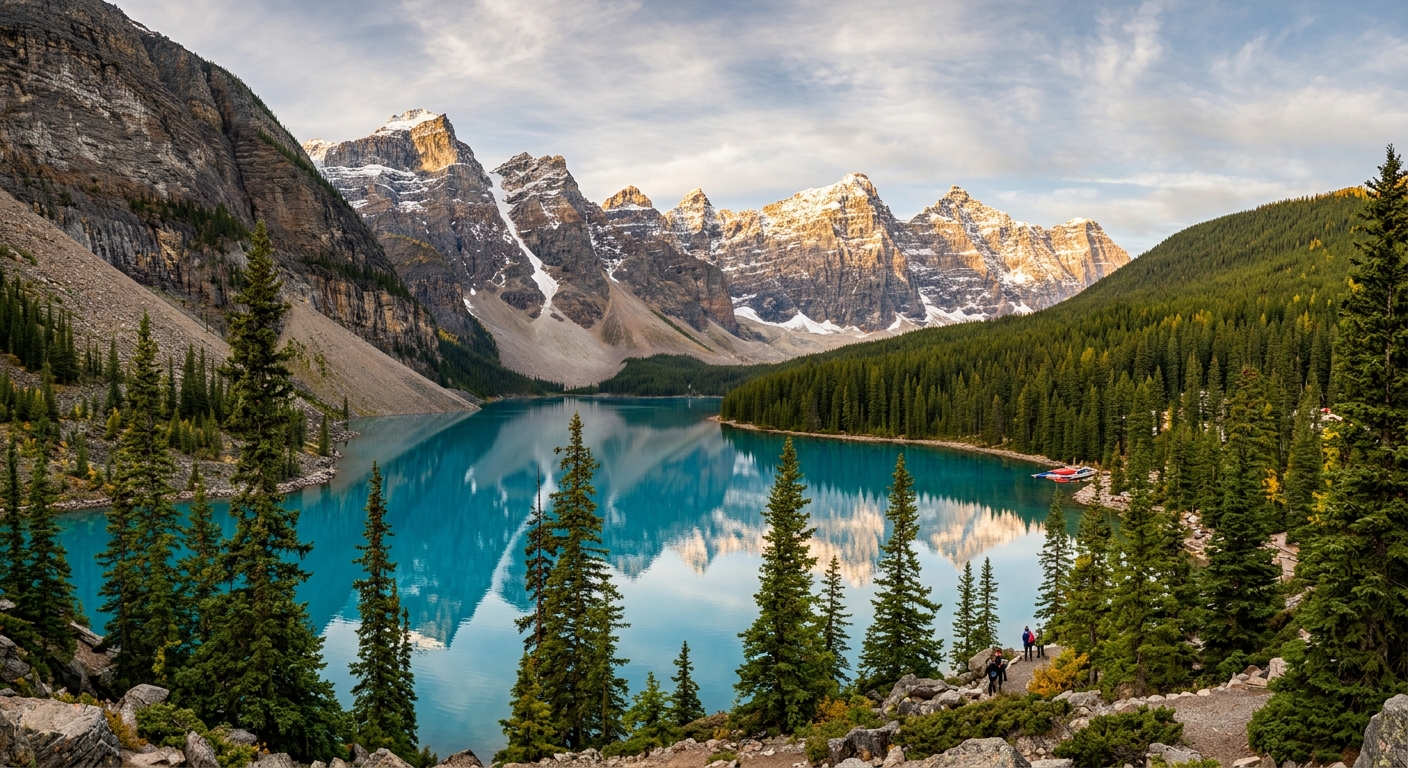
Banff's mountain weather is famously unpredictable — we've seen snowfall in July and T-shirt days in October. Understanding what to expect each month is essential for planning a great trip. This guide breaks down Banff weather month by month, the best time to visit for each activity, and exactly what to pack so you're prepared for anything the Rockies throw at you.
Banff Weather Overview
Banff townsite sits at 1,383 metres (4,537 feet) above sea level, which means temperatures are always cooler than nearby Calgary. Mountain weather can change in minutes — sunshine can turn to hail, rain, or even snow with little warning, any time of year. The key to comfortable hiking, sightseeing, and outdoor activities in Banff is layering.
Month-by-Month Banff Weather Guide
January
- Average high: -5°C (23°F)
- Average low: -15°C (5°F)
- Snowfall: 25 cm
- Daylight: ~8 hours
The coldest month in Banff. Expect deep cold snaps that can push temperatures to -30°C with wind chill. However, January is prime ski season with excellent powder at Sunshine Village, Lake Louise Ski Resort, and Mt. Norquay. Frozen waterfalls at Johnston Canyon, ice skating on Lake Louise, and the SnowDays festival make this a magical (if chilly) time to visit.
February
- Average high: -3°C (27°F)
- Average low: -13°C (9°F)
- Snowfall: 20 cm
- Daylight: ~9.5 hours
Slightly warmer than January with longer days. Skiing remains excellent — February often sees the deepest snowpack. The Ice Magic Festival at Lake Louise features remarkable ice sculptures. Clear nights offer great opportunities for northern lights viewing.
March
- Average high: 2°C (36°F)
- Average low: -10°C (14°F)
- Snowfall: 22 cm
- Daylight: ~11.5 hours
Spring skiing begins — warm sunny days and great snow coverage. Sunshine Village's season extends into late May thanks to its high elevation. March break is a popular family ski week. Lower-elevation trails start to soften, but alpine areas remain fully snow-covered.
April
- Average high: 7°C (45°F)
- Average low: -4°C (25°F)
- Snowfall: 18 cm (yes, still snowing)
- Daylight: ~13.5 hours
The shoulder season transition begins. Snow melts at lower elevations, feeding thundering waterfalls. It's the quietest month for tourism, with great hotel deals. Many trails are still snow-covered, but town walks and lower canyon trails are accessible. Pack for all four seasons in a single day.
May
- Average high: 13°C (55°F)
- Average low: 1°C (34°F)
- Precipitation: 55 mm (mostly rain)
- Daylight: ~15.5 hours
Spring is in full swing. Waterfalls reach peak flow, wildflowers begin blooming in valleys, and wildlife is increasingly active after winter. Lake Louise and Moraine Lake begin thawing but are typically not at peak colour yet. Moraine Lake Road usually opens in late May. Some higher trails remain snowy through the end of the month.
June
- Average high: 17°C (63°F)
- Average low: 5°C (41°F)
- Precipitation: 60 mm
- Daylight: ~16.5 hours (sunrise ~5:30am, sunset ~10pm)
Early summer with incredibly long days. Most trails open by mid to late June, though some alpine routes may still have snow patches. June can be wetter than July, with afternoon thunderstorms common. The lake colours intensify as glacial melt increases. It's the start of peak season but slightly less crowded than July-August.
July
- Average high: 22°C (72°F)
- Average low: 7°C (45°F)
- Precipitation: 50 mm
- Daylight: ~16 hours
Peak season. The warmest month with the most reliable weather. All trails are open, lakes are at their most vivid turquoise, and wildflowers blanket alpine meadows. This is also the busiest month — book accommodation 3-6 months ahead, and reserve Moraine Lake shuttles as soon as they open. Afternoon thunderstorms are common, so start hikes early.
August
- Average high: 21°C (70°F)
- Average low: 7°C (45°F)
- Precipitation: 50 mm
- Daylight: ~14.5 hours
Similar to July but slightly cooler evenings. Wildfire smoke from BC can occasionally affect air quality and visibility — check forecasts. Crowds remain heavy until Labour Day. August is excellent for high-alpine hiking as snow is fully melted on all but the highest passes.
September
- Average high: 15°C (59°F)
- Average low: 2°C (36°F)
- Precipitation: 40 mm
- Daylight: ~12.5 hours
The locals' favourite month. Crowds vanish after Labour Day, the weather is often stable and crisp, and late September brings larch season — when alpine larch trees turn brilliant gold. Larch Valley, Sentinel Pass, and Cascade Amphitheatre are particularly jaw-dropping. Accommodation prices drop 20-40% from peak summer rates. Many consider this the absolute best time to visit Banff.
October
- Average high: 9°C (48°F)
- Average low: -3°C (27°F)
- Snowfall: may begin
- Daylight: ~10.5 hours
Late fall brings snow at higher elevations and cooler temperatures throughout. Moraine Lake Road closes mid-October. Some facilities begin winding down. However, the quiet trails, fall colours, and shoulder-season pricing make October a wonderful time for visitors who don't mind layering up.
November
- Average high: 0°C (32°F)
- Average low: -9°C (16°F)
- Snowfall: 20 cm
- Daylight: ~8.5 hours
Early winter sets in. Ski season begins at resorts (Sunshine Village and Lake Louise typically open in early to mid-November). The Banff Mountain Film Festival takes place in late October/early November. Town is quiet and cozy. This is a great time for budget-friendly visits before the holiday rush.
December
- Average high: -3°C (27°F)
- Average low: -13°C (9°F)
- Snowfall: 25 cm
- Daylight: ~7.5 hours
Banff transforms into a winter wonderland. Christmas in Banff is magical — festive lights, holiday markets, and snow-covered peaks. Skiing is in full swing. Johnston Canyon ice walks begin. The holiday period (Dec 20-Jan 2) sees premium pricing and busy slopes, so book well in advance.
Best Time to Visit by Activity
- Hiking: Late June to mid-October (peak: July-September)
- Skiing: November to May (peak: January-March)
- Lake photography: Mid-July to August (peak turquoise colour)
- Larch season: Last week of September to first week of October
- Wildlife viewing: May-June and September-October
- Northern lights: October to March (dark, clear nights)
- Budget travel: April-May and October-November
No matter when you visit, guided tours help you make the most of each season. Browse seasonal tours and experiences on GetYourGuide — from summer hiking tours to winter wildlife safaris.
What to Pack for Banff
Mountain weather demands smart packing. Here's what you need regardless of season:
Year-Round Essentials
- Layering system: base layer, insulating mid-layer, waterproof shell
- Waterproof hiking boots with ankle support
- Sunglasses (UV is intense at elevation, especially reflecting off snow or water)
- SPF 50 sunscreen and lip balm with SPF
- Reusable water bottle (at least 1 litre)
- Daypack (20-30 litre) for carrying layers, water, and snacks on trails
Summer Additions (June-September)
- Lightweight rain jacket (afternoon storms are common)
- Warm fleece or down jacket (evenings and mornings are cool, even in July)
- Bug spray (mosquitoes are active June-August, especially near lakes)
- Bear spray (essential for hiking)
- Quick-dry hiking pants and moisture-wicking shirts
Winter Additions (November-March)
- Insulated waterproof winter jacket
- Thermal base layers (merino wool recommended)
- Insulated winter boots with traction
- Warm hat, neck gaiter, insulated gloves
- Hand and toe warmers
- Ice cleats for walking on snowy/icy trails
Need to gear up before your trip? Find all your Banff packing essentials on Amazon — from hiking boots to base layers to bear spray.
Book Your Banff Trip
Now that you know exactly when to visit and what to pack, it's time to book. Find the best hotel deals for your travel dates on Expedia — prices vary dramatically by season, so booking early for peak periods (July-August, Christmas, ski season) is essential.
Enjoyed this guide? Get weekly Banff tips.