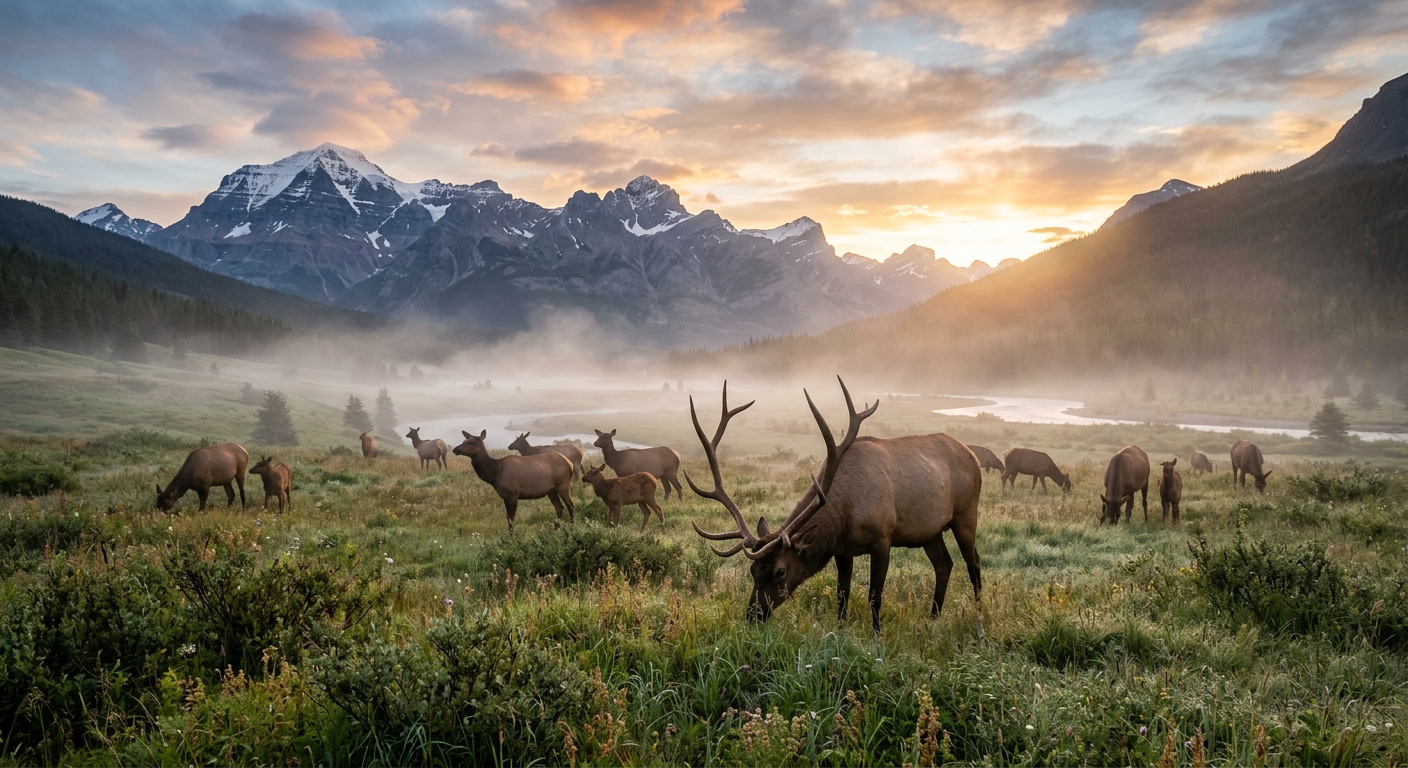
Banff National Park is home to an impressive diversity of wildlife. From grizzly bears to tiny pikas, knowing where to look and how to stay safe enhances every visit.
Common Wildlife in Banff
Elk
The most frequently seen large animal in Banff. Elk often graze on the grassy areas around town, especially near the Banff Springs Golf Course and along the Bow River. They may appear calm but can be aggressive, particularly during the fall rut (September-October). Maintain at least 30 metres distance.
Bighorn Sheep
Often spotted along roadsides, especially on the highway near Lake Minnewanka and on the Icefields Parkway. They're accustomed to vehicles but should never be approached or fed.
Black Bears
Present throughout the park, though they tend to avoid heavily trafficked areas. Berry-rich areas in late summer are good spots. If you see one, stay at least 100 metres away and never approach.
Grizzly Bears
Less common than black bears but present in more remote areas. Grizzlies are larger, have a distinctive shoulder hump, and should be given even more space. Carry bear spray on all hikes.
Mountain Goats
Found at higher elevations. The Icefields Parkway, Sulphur Mountain summit, and Lake Louise area are good spots. Their white coats stand out against dark rock faces.
Wolves & Coyotes
Wolves are present but rarely seen. Coyotes are more common, sometimes spotted near roadsides and meadows at dawn and dusk.
Best Wildlife Viewing Spots
- Bow Valley Parkway: The single best road for wildlife in the park. Drive slowly (60 km/h speed limit) at dawn or dusk.
- Vermilion Lakes: Elk, ospreys, bald eagles, and occasionally bears.
- Lake Minnewanka: Bighorn sheep, deer, and bears along the lakeshore.
- Icefields Parkway: Mountain goats, bears, and bighorn sheep along the roadside.
- Fenland Trail: A short, easy loop near Banff town that's excellent for birdwatching and the occasional elk sighting.
Wildlife Safety Rules
- Maintain 100m distance from bears, wolves, and cougars; 30m from all other wildlife
- Carry bear spray on every hike and know how to use it
- Make noise on trails (talking, clapping) to alert bears of your presence
- Never feed wildlife -- it's illegal and endangers both animals and people
- Store food in bear-proof containers or your vehicle trunk
- If you see a bear on or near a trail, stop, stay calm, back away slowly, and report the sighting
Enjoyed this guide? Get weekly Banff tips.