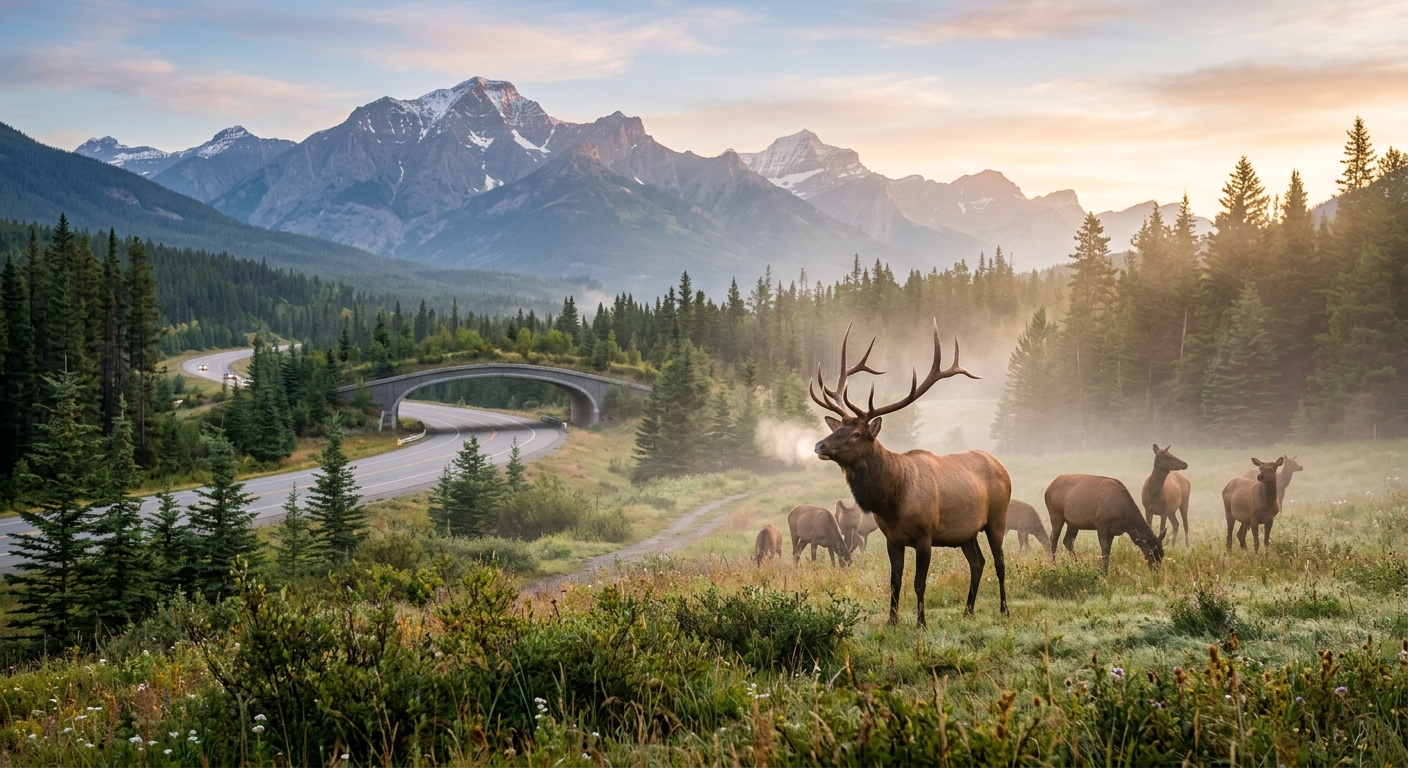
Banff National Park is home to the most successful wildlife crossing system in the world. Since the first wildlife underpass was built in 1996, the Trans-Canada Highway through Banff has been fitted with 6 wildlife overpasses and 38 underpasses — massive structures specifically designed to allow animals to safely cross one of Canada's busiest highways. The result is a conservation success story that has been studied and replicated around the globe.
Why Wildlife Crossings?
When the Trans-Canada Highway was twinned (expanded to four lanes) through Banff in the 1980s and 1990s, it created a deadly barrier for animals. Elk, deer, bears, wolves, cougars, and other species were being killed in vehicle collisions at alarming rates. The highway essentially split the park in half, isolating animal populations and threatening genetic diversity.
Parks Canada's solution was revolutionary: build dedicated crossing structures that allow animals to pass over and under the highway safely, accompanied by 2.4-metre-high wildlife exclusion fencing that guides animals toward the crossings.
How They Work
Overpasses
The six overpasses are wide, landscaped bridges that span the entire highway. They're covered with native soil, planted with local vegetation, and designed to look and feel like natural terrain. Each overpass is about 50 metres wide — wide enough that animals feel safe crossing. Logs, rocks, and stumps are placed to provide cover.
Underpasses
The 38 underpasses range from large box culverts to open-span bridges. Different species prefer different crossing types — bears and elk tend to use the wide, open underpasses, while smaller animals like coyotes and foxes use the smaller culverts.
The Results
The numbers are remarkable:
- Over 200,000 animal crossings have been recorded since monitoring began
- 11 species of large mammals regularly use the crossings, including grizzly bears, black bears, wolves, cougars, elk, moose, and deer
- Vehicle-wildlife collisions dropped by over 80% in areas with fencing and crossings
- Genetic connectivity has been maintained between animal populations on both sides of the highway
Where to See Them
You can spot wildlife overpasses while driving the Trans-Canada Highway through Banff National Park between the town of Banff and Lake Louise. They're the wide, green bridges that span the highway — look for landscaped mounds on top as you drive underneath. The most visible ones are between km 15 and km 45 of the highway within the park.
Camera Monitoring
Parks Canada has installed remote cameras at every crossing structure. These cameras have captured incredible footage of grizzly bears, wolves, cougars, and even wolverines using the crossings. Much of this footage is available on Parks Canada's website and YouTube channel.
Experience Banff's incredible wildlife and conservation by booking guided wildlife tours. Find your accommodation on Expedia.
Enjoyed this guide? Get weekly Banff tips.