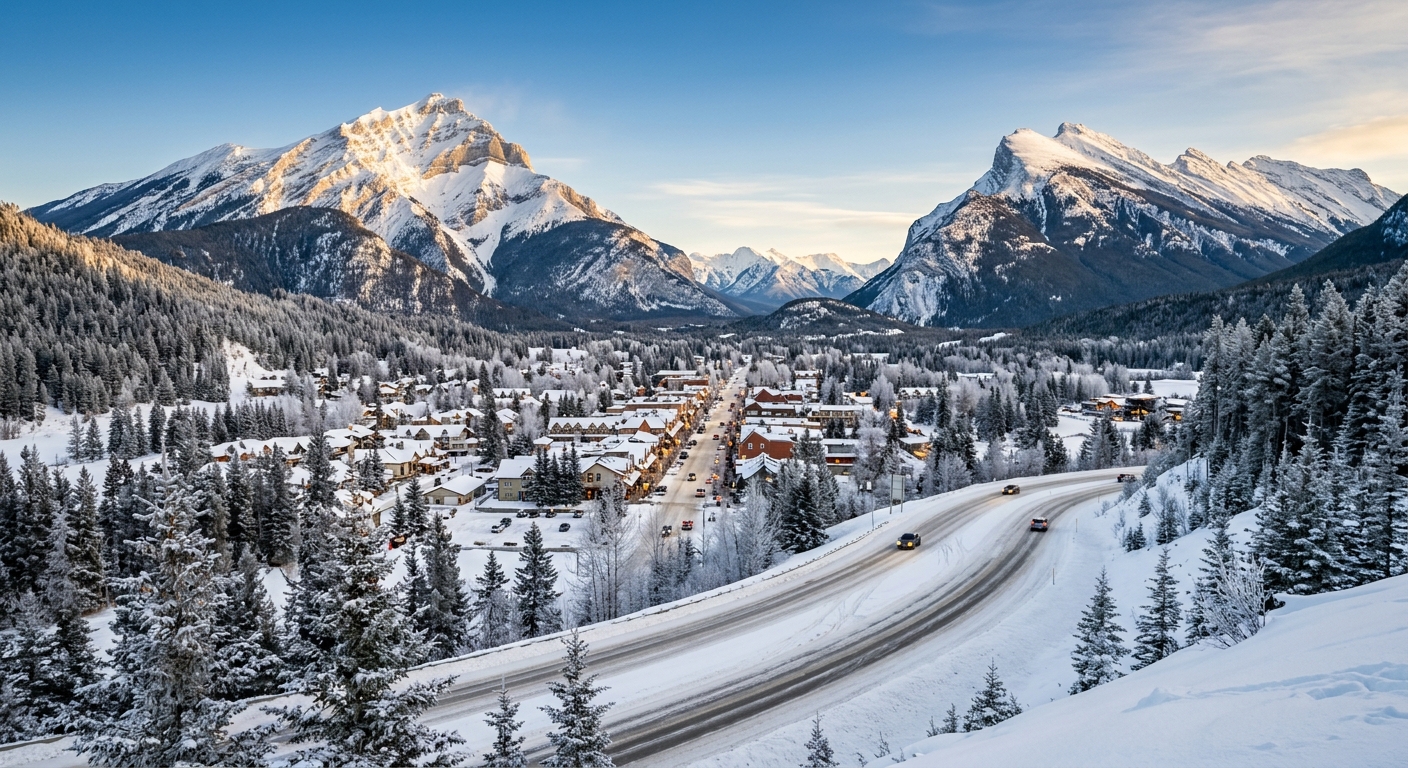
Driving to Banff in winter requires preparation, respect for the conditions, and the right equipment. The Trans-Canada Highway from Calgary is well-maintained but passes through mountain terrain where conditions can change rapidly. Blizzards, black ice, and reduced visibility are real risks. Here's everything you need to know to arrive safely.
The Route: Calgary to Banff
The drive from Calgary International Airport (YYC) to Banff is 130 km (80 miles) west on the Trans-Canada Highway (Highway 1). In good conditions, it takes about 90 minutes. In winter, allow 2-3 hours depending on conditions. The highway is a divided four-lane road with well-maintained lanes, but elevation increases as you approach the mountains.
Winter Tire Requirements
Alberta does not legally mandate winter tires on Highway 1 to Banff, but British Columbia does for the section of Highway 1 west of the BC-Alberta border (e.g., if continuing to Lake Louise area or beyond). Regardless of legal requirements, winter tires (or all-weather tires with the mountain snowflake symbol) are strongly recommended and effectively essential for safe winter driving in the Rockies.
If renting a car in Calgary, request a vehicle with winter tires. Most rental companies in Calgary offer winter-equipped vehicles from October to April — confirm at booking.
Road Conditions
Check current road conditions before departing:
- 511 Alberta: 511.alberta.ca — real-time highway conditions, closures, and webcams
- DriveBC: drivebc.ca — if continuing into BC
- Parks Canada: Road conditions within the park boundaries
Highway 1 through the mountain parks is regularly plowed and sanded, but during heavy snowfall or blowing snow, conditions can deteriorate rapidly. Temporary highway closures due to avalanche control are possible, especially on the stretch between Lake Louise and the BC border.
Common Winter Hazards
Black Ice
The most dangerous winter driving hazard. Black ice forms on the road surface and is nearly invisible. It's most common at dawn, in shaded areas, on bridges, and near rivers where moisture is present. Drive below the speed limit and maintain extra following distance.
Blowing Snow & Whiteouts
Strong winds can create whiteout conditions where visibility drops to near zero. If this happens, slow down significantly, turn on headlights and hazard flashers, and pull over safely if visibility becomes too poor to continue. Do not stop in a travel lane.
Avalanche Zones
Highway 1 between Lake Louise and Golden, BC, passes through avalanche terrain. Parks Canada and the BC Ministry of Transportation conduct avalanche control using explosives. The highway may be closed for hours during control work. Check 511 Alberta and DriveBC for alerts.
Wildlife on the Road
Elk, deer, and bighorn sheep are active near the highway year-round. In winter, reduced daylight hours mean you're more likely to be driving at dawn and dusk when wildlife is most active. Slow down and scan the roadsides, especially between Canmore and Lake Louise.
What to Keep in Your Car
- Winter emergency kit: Blanket, warm clothing, boots, gloves, hat
- Flashlight with extra batteries
- Phone charger (car charger or battery bank)
- Snacks and water
- Ice scraper and snow brush
- Small shovel
- Traction aids (sand, kitty litter, or traction mats)
- Booster cables
- First aid kit
Driving Tips
- Reduce speed: Drive below the posted limit when conditions warrant. The highway speed limit drops to 90 km/h in the park
- Increase following distance: Leave 4-6 seconds between you and the vehicle ahead
- Avoid sudden braking and steering: Gentle inputs prevent skids on icy surfaces
- Use headlights: Even during the day for visibility
- Fill your gas tank: Don't start the mountain drive on a low tank
- Clear ALL snow from your vehicle: Snow flying off your roof is a hazard to other drivers
Alternative Transportation
If winter driving makes you uncomfortable, shuttle services run between Calgary Airport and Banff year-round:
- Banff Airporter: Multiple daily departures, ~$70-80 CAD one way
- Brewster Express: Similar service and pricing
- Private transfer: More expensive but door-to-door service
These services use experienced mountain drivers with winter-equipped vehicles.
Enjoyed this guide? Get weekly Banff tips.