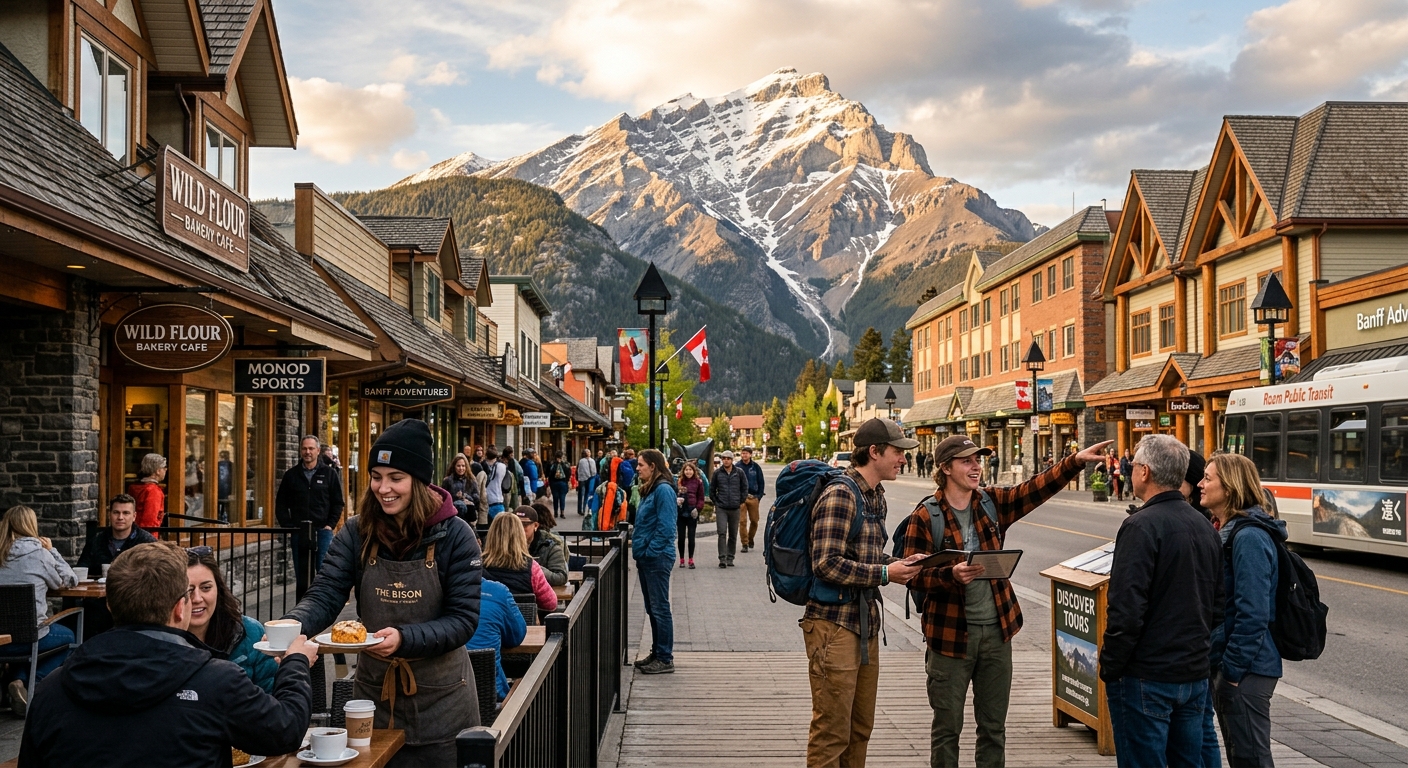
Working in Banff is a dream for thousands of people every year — and it's not hard to see why. You live in a UNESCO World Heritage Site, ski or hike after work, and join a vibrant international community of adventurers who came for a season and stayed for years. Here's the practical guide to making it happen.
Who Can Work in Banff?
Your eligibility depends on your nationality and visa status:
Canadian Citizens & Permanent Residents
You can work in Banff with no restrictions. Just apply for jobs and go.
International Working Holiday Visa (IEC)
The International Experience Canada (IEC) program offers working holiday visas to citizens of over 30 countries, including the UK, Australia, Ireland, France, Germany, Japan, and South Korea. The visa typically allows 1–2 years of open work in Canada. This is the most common route for international workers in Banff.
Study Permit Holders
International students at Canadian institutions can work part-time during studies and full-time during breaks. Some use summer or winter breaks to work a season in Banff.
Temporary Foreign Worker Program
Some Banff employers sponsor workers through the TFWP, particularly for positions they can't fill locally. This requires a Labour Market Impact Assessment (LMIA) and is employer-driven.
Best Employers in Banff
Hotels & Resorts
- Fairmont Banff Springs & Fairmont Chateau Lake Louise: The largest employers. Roles in housekeeping, food & beverage, front desk, kitchen, spa, and maintenance. Staff housing available
- Moose Hotel & Suites: Boutique hotel with various hospitality roles
- Banff Park Lodge, Elk + Avenue, Mount Royal Hotel: Mid-range hotels that hire seasonal staff
Ski Resorts
- Sunshine Village, Lake Louise Ski Resort, Mt. Norquay: Hire hundreds of seasonal workers for lift operations, ski school, food service, rental shops, and guest services. The perk: free skiing on your days off
Restaurants & Bars
Banff Avenue is lined with restaurants and bars that hire year-round. Servers, bartenders, hosts, and kitchen staff are always in demand, especially at the start of each season (June and November).
Retail & Tour Operators
- Outdoor gear shops on Banff Avenue
- Tour companies (Pursuit, Discover Banff Tours, Banff Adventures) hire guides and operational staff
- Souvenir shops and galleries
Housing in Banff
Housing is the biggest challenge of working in Banff. The town has a fixed boundary within the national park, limiting development:
- Staff accommodation: Many large employers (Fairmont, ski resorts) provide staff housing. This is often the easiest option, especially for first-timers. Expect shared rooms and dormitory-style living
- Private rental: Limited and expensive. A room in a shared house typically costs $800–$1,200 CAD/month. Studios and one-bedrooms are $1,500–$2,500+. The Banff Housing Facebook groups are the best resource
- Need to Reside clause: You must prove you work at least 20 hours/week in Banff to live in the town. This is enforced
- Canmore: Some workers live in nearby Canmore (25 minutes away) where housing is slightly more available, though not necessarily cheaper
What to Expect
- The community: Banff's workforce is young, international, and adventure-focused. You'll meet people from dozens of countries
- The lifestyle: Work your shift, then ski, hike, or soak in the hot springs. Summers have 16+ hours of daylight; winters have jaw-dropping snow and northern lights
- The cost: Banff is expensive. Groceries, dining out, and activities all cost more than in cities. Budget carefully
- The grind: Hospitality work is demanding. Busy seasons mean long hours and crowded conditions. But the trade-off — living in the mountains — makes it worthwhile
Tips for Success
- Apply early: For summer (June start), apply in February–March. For winter (November start), apply in August–September
- Secure housing first: A job without housing means nothing in Banff. Prioritise employers that offer staff accommodation
- Bring savings: Have at least $2,000–$3,000 CAD to cover your first month before paychecks start
- Get a SIN: You need a Social Insurance Number to work legally in Canada. Apply at Service Canada upon arrival
- Open a Canadian bank account: TD, RBC, and CIBC all have branches in Banff
Start your Banff working holiday with accommodation on Expedia while you settle in. Explore activities and tours on your days off.
Enjoyed this guide? Get weekly Banff tips.