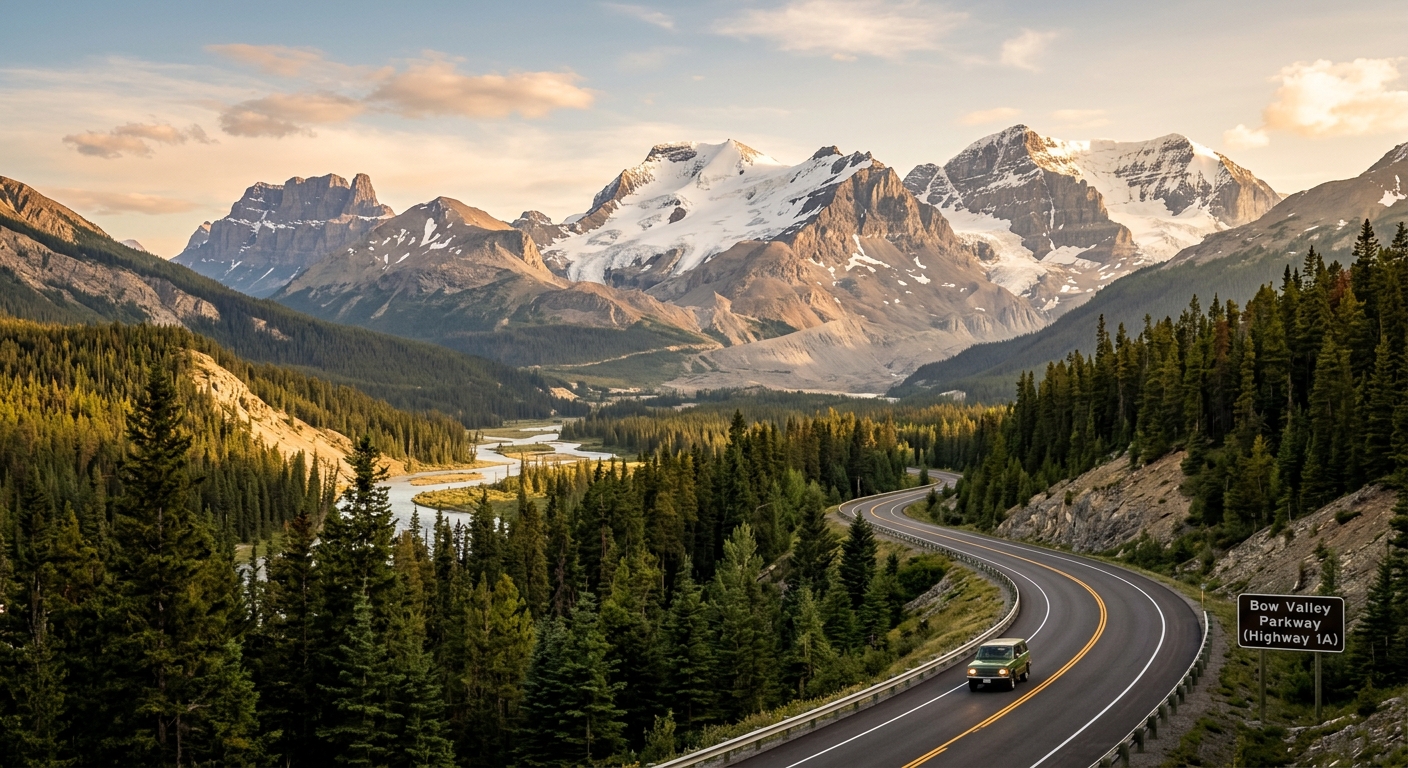
The Bow Valley Parkway (Highway 1A) is one of the most beautiful and wildlife-rich roads in the Canadian Rockies. This 51 km route between Banff and Lake Louise winds through dense forest along the Bow River, offering a slower, more intimate alternative to the Trans-Canada Highway. If you see one road in Banff, it might be the Icefields Parkway — but if you want to see wildlife, this is the one.
Getting Started
The Bow Valley Parkway begins at the Highway 1/Highway 1A interchange just west of Banff town and ends at the Lake Louise junction, 51 km later. You can drive it in either direction. The speed limit is 60 km/h throughout — this is intentionally slow to protect wildlife and let you enjoy the scenery.
Budget 2-3 hours for a leisurely drive with stops, or half a day if you hike Johnston Canyon.
Best Stops (East to West)
1. Backswamp Viewpoint (km 2)
A pulloff overlooking wetlands just minutes from the start. Excellent for birdwatching and elk sightings, especially at dawn and dusk. Bald eagles and ospreys are occasionally spotted here.
2. Muleshoe Picnic Area (km 8)
A scenic picnic spot along the Bow River. The Muleshoe viewpoint offers a sweeping valley panorama and is a reliable spot for wildlife sightings.
3. Johnston Canyon (km 17)
The most popular stop on the Parkway. Walk along catwalks bolted to the canyon walls to see the Lower Falls (1.1 km) and Upper Falls (2.7 km). For a longer adventure, continue to the Ink Pots (5.8 km) — five cold mineral springs bubbling through vivid blue-green pools. In winter, the frozen falls are dramatic on a guided ice walk.
4. Moose Meadows (km 22)
A marshy meadow area that's aptly named — moose are occasionally spotted here, along with elk and deer. Pull off carefully and scan the treeline, especially in early morning.
5. Castle Mountain Viewpoint (km 28)
A pulloff with a beautiful view of Castle Mountain, one of the most dramatic and recognisable peaks in the Rockies. Its flat-topped, castle-like silhouette is especially photogenic in sunset light. Castle Junction, nearby, is a small hub with basic services.
6. Castle Cliffs Viewpoint (km 33)
Another angle on Castle Mountain and the surrounding cliffs. This stretch of road is lined with dense forest where black bears are frequently spotted in summer feeding on roadside berries.
7. Protection Mountain Campground Area (km 38)
The road winds through deep forest here with frequent wildlife sightings. Keep your eyes peeled and drive slowly — bears cross the road regularly in this section.
8. Baker Creek (km 41)
A small area with mountain lodge accommodation and trails into the backcountry. The Baker Creek area is quiet and scenic, with access to less-visited hiking routes.
Wildlife on the Parkway
The Bow Valley Parkway is the single best road in Banff for wildlife viewing. Species commonly spotted include:
- Elk: Very common, especially in meadows at dawn and dusk
- Black bears: Frequently seen in summer, particularly in berry season (July-August)
- Grizzly bears: Less common but present — give them extra space (100m minimum)
- Deer: Mule deer and white-tailed deer are regular sightings
- Wolves: Occasionally spotted, especially in winter and early morning
- Coyotes: Common at dawn and dusk
- Bighorn sheep: Sometimes seen near Castle Mountain area
Seasonal Closures
To protect wildlife during sensitive periods, Parks Canada implements seasonal closures:
- March 1 to June 25: The eastern section (km 0-17, Banff to Johnston Canyon) is closed from 8pm to 8am daily to reduce disturbance during spring wildlife activity
- The western section remains open year-round
- Check the Parks Canada website for current closures before your visit
Tips for Driving the Parkway
- Drive at dawn or dusk for the best wildlife sightings
- Keep your speed at or below the 60 km/h limit
- Pull completely off the road if you stop for wildlife — never block traffic
- Keep 100m from bears and wolves, 30m from all other wildlife
- Bring binoculars and a telephoto lens
- Pack food and water — services are very limited along the route
Enjoyed this guide? Get weekly Banff tips.