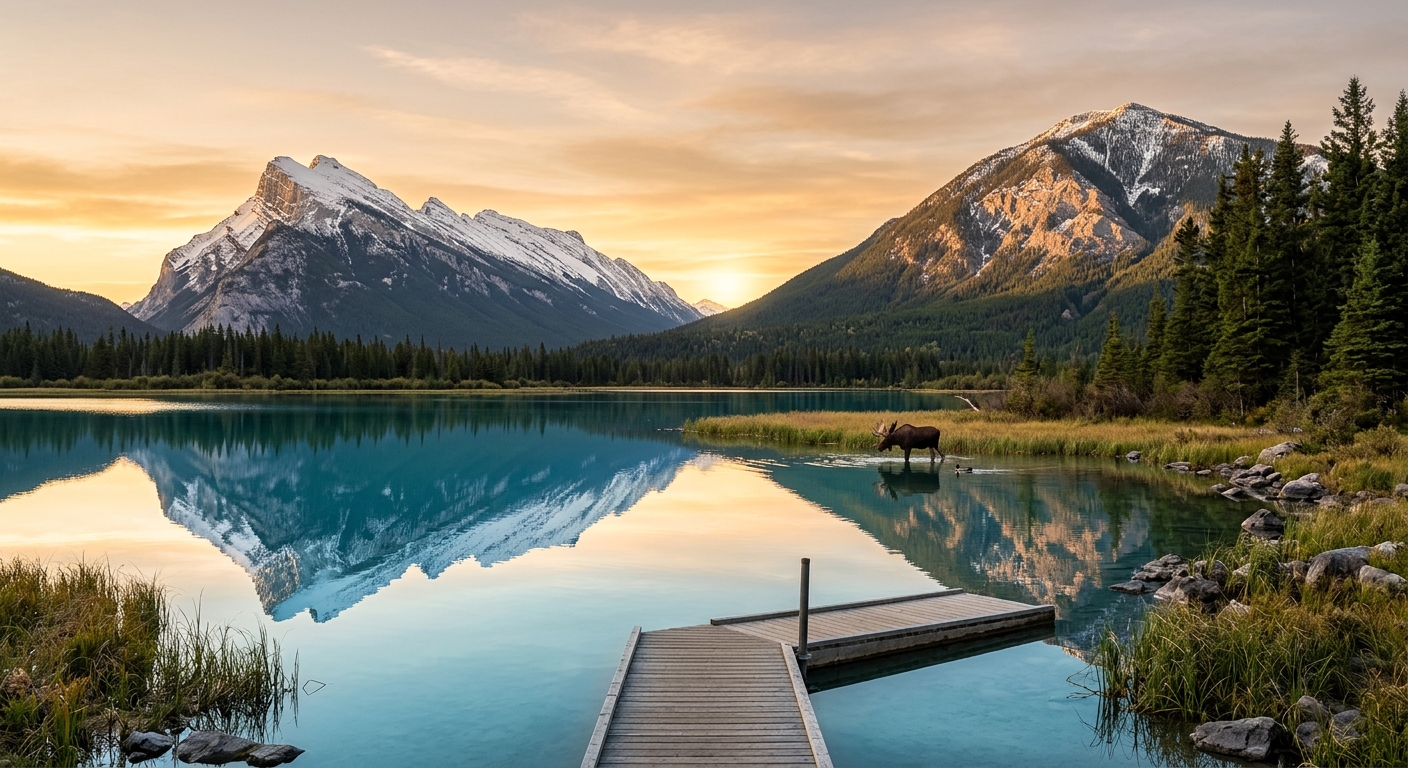
Vermilion Lakes might be Banff's best-kept secret — which is remarkable given that they're just a 5-minute drive from the centre of town. This trio of shallow lakes on the western edge of Banff offers the finest sunrise photography, the most reliable wildlife viewing, and some of the most peaceful moments you'll experience in the national park. While tourists flock to Lake Louise and Moraine Lake, those in the know head to Vermilion Lakes.
Getting There
Vermilion Lakes are accessed via Vermilion Lakes Road, which runs parallel to the Trans-Canada Highway on the south side. The turnoff is just west of the Mount Norquay interchange — look for the signs from the highway or from Banff Avenue heading west. The road is paved, flat, and has multiple pulloffs for parking along the three lakes. You can also walk or cycle from downtown Banff in about 15 minutes.
The Three Lakes
There are three Vermilion Lakes, each with a slightly different character:
- First Vermilion Lake: The closest to town, accessible by an easy walk. Marshier edges with good birdwatching but partially obstructed mountain views
- Second Vermilion Lake: The most popular photography spot. Wide-open views of Mount Rundle reflected in the water. The classic Vermilion Lakes shot is taken here
- Third Vermilion Lake: The most secluded and wild-feeling. Warmed by hot spring water, it stays partially ice-free in winter, attracting wildlife year-round
Sunrise Photography
Vermilion Lakes is the premier sunrise photography location in Banff. The lakes face east toward Mount Rundle, which catches the first morning light in dramatic fashion — turning orange, pink, and gold while the still water creates a perfect mirror reflection.
Photography Tips
- Set up at the Second Vermilion Lake for the classic Mount Rundle reflection
- Arrive 30 minutes before sunrise to find your composition and catch the pre-dawn colour
- Bring a tripod — the low light requires longer exposures for optimal image quality
- A polarizing filter helps control reflections and enhance the sky
- In winter, the partially frozen lake adds dramatic ice textures to the foreground
Wildlife Viewing
The Vermilion Lakes wetlands are one of the richest wildlife habitats near Banff town:
- Elk: Herds frequently graze along the road and lakeshores, especially at dawn and dusk
- Bald eagles and ospreys: Nest and hunt near the lakes in summer. Watch for them perching in dead trees along the shore
- Beavers: Active at dawn and dusk. Look for their lodges and listen for the distinctive tail slap on water
- Muskrats: Commonly seen swimming in the marshier areas
- Great blue herons: Occasional visitors to the shallow waters
- Coyotes and wolves: Occasionally spotted in the area, particularly in winter
The third lake's hot-spring-warmed water keeps it partially open in winter, attracting waterfowl and other wildlife when the rest of the valley is frozen solid.
Activities
- Cycling: Vermilion Lakes Road is flat and scenic — perfect for a casual bike ride from town
- Walking/Jogging: The road and trails make for a peaceful morning stroll or run
- Birdwatching: Over 200 bird species have been recorded in the Vermilion Lakes area
- Stargazing: The open sky and proximity to town make this an accessible dark-sky viewing spot
Seasonal Tips
- Summer: Lush and green, best birdwatching, long golden-hour evenings. Mosquitoes can be intense near the marshy areas — bring repellent
- Fall: Striking golden aspens frame the lakes, creating even more colourful reflections. Elk rutting season (September–October) brings bugling bulls to the area
- Winter: Frozen lakes with Rundle reflections in ice, partially open Third Lake attracts wildlife, gorgeous frosty sunrise photography. Bring layers and a thermos of coffee
- Spring: Ice melting, waterfowl returning, fresh green growth beginning. A quiet time to visit
Enjoyed this guide? Get weekly Banff tips.