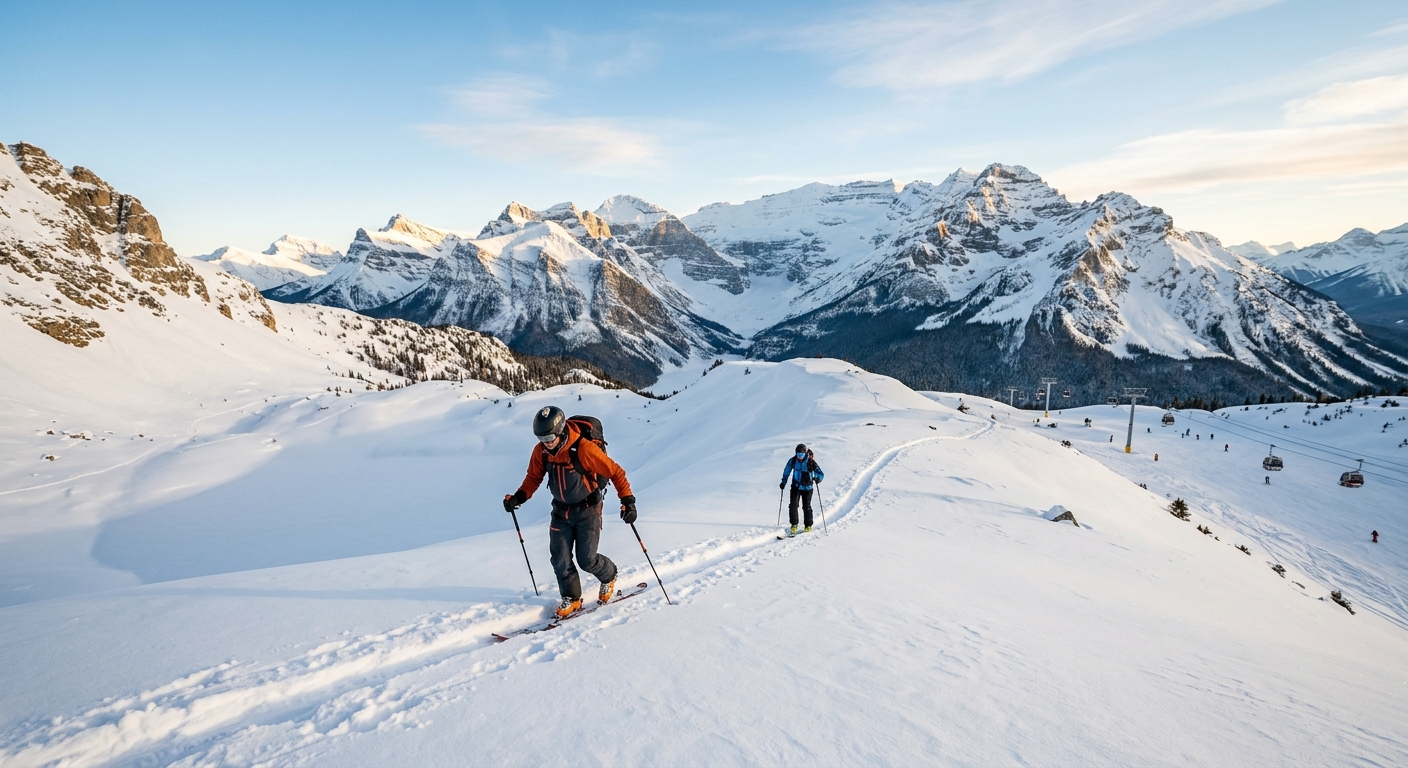
Backcountry ski Ski Touring : Canmore to Banff — also called ski mountaineering or skinning — is the purest form of skiing: climbing mountains under your own power with skins attached to your skis, then skiing fresh powder back down through terrain no resort could ever replicate. The mountains around Banff offer excellent ski touring, but it demands fitness, knowledge, and respect for avalanche terrain.
What Is Ski Touring?
Unlike resort skiing where lifts carry you uphill, ski touring uses climbing skins — strips of synthetic fabric that attach to the base of your skis and grip the snow, allowing you to walk uphill. At the top, you remove the skins, lock your bindings into downhill mode, and ski down. It's a full-body workout and a deeply rewarding way to experience the mountains in winter.
Planning your ski touring adventure? Start by securing your where to stay in Banff and compare hotel rates on Expedia for the best deals on accommodations near prime touring terrain.
Essential Gear
- Touring skis: Lighter than resort skis with touring-specific bindings that allow heel lift for climbing
- Climbing skins: Adhesive-backed fabric strips that attach to ski bases
- Touring boots: Walk mode for climbing, ski mode for descending. Lighter and more flexible than alpine boots
- Avalanche safety kit: Transceiver, probe, and shovel — absolutely mandatory. Know how to use them before heading out
- Backpack (30–40L): For carrying skins, extra layers, food, water, and safety equipment
- Additional essentials: First aid kit, emergency bivy, headlamp, navigation tools
New for 2026: Technology Updates
The ski touring world has evolved significantly, with several technology improvements enhancing safety and experience. GPS-enabled avalanche transceivers now offer improved search patterns and smartphone integration for practice sessions. Lightweight carbon fiber probes have become more affordable, and new skin designs with improved grip-to-glide ratios make ascents more efficient. Additionally, several touring companies now offer app-based route tracking and condition reporting, making it easier to share beta with the touring community.
Popular Touring Routes Near Banff
Healy Pass Area
Accessed from the Sunshine Village road, the Healy Pass area offers moderate touring terrain with treeline access and open alpine slopes. The approach through the forest is sheltered, and the alpine terrain above offers multiple lines of varying steepness. It's one of the more accessible touring areas near Banff for intermediates.
Parker Ridge
Located along the Icefields Parkway about 2 hours north of Banff, Parker Ridge is a classic touring destination. The ridge offers above-treeline skiing with views of the Saskatchewan Glacier. Multiple aspects allow you to choose terrain based on avalanche conditions.
Bow Summit / Peyto Lake Area
The Bow Summit area along the Icefields Parkway provides access to alpine terrain above Peyto Lake. Touring here rewards you with incredible views and a variety of terrain from gentle slopes to steeper chutes. The snowpack is generally reliable from December through April.
Lake Louise Backcountry
The mountains around Lake Louise — including the Skoki area — offer extensive backcountry touring terrain. The Skoki Lodge (accessible by ski tour) is a historic backcountry lodge where you can stay overnight and tour the surrounding peaks for multiple days. Check our comprehensive Lake Louise guide for additional winter activities in the area.
Rogers Pass (3 hours from Banff)
While technically outside the Banff area, Rogers Pass in Glacier National Park is one of the premier ski touring destinations in North America. Deep, consistent snowfall and extensive alpine terrain draw touring enthusiasts from around the world. Note: special avalanche bulletins and mandatory registration apply here.
Avalanche Safety
This cannot be overstated: backcountry ski touring in the Canadian Rockies requires avalanche knowledge. Avalanches kill people every year in this terrain.
- Take a course: At minimum, complete an Avalanche Skills Training (AST) Level 1 course before touring. AST 2 is recommended for regular tourers
- Check the forecast: Avalanche Canada publishes daily bulletins for the Banff-Yoho-Kootenay region. Check it every time you go out
- Travel with partners: Never tour alone. Groups of 3–4 are ideal
- Carry rescue equipment: Transceiver, probe, shovel. Practice rescue scenarios regularly
- Make conservative terrain choices: Avoid avalanche terrain on high-danger days. No run is worth your life
Guided Touring
If you're new to ski touring, hiring a certified guide is the safest and most educational way to start:
- ACMG-certified mountain guides lead tours from Banff, Lake Louise, and Canmore
- Guides assess avalanche conditions, choose appropriate terrain, and manage group safety
- A guided day typically costs
Backcountry ski Ski Touring : Canmore to Banff — also called ski mountaineering or skinning — is the purest form of skiing: climbing mountains under your own power with skins attached to your skis, then skiing fresh powder back down through terrain no resort could ever replicate. The mountains around Banff offer top-tier ski touring, but it demands fitness, knowledge, and respect for avalanche terrain.
What Is Ski Touring?
Unlike resort skiing where lifts carry you uphill, ski touring uses climbing skins — strips of synthetic fabric that attach to the base of your skis and grip the snow, allowing you to walk uphill. At the top, you remove the skins, lock your bindings into downhill mode, and ski down. It's a full-body workout and a deeply rewarding way to experience the mountains in winter.
Essential Gear
- Touring skis: Lighter than resort skis with touring-specific bindings that allow heel lift for climbing
- Climbing skins: Adhesive-backed fabric strips that attach to ski bases
- Touring boots: Walk mode for climbing, ski mode for descending. Lighter and more flexible than alpine boots
- Avalanche safety kit: Transceiver, probe, and shovel — absolutely mandatory. Know how to use them before heading out
- Backpack (30–40L): For carrying skins, extra layers, food, water, and safety equipment
- Additional essentials: First aid kit, emergency bivy, headlamp, navigation tools
Popular Touring Routes Near Banff
Healy Pass Area
Accessed from the Sunshine Village road, the Healy Pass area offers moderate touring terrain with treeline access and open alpine slopes. The approach through the forest is sheltered, and the alpine terrain above offers multiple lines of varying steepness. It's one of the more accessible touring areas near Banff for intermediates.
Parker Ridge
Located along the Icefields Parkway about 2 hours north of Banff, Parker Ridge is a classic touring destination. The ridge offers above-treeline skiing with views of the Saskatchewan Glacier. Multiple aspects allow you to choose terrain based on avalanche conditions.
Bow Summit / Peyto Lake Area
The Bow Summit area along the Icefields Parkway provides access to alpine terrain above Peyto Lake. Touring here rewards you with incredible views and a variety of terrain from gentle slopes to steeper chutes. The snowpack is generally reliable from December through April.
Lake Louise Backcountry
The mountains around Lake Louise — including the Skoki area — offer extensive backcountry touring terrain. The Skoki Lodge (accessible by ski tour) is a historic backcountry lodge where you can stay overnight and tour the surrounding peaks for multiple days.
Rogers Pass (3 hours from Banff)
While technically outside the Banff area, Rogers Pass in Glacier National Park is one of the premier ski touring destinations in North America. Deep, consistent snowfall and extensive alpine terrain draw touring enthusiasts from around the world. Note: special avalanche bulletins and mandatory registration apply here.
Avalanche Safety
This cannot be overstated: backcountry ski touring in the Canadian Rockies requires avalanche knowledge. Avalanches kill people every year in this terrain.
- Take a course: At minimum, complete an Avalanche Skills Training (AST) Level 1 course before touring. AST 2 is recommended for regular tourers
- Check the forecast: Avalanche Canada publishes daily bulletins for the Banff-Yoho-Kootenay region. Check it every time you go out
- Travel with partners: Never tour alone. Groups of 3–4 are ideal
- Carry rescue equipment: Transceiver, probe, shovel. Practice rescue scenarios regularly
- Make conservative terrain choices: Avoid avalanche terrain on high-danger days. No run is worth your life
Guided Touring
If you're new to ski touring, hiring a certified guide is the safest and most educational way to start:
- ACMG-certified mountain guides lead tours from Banff, Lake Louise, and Canmore
- Guides assess avalanche conditions, choose appropriate terrain, and manage group safety
- A guided day typically costs $250–$400 CAD per person in a group setting
- Multi-day guided trips to backcountry lodges are available (Skoki Lodge, Shadow Lake Lodge)
Fitness Requirements
Ski touring is physically demanding. A typical day involves:
- 4–8 hours of activity
- 800–1,500 metres of climbing
- Carrying a 10–15 kg pack
- Skiing in variable snow conditions
Good cardiovascular fitness and strong legs are essential. If you can comfortably hike 15 km with elevation gain, you're ready for introductory touring.
Base your touring trip in Banff — book on Expedia. Explore guided backcountry tours and winter adventures for expert-led experiences.
Ski Touring Tip: Your first touring experience should be with a guide or an experienced partner on low-angle terrain. The learning curve for uphill travel, transitions, and avalanche awareness is real. Invest in an AST 1 course and a guided day before venturing out independently — it could save your life.80–$450 CAD per person in a group setting - Multi-day guided trips to backcountry lodges are available (Skoki Lodge, Shadow Lake Lodge)
For expert-led backcountry experiences, browse guided tours on GetYourGuide to find certified guides and structured touring programs suitable for all skill levels.
Fitness Requirements
Ski touring is physically demanding. A typical day involves:
- 4–8 hours of activity
- 800–1,500 metres of climbing
- Carrying a 10–15 kg pack
- Skiing in variable snow conditions
Good cardiovascular fitness and strong legs are essential. If you can comfortably hike 15 km with elevation gain, you're ready for introductory touring. Consider training on some of the best Banff hiking trails during summer and fall to build the necessary fitness base.
2026-2027 Season Planning
The 2026-2027 ski touring season in Banff typically runs from December through April, with peak conditions usually occurring from January to March. Early season touring (December-January) often requires careful route selection due to shallow snowpack and persistent weak layers. Late season (March-April) brings longer days and corn snow conditions, but also increased avalanche danger from warming temperatures. Plan your 3-day Banff itinerary around weather windows and avalanche forecasts for the safest and most enjoyable experience.
Base your touring trip in Banff — book on Expedia for competitive rates. Explore guided backcountry tours and winter adventures for expert-led experiences.
Enjoyed this guide? Get weekly Banff tips.