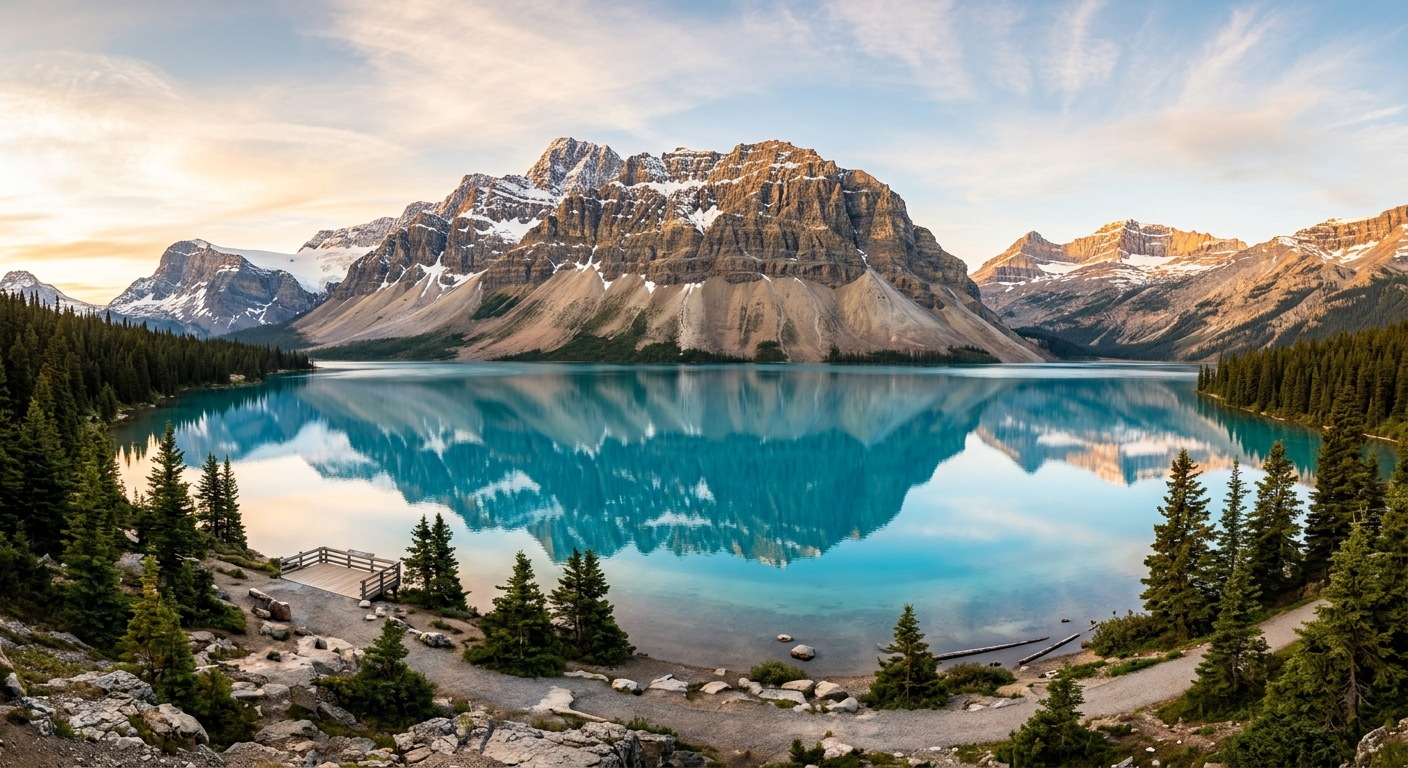
As someone who's driven the Icefields Parkway countless times during my training runs and ski trips to Banff, I can tell you that the Bow Lake view point is one of those stops that never gets old. Located 37 kilometers north of Lake Louise along Highway 93, this roadside pullout offers direct access to one of the Canadian Rockies' most photographed alpine lakes. Whether you're passing through on a day trip or planning a longer stay in the area, this accessible viewpoint deserves a spot on your itinerary.
Getting to Bow Lake View Point
The Bow Lake view point sits at kilometer 37 on the Icefields Parkway, making it an easy drive from either Lake Louise or Jasper. From Lake Louise village, expect a 45-minute drive north through some spectacular mountain scenery. The parking area is clearly marked on the west side of the highway, though I'll warn you now - it fills up fast during summer months.
If you're staying in Banff townsite, the drive takes about 1 hour and 15 minutes. I recommend combining this stop with other Icefields Parkway attractions like Peyto Lake or the Columbia Icefield if you're making the full journey. You'll need a valid Parks Canada discovery pass, which costs $20.65 CAD for adults in 2026.
The best times to visit are early morning before 8 AM or late afternoon after 4 PM when the lighting is optimal and crowds are thinner. During my last visit in September, arriving at sunrise meant having the entire viewpoint to myself for about 30 minutes - a rare treat during peak season.
What to Expect at the Bow Lake Lookout
The main viewing area sits directly across from the parking lot, requiring no hiking whatsoever. From here, you get unobstructed views of Bow Lake with Crowfoot Mountain rising 3,050 meters above the far shore. The lake sits at 1,920 meters elevation, which means it can be significantly cooler than Lake Louise or Banff townsite, especially in spring and fall.
The glacier-fed lake maintains its turquoise color from late June through September, thanks to fine rock particles suspended in the water. Earlier in the season, you might find it partially frozen or a more muted gray-green color. I've seen it completely frozen as late as mid-May during colder years.
Photography enthusiasts should know that the best light hits the mountains across the lake during the first two hours after sunrise and the last hour before sunset. The classic shot includes the historic Bow Lake Lodge in the foreground, which has been operating since the 1920s and adds a nice human element to landscape photos.
Bow Lake Lodge and Facilities
Bow Lake Lodge, visible from the viewpoint, operates as both a historic accommodation and restaurant during summer months (typically June through September). The rustic log buildings offer some of the most remote dining in the Canadian Rockies, though reservations are essential and meals run $35-50 CAD per person. When I stopped there after a long training run last summer, their hearty soups were exactly what I needed.
There are basic washroom facilities at the lodge during operating season, but no services directly at the viewpoint itself. The nearest gas station and full facilities are back in Lake Louise village.
Extended Activities from Bow Lake
While most visitors stick to the roadside viewpoint, several hiking options start from this area. The most popular is the Bow Lake Loop, a relatively easy 4.8-kilometer walk around the lake's shoreline that takes about 2 hours to complete. The trail stays flat and offers multiple angles of the surrounding peaks.
For more experienced hikers, the Bow Glacier Falls trail begins at the same parking area and leads 4.3 kilometers to an impressive waterfall cascading from Bow Glacier. This hike gains about 130 meters of elevation and typically takes 3-4 hours round trip. I've run this trail several times and always enjoy the mix of lakeside walking and rockier terrain near the falls.
Advanced mountaineers use Bow Lake as a starting point for approaches to several technical climbing routes on Crowfoot Mountain and Mount Thompson, though these require proper equipment and experience. If you're interested in exploring more of the area's best Banff hiking trails, I recommend checking current trail conditions with Parks Canada before heading out.
Planning Your Bow Lake Visit
Most people spend 20-30 minutes at the viewpoint, though photographers and hikers obviously stay longer. If you're just stopping for photos and a quick look, allow 45 minutes total including parking and walking time. The area works well as part of a larger Icefields Parkway tour, which you can book through GetYourGuide if you prefer guided experiences.
Weather can change rapidly at this elevation. I always pack a warm layer even during summer visits, and waterproof gear is smart from June through September when afternoon thunderstorms are common. The area receives significant snowfall from October through May, making winter visits possible but requiring proper winter driving preparation.
For accommodation planning, most visitors stay in Lake Louise village or Banff townsite rather than at Bow Lake Lodge itself. If you're looking for options, you can compare 95+ Banff hotels to find something that fits your budget and preferences. The drive from either location makes Bow Lake an easy day trip addition to your 3-day Banff itinerary.
Seasonal Considerations and Current Conditions
Each season offers a different experience at Bow Lake view point. Summer (July-August) brings the warmest weather and fullest parking lots, but also the most vibrant lake colors and longest daylight hours. Spring visits in May and June mean fewer crowds but potentially lingering snow and muddy trail conditions.
Fall, particularly September, is my personal favorite time to visit. The weather stays generally stable, crowds thin out after Labor Day, and you might catch some early snow on the peaks that creates dramatic contrast with the lake. Winter visits are certainly possible - the viewpoint stays accessible as Parks Canada plows Highway 93 year-round - but temperatures can drop below -30°C and daylight hours are limited.
As of May 2026, Parks Canada has been improving the parking area drainage to handle heavy summer use better. They've also added better signage about wildlife safety, as black bears and grizzly bears are both active in this area throughout the warmer months.
Making the Most of Your Visit
Bow Lake view point works perfectly as either a quick roadside stop or the starting point for longer adventures. The accessibility means it's suitable for all fitness levels and ages, while the hiking options provide challenges for those wanting more activity. During my years of regular visits, I've found it consistently delivers regardless of weather conditions or season.
If you're planning multiple days in the area, consider staying in Lake Louise village where you'll have easy access to restaurants, shops, and other attractions. For dining recommendations after your Bow Lake visit, check out our guide to the best Banff restaurants for options ranging from casual to fine dining.
The combination of easy access, stunning mountain scenery, and optional hiking makes Bow Lake view point a must-visit stop along the Icefields Parkway. Whether you spend 20 minutes or half a day here, you'll understand why this spot has been drawing visitors to the Canadian Rockies for nearly a century.
Enjoyed this guide? Get weekly Banff tips.