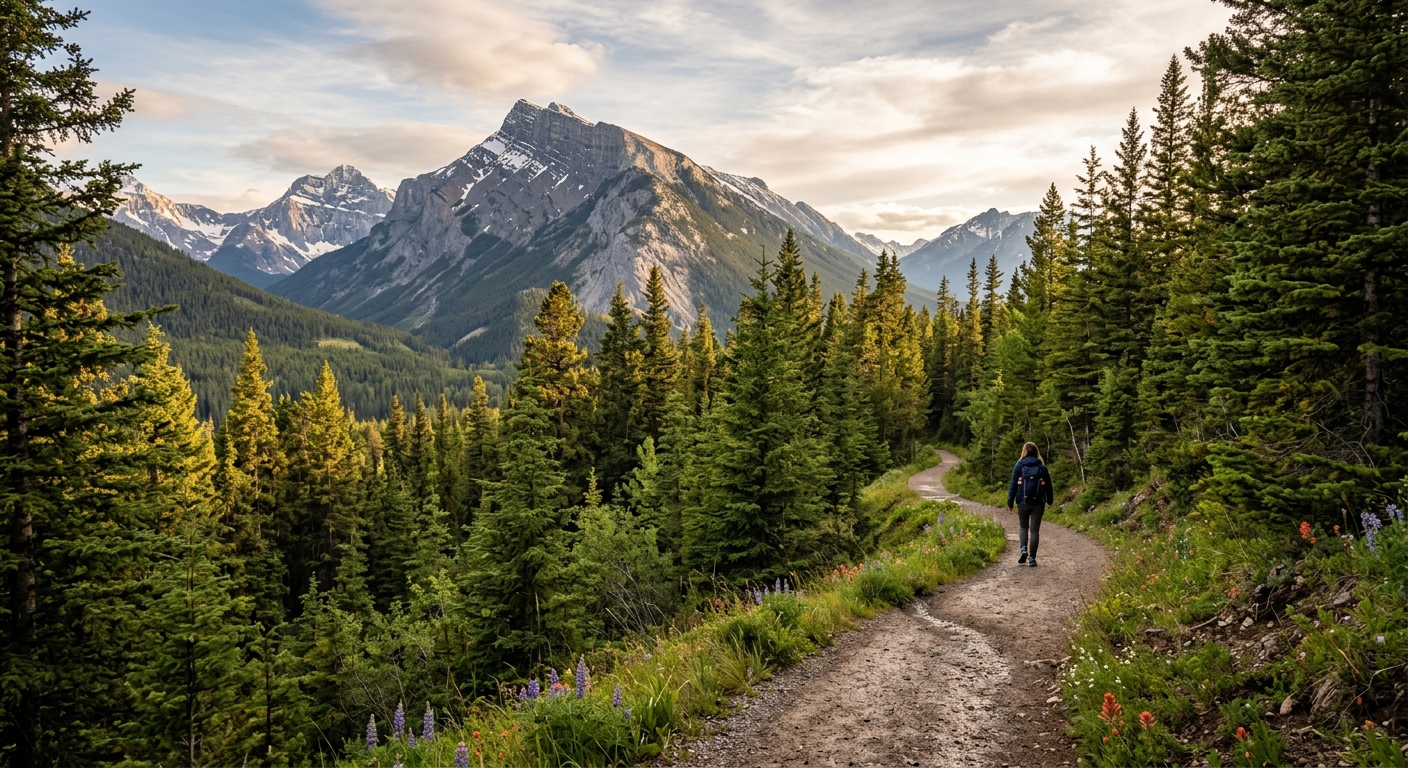
The Fenland Bow Summit Trail Banff: Views Without the Crowds is one of Banff's most peaceful walks — a flat, easy loop through old-growth spruce and pine forest just minutes from downtown. While most visitors rush to the big-name attractions, the Fenland Trail offers something different: tranquility, wildlife, and the kind of quiet forest immersion that makes you forget you're near a busy tourist town.
Trail Details
- Distance: 2.1 km loop
- Elevation gain: Virtually none — completely flat
- Time: 30–45 minutes at a leisurely pace
- Surface: Packed gravel path, well-maintained
- Difficulty: Easy — suitable for all ages and fitness levels
- Stroller/wheelchair: Mostly accessible, though some sections may have uneven gravel
- Dogs: Allowed on leash
Getting There
The Fenland Trail starts from a small parking area on Mount Norquay Road, just off the Trans-Canada Highway interchange near Banff. From downtown Banff, it's a 5-minute drive or 15-minute walk. The parking lot is small — arrive early on summer weekends or walk from town.
What You'll See
Old-Growth Forest
The trail passes through a fen — a type of wetland fed by groundwater — surrounded by mature Engelmann spruce and lodgepole pine trees. Some of these trees are centuries old, and the forest has a cathedral-like quality with tall trunks and filtered light.
Forty Mile Creek
The trail follows and crosses Forty Mile Creek, a clear mountain stream that flows through the forest. The sound of the creek and birdsong are often the only sounds you'll hear on the trail.
Wildlife
The Fenland Trail is one of the best wildlife viewing locations close to Banff town:
- Elk: Frequently spotted grazing in the meadows and forest clearings, especially at dawn and dusk
- Birds: Excellent birdwatching — woodpeckers, chickadees, nuthatches, jays, and occasional owls
- Squirrels and chipmunks: Active throughout the forest
- Bears: Black bears are occasionally seen in the area — carry bear spray and make noise
- Beavers: Evidence of beaver activity (chewed trees, dams) is visible along the creek
Best Time to Visit
- Early morning: The best time for wildlife viewing and photography. The forest is quiet, and animals are most active
- Summer: Wildflowers and lush green vegetation make the forest vibrant
- Fall: Some deciduous trees and shrubs add colour, and the forest has a moody, misty atmosphere
- Winter: The trail is often packed down for snowshoeing or winter walking. Snow-covered trees are beautiful
- Spring: Birdsong is at its peak, and the creek runs high with snowmelt
Why Walk the Fenland Trail
The Fenland Trail won't appear on any "most dramatic hikes in Banff" list, and that's exactly its charm. It's a place for:
- A quiet morning walk before the day's adventures begin
- Gentle exercise when you need a rest day from harder hikes
- Introducing young children or elderly family members to Banff's forests
- Birdwatching and wildlife photography
- Clearing your head — the forest immersion is genuinely calming
Combine With
The Fenland Trail connects to the Vermilion Lakes road via a short walk, making it easy to combine both in a morning. Walk the Fenland loop, then continue to Vermilion Lakes for mountain and lake views — the contrast between deep forest and open lakeshore is striking.
Stay in Banff and explore its hidden trails — book on Expedia. Add guided nature walks and wildlife tours to discover Banff's quieter side.
Enjoyed this guide? Get weekly Banff tips.